In this episode of the Peopling the Past podcast, we sit down with Dr. Mark Locicero, a research fellow at the University of British Columbia. Dr. Locicero earned his PhD from Leiden University and he was most recently involved with the excavations at Ostia Antica as a primary field researcher.
Listen in, As Dr. Locicero takes us through his research on water systems in North Africa, most notably at the site of Volubilis, and the ways in which water was used in both public and private contexts.
Looking for additional research on this topics? Check out this book by Dr. Locicero:
Liquid Footprints: Water, Urbanism, and Sustainability in Roman Ostia, Leiden: Leiden University Press, 2020.
Looking for a transcript of this episode? Click here.
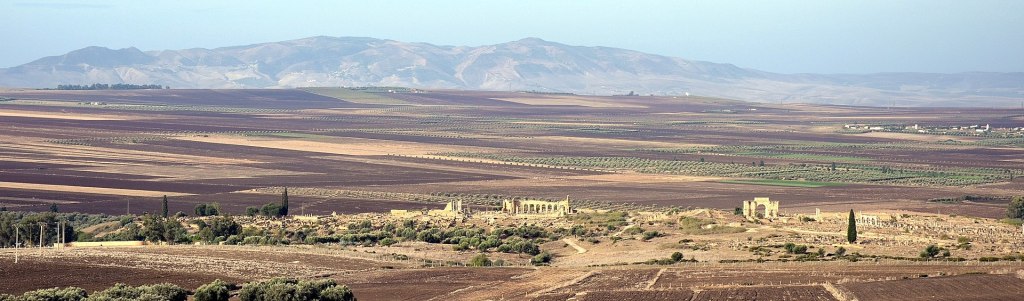
(CC BY-SA 2.0 – Иерей Максим Массалитин; derivative work: Prioryman)


Additional Resources Related to this Podcast
Locicero, M. 2020. “Waters Waters Everywhere: Exploring the Flexibility and Sustainability of Roman Water Supply Systems”, in C. Schliephake, N. Sojc, and G. Weber (eds.) ‚Nachhaltigkeit‘ und Umweltverhalten in der Antike: Die Environmental Humanities‘ aus archäologischer und althistorischer Perspektive, 57-74.
Locicero, M. 2020. Liquid Footprints: Water, Urbanism, and Sustainability in Roman Ostia. Leiden University Press.
Locicero, M. 2020, “Downdrains and Floating Sewers: An Updated Assessment of Drainage Systems in Ostia”, in G. Wiplinger (ed.) Internationales Frontinus-Symposium 10. – 18. Nov. 2018 Rome, BABESCH Suppl. 40, 373-385.
Locicero, M. 2017, “Under Pressure: A New Water Tower in Roman Ostia”, in G. Wiplinger, and W. Letzner (eds.), Wasserwesen zur Zeit des Frontinus, Bauwerke – Technik – Kultur, 40 Jahre Frontinus Gesellschaft Tagungsband des Internationalen Frontinus- Symposiums Trier, 25.-29. Mai 2016 Germany, BABESCH Suppl. 32, 363-372.
Locicero, M. 2017, “Sustainable Romans? Exploring the Flexibility of the Urban Water Cycle in Roman Ostia”, in R. O’Sullivan et al. (eds.), Archaeological Approaches to Breaking Boundaries Interaction,Integration & Division, Proceedings of the Graduate Archaeology at Oxford Conferences 2015–2016, British Archaeological Reports 2869, 117-125.
Digital Resources
Calculate your personal water footprint
UNESCO: Archaeological Site of Volubilis
University of Oxford: Manar al-Athar (Images of aqueducts at Volubilis)
 Peopling the Past