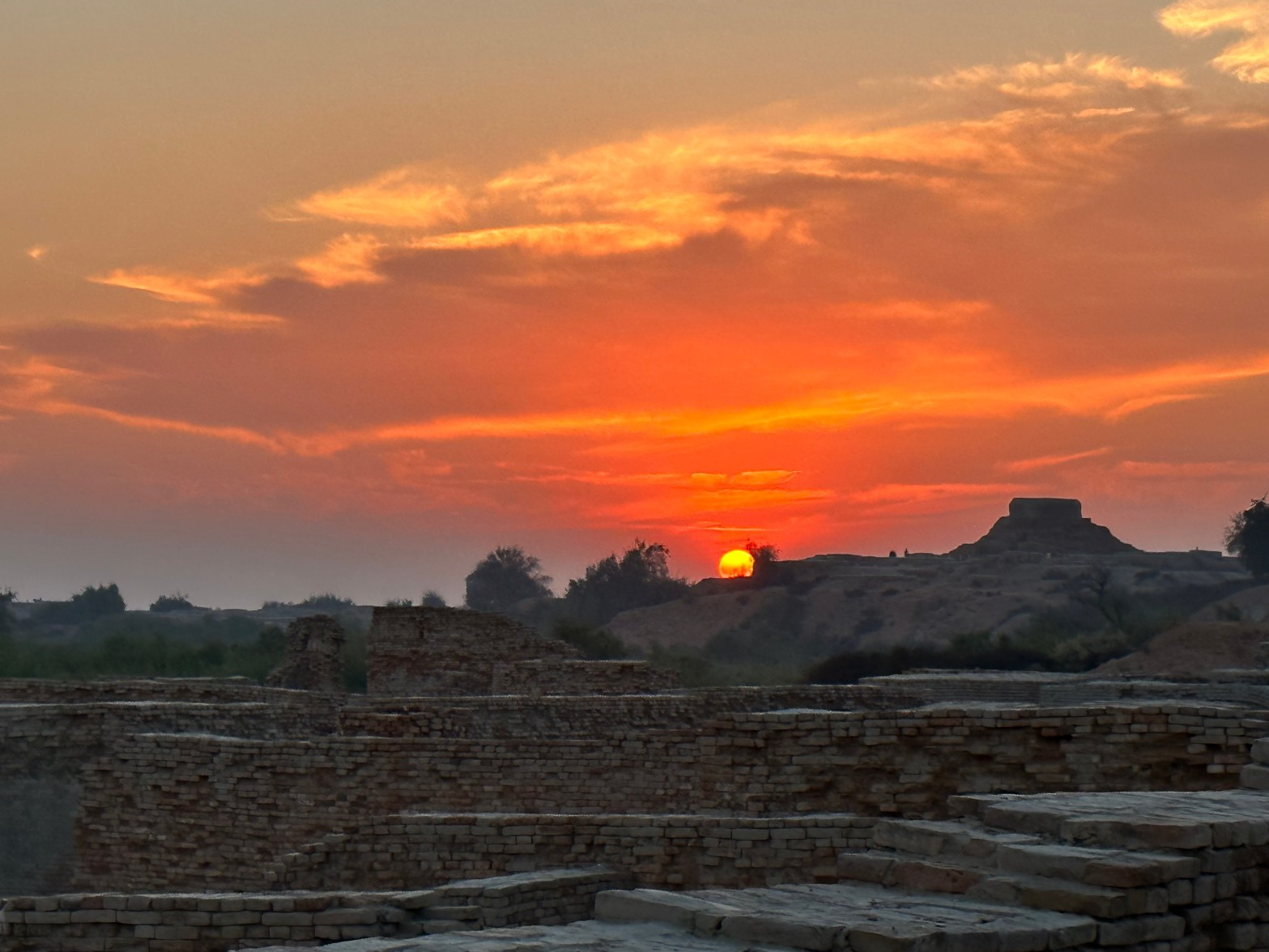
I spent much of my time this past January (2025) working in the curators office at the Museum in MohenjoDaro (Sindh, Pakistan), with one of the curatorial assistants, Munawar Hussain. We both spent hours and hours working our way through the documentation of accession cards from the original excavations at the ancient third millennium BCE city of MohenjoDaro. The focus of our documentation was on the excavations of one of the northern neighborhoods of the site, DK area (named after Rao Bahadur Kashinath Narayan Dikshit [1889 – 1944], Director General of the Archaeological Survey of India (ASI) from 1937 to 1944; he was also one of the first excavators of MohenjoDaro in 1924). As we took images of each card, we spent time talking through the artifacts, and remarked on the handwriting, or the drawings that accompanied some of the cards. As he replaced one card after another, Mr. Hussain mused about how maybe in another century, two people will be sitting right here, re-accessing the work that we were doing in that moment. As it happens often within archaeological practice, that statement immediately linked us both to the past and the future: the work done across generations and centuries linked through an engagement with material. In that one comment, he made us part of the history of the archaeological practice at the site.

This accession card project is part of a larger project entitled Care at MohenjoDaro, that the Laboratory for Integrated Archaeological Visualization and Heritage (LIAVH) has been engaged in for a few years now. Care at MohenjoDaro invites us to access knowledge sharing differently, while utilizing a decolonial, non-extractive, and generative approach within a framework that emphasizes care at the site of MohenjoDaro, Pakistan. Located in Sindh Province, in present-day Pakistan, the World Heritage Site of MohenjoDaro (27° 15’ N, 68° 05’ E) is regarded as one of the principal urban centres of the third millennium BCE South Asian landscape and has been instrumental in shaping our understanding of the Indus Civilisation. Extending over some 250 hectares, it was first documented in 1919, with large-scale excavations taking place from the 1920s through to the mid-1960s.
Our interlocution with the archaeological site, legacy data, site labor, and archival history, allows us to explore the notion of care across time and data sets. The materiality of care at MohenjoDaro can be identified through the repair and restoration in antiquity of household units through time, through the upkeep and maintenance of sanitation infrastructure, and through urban design decisions that are made with multiple stakeholders in mind, such as the location of wells and trash bins. Each of these aspects can be documented in detail utilizing remote sensing. An ethic of care allows us to approach the archive with a new lens. Revealing never-before-reported first-hand accounts of the conservation of MohenjoDaro through ethnographic conversations, this project tells a story broad and uncensored enough to bring equity and justice into the archive, into archaeological sensibilities, and into the world. Significantly, it rights some (colonial and caste-based) wrongs by witnessing, acknowledging and celebrating the care work that marginalized people have done as they cared for an ancient city (Rizvi and Burry 2025).
As artifacts are recovered from excavations, they pass through careful processes of cleaning and documentation. Central to this work are the registrars—those responsible for cataloguing, recording, and managing every artefact recovered from the site. Their tasks include describing each object in detail, assigning it a unique identifier, and maintaining precise records that ensure each item’s place within the broader archaeological archive. This meticulous and often unseen labour underpins all archaeological knowledge. It ensures that artefacts are properly organised, conserved, and made available for future research and interpretation. These are not the figures who usually appear in published accounts or scholarly narratives of discovery. Our research aims to honor these unsung contributors—whose sustained commitment has enabled generations of archaeological study at MohenjoDaro—by foregrounding their vital role in the preservation and continuation of our shared heritage.
As our lab processed each of the over 2000 cards documented in January 2025, we started seeing some patterns.[1] Utilizing the documentation of two LIAVH graduate student researchers, Sarah Burry and Sophia Trifoli, we began to collate particular cards that bore the signatures of individuals who were creating the accession cards. Within those specific cards, we were able to identify particular individuals who provided signatures on the cards they produced. Working with LIAVH Director of Geospatial Visualization, Sara Eicher, we developed a visual form that could honor each of the individuals, while simultaneously providing a histogram so a viewer could visually get a sense of how many cards each individual was responsible for, at least within the data set that we had been able to document.
Those familiar with the archaeology of South Asia will recognize all of the names on this list: C.R. Roy, H.L. Srivastava, Sadar Din, N.G. Majumdar, and K.N. Puri. Each of these individuals have contributed to foundational information and knowledge about the archaeology of this region, and went on to be well regarded internationally for their work. Being able to amplify the work of those who dedicated their academic careers to this region, and much of their early career to understanding the city of MohenjoDaro, is one of the many ways archival work on legacy data, provides us with the opportunity to recognize the labor of everyone involved within an archaeological project. We consider such work to be a small step towards redressing the colonial project that so completely considered only the work of British archaeologists, casting a long shadow on the work done by archaeologists and scholars who were colonized subjects.
Acknowledgements
This work is only possible through the support and cooperation of Syed Zulfikar Ali Shah, Minister of Culture, Tourism, Antiquities, Government of Sindh (Pakistan); Mr. Fetah Shaikh, Director General of Antiquities, Government of Sindh (Pakistan) and his offices; Dr. Kaleemullah Lashari, Chair of Technical Committee of MohenjoDaro; Dr. Asma Ibrahim; Dr. Yousuf Khushk, Vice Chancellor of Shah Abdul Latif University, and others who assisted in ensuring our research work was possible. Financial support for this project has been provided by Pratt Institute and the American Institute of Pakistan Studies. Additional support has been provided by our academic collaborators, Shah Abdul Latif University, Khairpur, Pakistan.
[1] To see other modalities of use, please see https://liavh-mlab.github.io/data-viz/vessels/ (last accessed 11/25/20250.
Additional Resources
Ameri, M. 2018. Letting the pictures speak: An image-based approach to the mythological and narrative imagery of the Harappan world. In M. Ameri, S. K. Costello, S. J. Scott and G. Jamison (eds), Seals and Sealing in the Ancient World: Case Studies from the Ancient Near East, Egypt, the Aegean and South Asia:144-166. Cambridge University Press, Cambridge.
Kenoyer, J. M. 2006. Cultures and societies of the Indus tradition. In R. Thapar (ed), India: Historical beginnings and the concept of the Aryan: 41–99. National Book Trust, New Delhi.
Kenoyer, J. M. 2012. Households and neighborhoods of the Indus tradition: An overview. In B. J. Parker and C. P. Foster (eds), New Perspectives on Household Archaeology: 373–406. Eisenbrauns, Winona Lake, IN.
Mackay, E. J. H. 1928-29. Excavations at Mohenjo-daro. Annual Report of the Archaeological Survey of India: 67-75.
Mackay, E. J. H. 1938. Further Excavations at Mohenjo-daro. Government of India, New Delhi.
Marshall, J. 1925-26. Excavations at Mohenjo-daro. Annual Report of the Archaeological Survey of India: 72-93. Marshall, J. 1931. Mohenjo-daro and the Indus Civilization. Arthur Prosbain, London.
Possehl, G. L. 2002. The Indus Civilization: A Contemporary Perspective. AltaMira Press, Walnut Creek, CA.
Rizvi, U.Z. 2011. Subjectivity and Spatiality in Indus Urban Forms: Mohenjo-Daro, the body, and the domestication of waste. The Archaeology of Politics: the Materiality of Political Practice and Action in the Past, edited by Peter G. Johansen and Andrew M. Bauer, pp. 221-244. Cambridge Scholars Press.
Wright, R. 2010. The Ancient Indus: Urbanism, Economy, and Society. Cambridge University Press, New York.
Online Resource: harappa.com
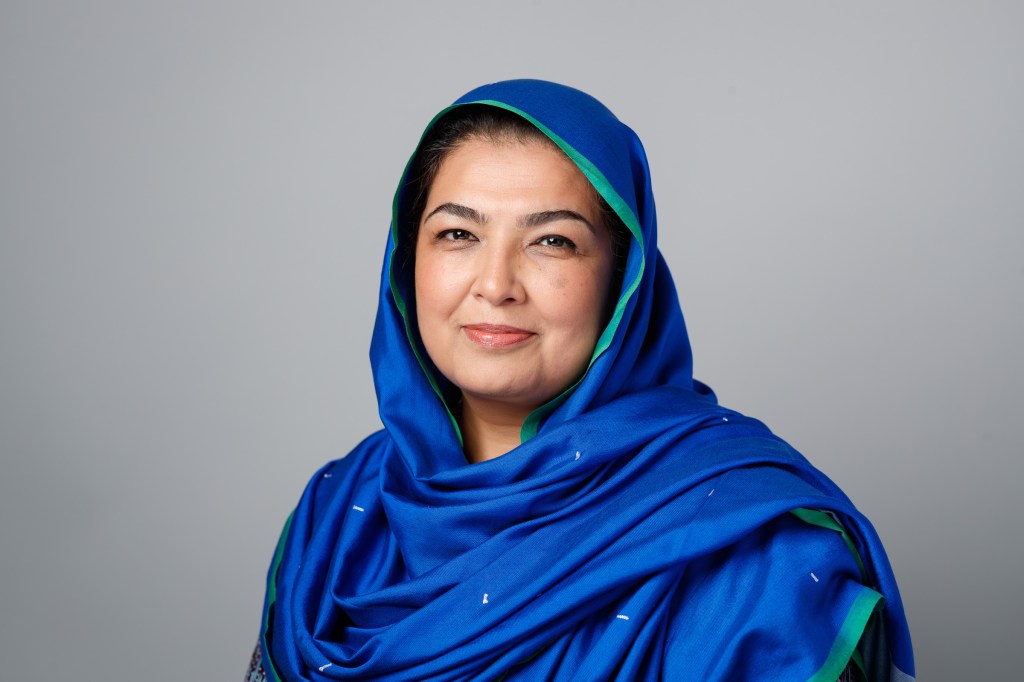
Uzma Z. Rizvi is Professor of Anthropology and Urban Studies at Pratt Institute, and a visiting scholar in the Department of Archaeology, Shah Abdul Latif University, Khairpur, Pakistan. Rizvi’s own work intentionally interweaves archaeology with cultural criticism, philosophy, critical theory, art, and design. With nearly two decades of work on decolonizing methodologies, intersectional and feminist strategies, and transdisciplinary approaches, her work has intentionally pushed disciplinary limits, and demanded ethical decolonial praxis at all levels of engagement, from teaching to research.
Rizvi is the Principal Investigator for the Laboratory for Integrated Archaeological Visualization and Heritage (LIAVH.org), an intentionally interdisciplinary, feminist, anticolonial, and antiracist space bringing together archaeological research with data management, visualization, and heritage practice. She is currently working with her team at the UNESCO World Heritage Site of MohenjoDaro, Pakistan.
Like our content? Consider donating to Peopling the Past. 100% of all proceeds support honoraria to pay the graduate students and contingent scholars who contribute to the project.
Make a monthly donation
Make a yearly donation
Choose an amount
Or enter a custom amount
Your contribution is appreciated. Please note that we cannot provide tax receipts, as we are not a registered charity.
Your contribution is appreciated. Please note that we cannot provide tax receipts, as we are not a registered charity.
Your contribution is appreciated. Please note that we cannot provide tax receipts, as we are not a registered charity.
DonateDonate monthlyDonate yearly Peopling the Past