One of Peopling the Past’s goals is to amplify the work of young and/or under-represented scholars and the amazing research that they are doing to add new perspectives to the fields of ancient history and archaeology (broadly construed). We will thus feature several blog posts throughout the year interviewing graduate students on their research topics, focusing on how they shed light on real people in the past.
Peopling the Past brings you our Halloween features on the human skeleton and the deeper stories we can learn about humans from their skeletal remains.
Please see here for Peopling the Past’s statement on the discussion and display of human remains.
I’m a PhD researcher from the University of Sheffield, UK, specialising in bioarchaeology – that is, the contextual study of human remains. This means that I study ancient bones for what they reveal about past lives and deaths. Scientifically speaking, skeletons can reveal huge amounts of information about aspects of life, like demography, disease, diet, activity patterns and trauma (to name but a few). In my research, I record and analyse this information, using both macroscopic and microscopic methods. Equally important to me are the non-scientific parts of ‘bioarchaeology’ – alongside the osteological analysis, I use archaeological and historical information, as well as broader social theories, to holistically explore my research questions.
What is ‘identity’ and how is it formed during life (and death)? And how does the information available from our bones – for example, whether we are skeletally ‘male’ or ‘female’, or whether we ate more meat than our peers, or whether we broke an arm or a leg as a child – relate to our lived experience of our identities, and ourselves? How can we investigate ancient identities using a bioarchaeological approach?
Firstly, context is key. My PhD dissertation focuses on a particular case study – the ancient Greek polis of Corinth, during the Geometric, Archaic and Classical periods, ca. 1050-330 BCE. Both archaeological and historical information is available for Corinth during these periods – the former from both the American School of Classical Studies’ long-running Corinth Excavations, the latter from a variety of ancient literary sources. Taken together, these paint a picture of a fast-growing city-state, which reached an apogee of commercial power and prosperity during the 7th century BCE. Its economic and political decline, from the mid-Archaic and throughout the Classical period (ca. mid-6th century to the end of the 4th century), was accompanied by upheavals that stretched across the Greek world as a whole – such as the Peloponnesian War and the Corinthian War (Salmon, 1984).
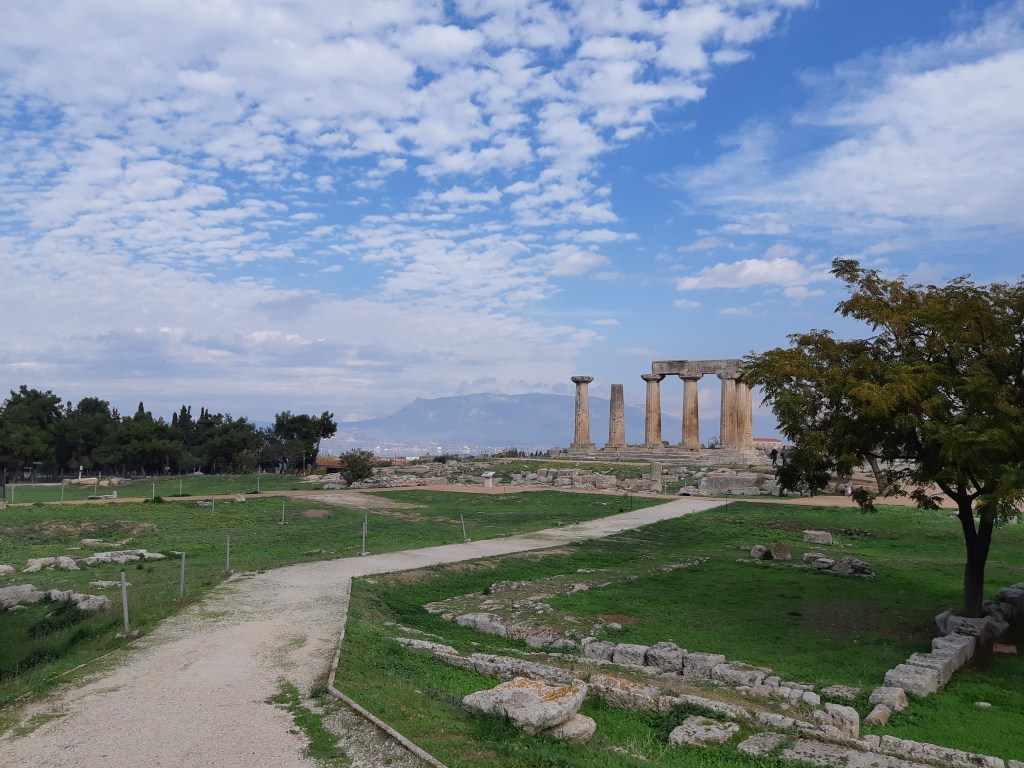
From the historical sources, we can get a sense of the overarching geopolitical context, such as the dynastic history of Corinth, or the city’s participation in the conflicts mentioned above. In contrast, the archaeological data – such as buildings, pottery and grave goods – allows us to approach what Richard Jenkins calls “ways-of-doing-things” and “what-goes-on-between-people”: organised symbolic action, as well as interactions and relationships between individuals (2000, p.10). Both of these ‘orders’ of identification played out within the political, economic and social space of ancient Corinth, which in turn was affected by wider developments.
The archaeo-historical data is also crucial because of its limitations. What does it not tell us about lived experiences of identity among the Corinthian people? What gaps does it leave that can be filled by skeletal analysis?
My skeletal sample consists of 153 individuals. These graves were excavated by the American School of Classical Studies over a period of approximately 100 years (1916-2003), from cemeteries in and around the ancient city, as well as by the Ephorate of Antiquities, whose salvage excavations in the 2000s and 2010s unearthed many hundreds of graves from extensive cemeteries outside the city wall, on Corinth’s ‘northern plain’ (Slane, 2017). I took a holistic, multiscale approach to the osteological analysis, looking macroscopically at age-at-death, skeletal sex, stature, physiological stress, oral pathologies, mechanical stress, trauma and biological distance. Microscopically speaking, I also conducted stable isotope analysis (carbon, nitrogen, oxygen) on a selected subsample of individuals in order to preliminarily investigate diet and mobility.
Apart from the multiscalar nature of the analysis, two other main principles guided my thinking. Firstly, that identity formation – or identification – is an experiential and fluid process emerging from the interaction of bodies with their (material, environmental, sociocultural) contexts. Skeletons can be conceptualised as a locus of this entanglement, where some of the emergent properties of identification can be detected. Secondly, the relationships of identification are always situated in time. After all, identity is not static: it shifts fluidly during life, in ways that are often related or responsive to social expectations. Here, the biocultural concept of the ‘life course’ was very useful. I gathered archaeo-historical information on what might have been expected or idealised at different stages of the life course in ancient Greece and compared this to my skeletal data, much of which could also be related to different ages and stages (e.g., childhood versus adulthood physiological stress).
The Case of the Corinth ‘Hero’
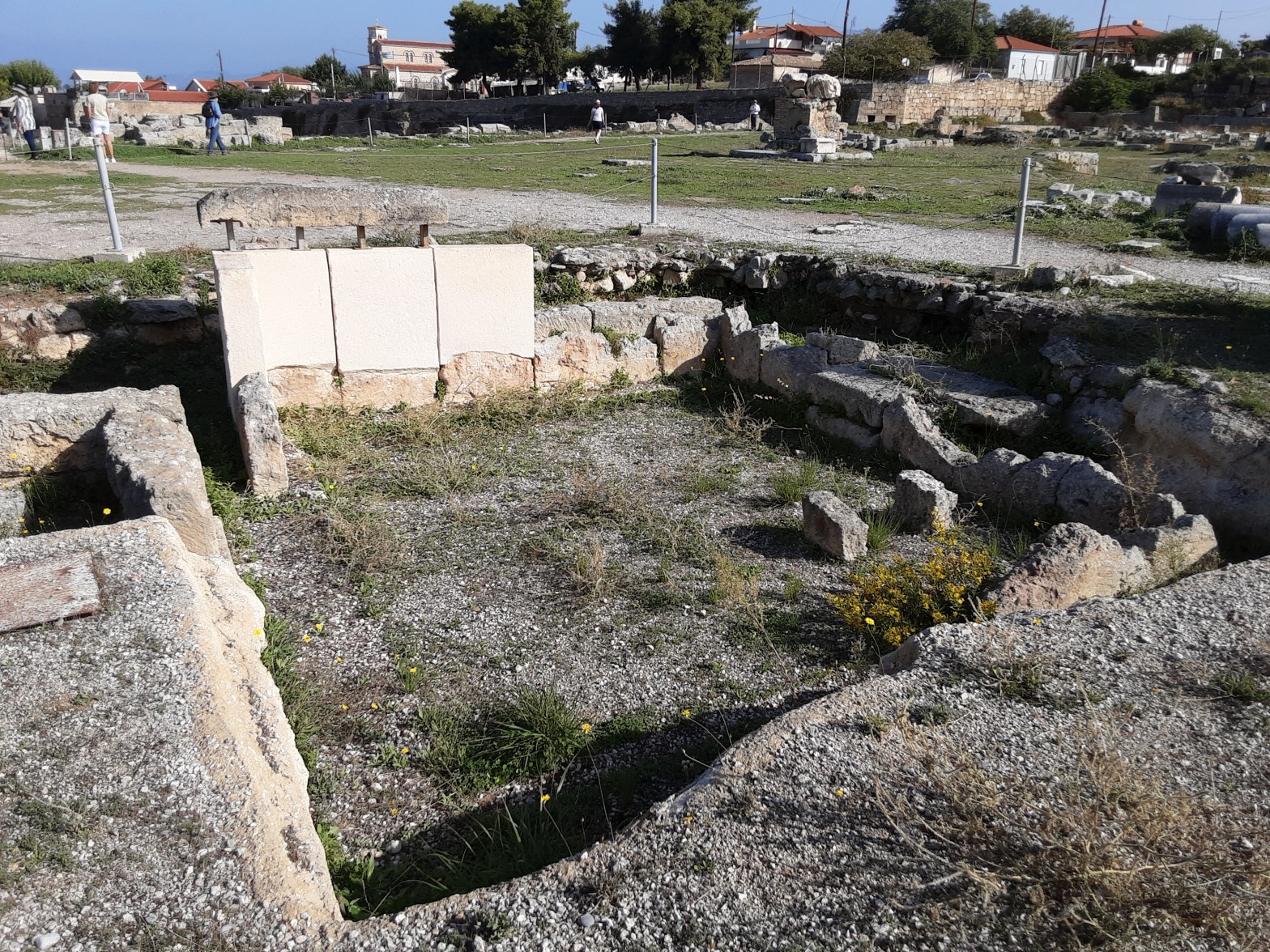
In keeping with the October theme, I will now focus on a specific example from my PhD research – one that made me think about the porous boundaries of the life course, and how ‘identity’ can continue to be made and remade after we are dead. This is Corinth’s ‘hero’ – or the individual who was revered as such within the Heroon of the Crossroads, a roadside hero shrine located in the central, public space of the city, next to a busy roadway.
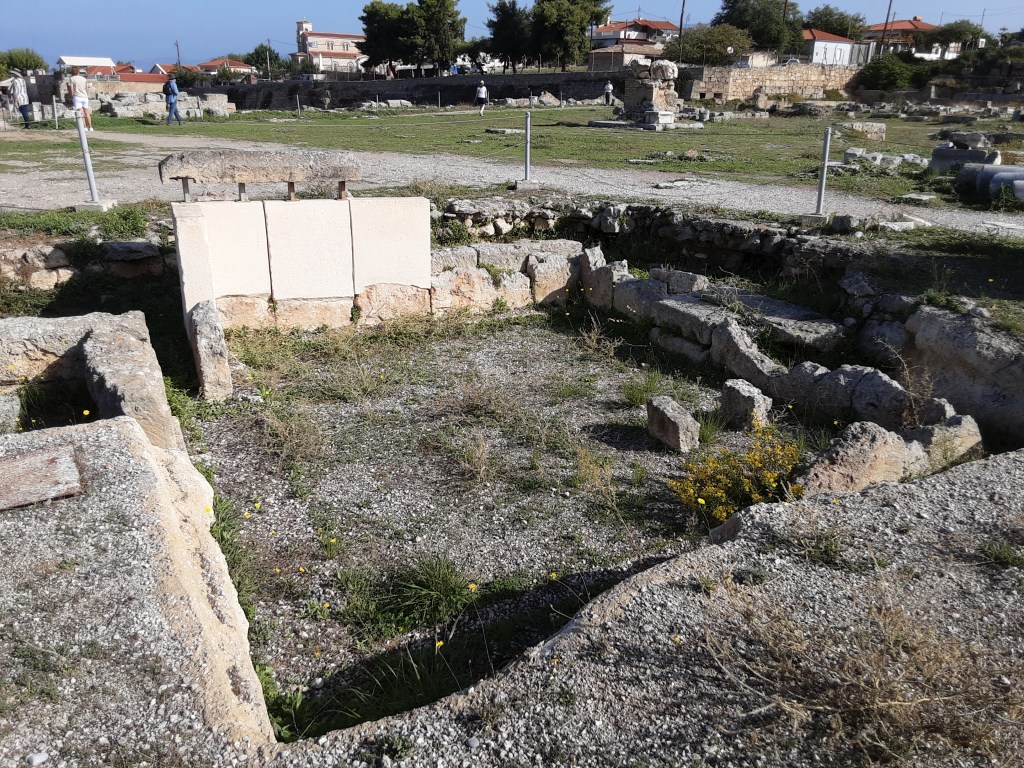
Graves were often the site of ancient Greek hero worship. However, this didn’t necessarily mean that the actual person buried in the grave was always known, or remembered (Antonaccio, 1994). Indeed, the ‘hero of the crossroads’ died sometime during the Protogeometric period (ca. 1050-875 BCE). He wasn’t buried alone, as the later configuration of the shrine might suggest; his grave was actually part of a small burial group, typical of early Corinth. These have been interpreted as family plots (Roebuck, 1972, p.103).
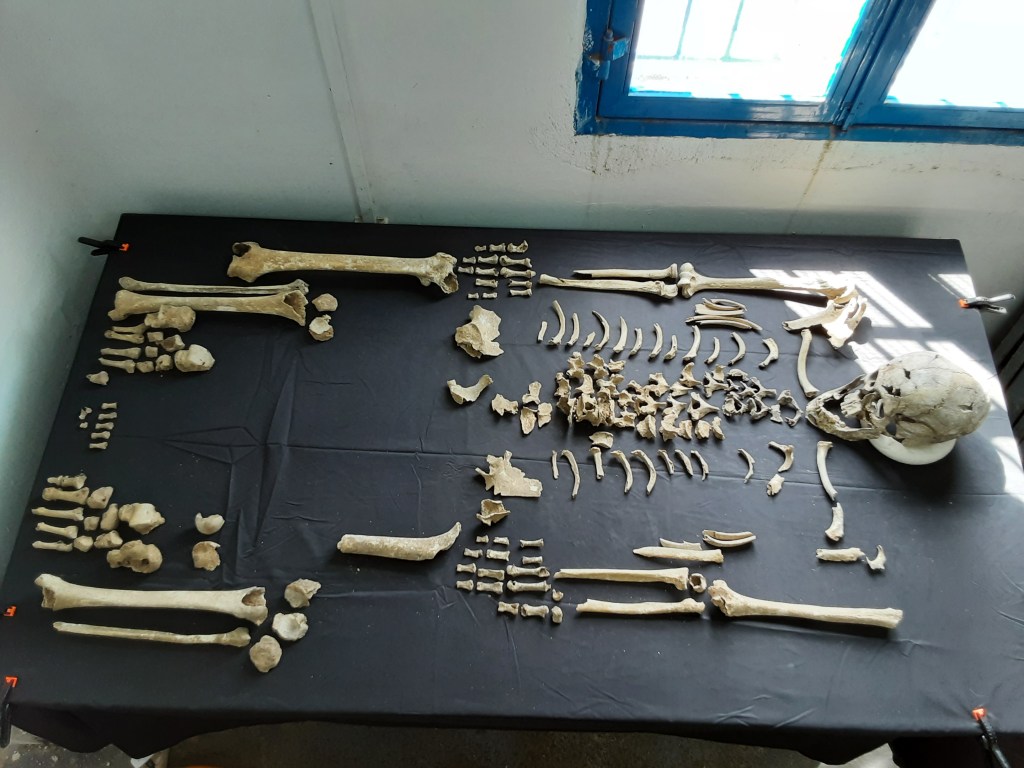
From the skeletal analysis – mine and the earlier work of J. Lawrence Angel, who analysed this individual in the 1970s (Williams et al., 1973) – we know that the ‘hero’ was skeletally male and middle aged. He had suffered childhood physiological stress which may have been caused by periods of illness or nutritional deficiency. His dental health was extremely poor, including severely worn teeth, multiple carious lesions (cavities), calculus (mineralised plaque), and several teeth lost antemortem. Widespread degenerative joint disease and marked musculoskeletal changes hint at an active and arduous lifestyle. Lastly, the ‘hero’ had rib fractures and two fractures to his right hand: a Bennett’s fracture of the first metacarpal and a head-neck fracture of the second metacarpal. These kinds of metacarpal fractures are linked to interpersonal violence, such as bare-knuckle boxing (Brickley and Smith, 2006; Lorentz and Casa, 2020).

During the Early Corinthian period (ca. 620-590 BCE), this individual’s grave, 72-4, was discovered during roadworks, looted, and reclosed. Worship started from then on. Initially, this may have been simply apotropaic – to placate the unquiet, unknown dead, at that point 200 years in a forgotten grave. But, around a generation later, a temenos (sacred enclosure) wall was built around grave 72-4. During construction, the other graves in the plot were discovered, ignored (in one case trampled!) and covered back over. Hero worship then began in earnest, continuing to the end of the Classical period (Williams et al., 1973; Williams, McIntosh and Fisher, 1974). The dead man in effect, became the dead hero: an invented symbol which could be used by Corinthian elites to shore up their power (the construction of the temenos wall occurred around a period of dynastic rupture, mentioned by historical sources), or as a semi-divine figure who could be offered prayers and sacrifices during the uncertainty of the Classical period’s multiple regional and supra-regional conflicts (Buisine, 2023).
This individual’s identity in life – expressed through the accumulation of skeletal traits and markers – and his identity in death – buried alongside his kin group, presumably mourned and commemorated by them – were lost within an ‘afterlife’ constructed in service of broader goals. After we die, we become not ghosts, but memories. Occasionally, some of us get to become ideas.
References
Antonaccio, C. M. (1994) ‘Contesting the Past: Hero Cult, Tomb Cult, and Epic in Early Greece’, American journal of archaeology, 98(3), pp. 389–410. doi: 10.2307/506436.
Brickley, M. and Smith, M. (2006). ‘Culturally Determined Patterns of Violence: Biological Anthropological Investigations at a Historic Urban Cemetery.’ American Anthropologist. 108(1), pp.163-177.
Buisine, D. (2023) ‘Le culte des héros à Corinthe, l’exemple de l’héroon du carrefour’, Etudes sur la mort, 159(1), pp. 223–240. doi: 10.3917/eslm.159.0223.
Lorentz, K.O. and Casa, B. (2020). ‘First metacarpal fractures from Chalcolithic Cyprus: A fall or a fist?’ International Journal of Osteoarchaeology. 30(5), pp.712-735.
Roebuck, C. (1972) ‘Some Aspects of Urbanization in Corinth’, Hesperia, 41(1), pp. 96–127. doi: 10.2307/147478.
Salmon, J.B. (1984). Wealthy Corinth. Clarendon Press: Oxford.
Slane, K.W. (2017) Tombs, Burials and Commemoration in Corinth’s Northern Plain. Corinth XXI. American School of Classical Studies at Athens.
Williams, C. K. et al. (1973) ‘Corinth, 1972: The Forum Area’, Hesperia, 42(1), pp. 1–44. doi: 10.2307/147469.
Williams, C. K., MacIntosh, J. and Fisher, J. E. (1974) ‘Excavation at Corinth, 1973’, Hesperia, 43(1), pp. 1–76. doi: 10.2307/147375.
Further Reading
Attala, L. and Steel, L. (eds.) (2019) Body Matters: Exploring the Materiality of the Human Body. University of Wales Press: Cardiff.
Craig-Atkins, L. and Harvey, K. (eds.) (2024) The Material Body: Embodiment, history and archaeology in industrialising England, 1700-1850. Manchester University Press: Manchester.
Gowland, R. and Thompson, T.J.U. (2013) Human Identity & Identification. Cambridge University Press: Cambridge.
Harris, O.J.T., Hughes, J., Osborne, R., Robb, J. and Stoddart, S. (2013). ‘The body and politics.’ In Robb, J. and Harris, O. (eds.) The Body in History: Europe from the Palaeolithic to the future. Cambridge University Press: Cambridge. pp.98-128.
Pierce, E., Russell, A., Maldonado, A., and Campbell, L. (eds.) Creating Material Worlds: The uses of identity in archaeology. Oxbow Books: Oxford & Philadelphia.
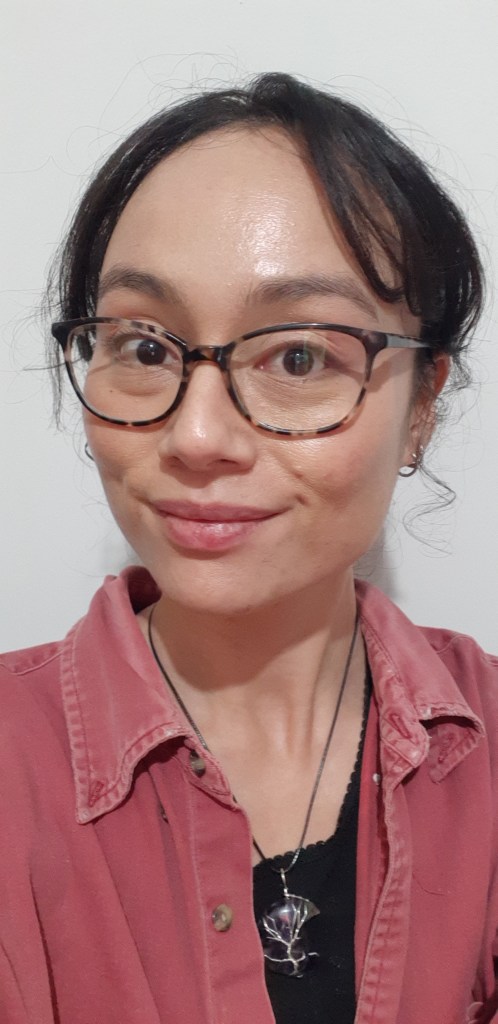
Hannah Lee is a third-year doctoral candidate at the University of Sheffield. Prior to that, she completed a BA (Hons.) in Archaeology and Anthropology at the University of Cambridge, and a MSc in Human Osteology and Funerary Archaeology at the University of Sheffield. She has excavated at sites in Greece and England.
 Peopling the Past
One thought on “Blog Post #99: (After)Lives: A Bioarchaeological Approach to Identification at Corinth with Hannah Lee”