This post is part of a featured blog series on cultural heritage and the legacies of colonialism in the fields of ancient Mediterranean, West Asian, and North African history and archaeology, which is the topic of the fourth season of the Peopling the Past podcast.
“I saw the programme and I could not really imagine […] how it would work. […] I thought it would be like a series of lectures. But it was not like that. It was all very engaging and more free style.” Margarita, Cyprus.
“We walked, we cleaned the path, we explored: it was not a very constructed participation, but it was very natural and spontaneous” Giorgio, Italy.
Archaeology is not just about the past. Archaeology is a discipline that lives in the present: it connects people, stimulates curiosity, sparks conversation and brings benefits to everyone involved. Ultimately, it can help people to be happy and feel better, supporting our physical and mental health. When I started brainstorming about the next step after my PhD, the idea was to extend my research on how to evaluate public participation in community archaeology projects by involving new groups and using different ways of evaluating participation. Inspired by ground-breaking projects already underway at the time, such as Operation Nightingale, Waterloo Uncovered and Human Henge, I thought about involving vulnerable groups and evaluating the impact on wellbeing.
The connection with vulnerable groups was already there. My father was a psychiatrist and as a child I had the opportunity to take part in some of the cultural and sporting activities he organised in the mental health unit where he worked. I also took part in activities with the Alzheimer’s community organised at the National Archaeological Museum of the Marche shortly after my Master’s degree, and I also led a guided tour of the same museum with people living with mental health problems. A series of conversations with my father, who is retired and has a lot of time on his hands, helped me to identify possible approaches and key opportunities that archaeology could offer. One of the problems my father had experienced over the years was the tendency to run programmes specifically for patients, preventing them from socialising with other people and integrating into a different group.
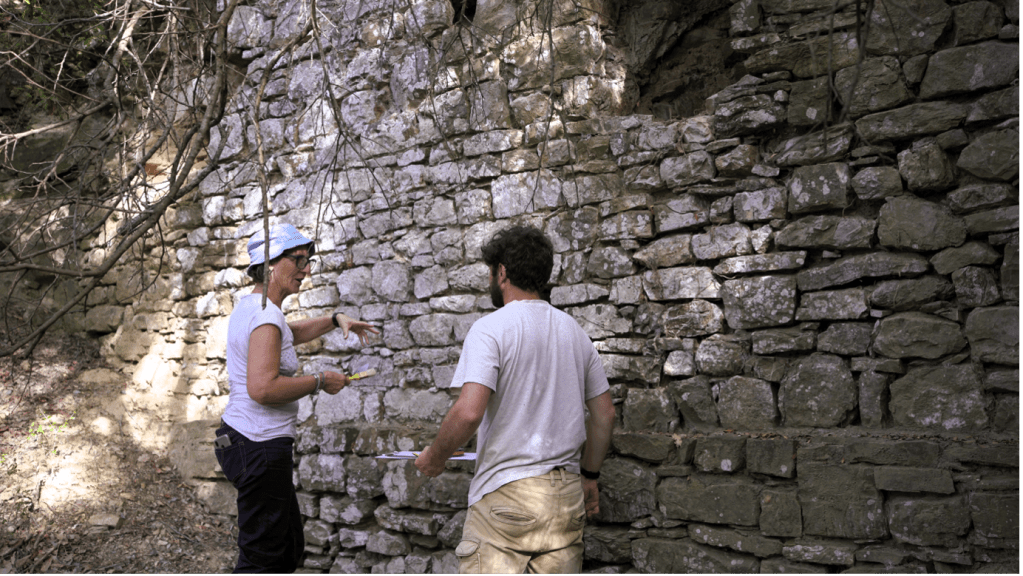
This was one of the core concepts of the proposal for the Linking community archaeology and wellbeing in the Mediterranean (LOGGIA) project. Funded by the European Union as a Marie Skłodowska-Curie Postdoctoral Fellowship and based in the Department of Classics at Trinity College Dublin, LOGGIA explored how active participation in archaeology can contribute to community wellbeing. Through 6-8 session programmes based on the historic landscape, vulnerable groups have worked together with archaeologists, residents, local associations and other stakeholders towards a common goal. Evaluations tend to focus on individual wellbeing, but LOGGIA has measured community elements such as trust and belonging. As most of the projects were based in Northern Europe, LOGGIA focused on the Mediterranean, with two case studies of Vignale in Tuscany (Italy) and the Xeros Valley in the Larnaca region (Cyprus). ArcheologicaMente brought together archaeologists working on the Roman site of Vignale, citizens of the small village of Riotorto, local associations, users and health professionals from the Mental Health Unit of the nearby town of Piombino. The aim of the programme, which was co-designed with all the groups involved, was to make the remains of the medieval castle of Vignale visible and to restore the network of footpaths, which were in need of maintenance following the neglect caused by the Covidi pandemic. In a series of eight meetings, combining indoor and outdoor sessions (September-October 2023), the participants of the ArcheologicaMente programme managed to make the castle accessible by footpath. The participants designed and installed three panels with information about the path, the castle and the historic landscape. They wrote most of the texts in groups during our meetings, drew the sketches of the castle included in the panels and painted the signs necessary to indicate the route to walkers. The final event of the programme was a walk to the castle accompanied by a reconstruction of a local folklore story about the castle’s demise. With around 40 people taking part in the walk and 150 attending the dinner, it was a fantastic end to ArcheologicaMente.
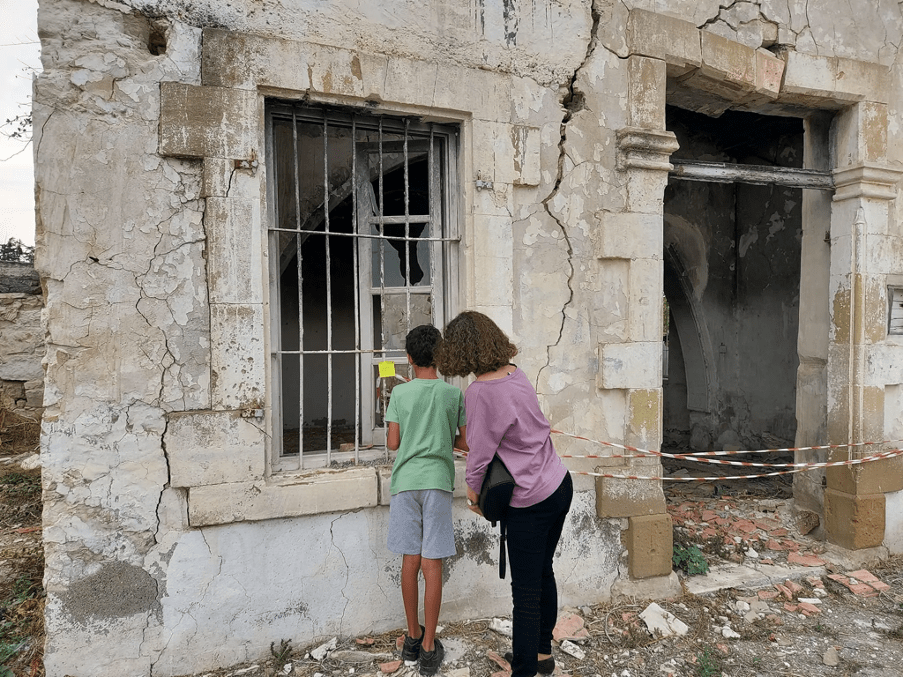
With the support of the Archaeological Research Unit of the University of Cyprus and the Cyprus Institute of Neurology and Genetics, ΑρχαιοΛογικά (“ArchaioLogika”) comprised a six-session programme (October-December 2023) of tailor-made indoor and outdoor activities based on the landscape of the Xeros Valley. By looking at heritage sites and exploring them through creative activities, including writing and photography, the project encouraged discussions on abandonment, a topic of particular relevance to our target groups: the local communities, individuals from other areas of Cyprus and the Huntington’s disease (HD) community (users, families and carers). HD is a rare, inherited disease that causes the progressive breakdown of nerve cells in the brain and usually results in movement, cognitive and psychiatric disorders. Abandonment is central to any conversation about archaeology, but is also an inescapable aspect of neurological conditions such as HD, where human abandonment is felt by both people living with the disease and their families. Participants captured their perceptions of abandonment with their cameras, using the heritage sites of the Xeros Valley as the subject of their images, and organised an exhibition of selected photographs as the final event of the programme.
Quantitative evaluations show an increase in wellbeing for participants in both programmes, although the increase is less evident for members of vulnerable groups. Components of community wellbeing such as supportive relationships, trust and belonging increased over the course of the programmes and are supported by the qualitative analyses, which show the importance of socialisation, connection with the historic landscape and its past inhabitants, appreciation of active participation approaches and the opportunity to have a say in the decision-making process.
Both programmes worked very well and in the end the interaction between the different groups involved was a success. Each group had its own habits, needs and interests, but after each session the boundaries between the groups faded and in the end there was one big team working towards the same goal. The idea that programmes like this should not only target specific groups, and especially not only vulnerable groups, proved to be correct. By triggering inclusivity and increasing social support, sense of place and belonging, archaeology acted as a service, providing the common ground that made the programmes enjoyable and ultimately beneficial to participants’ wellbeing. More resources are needed to run programmes for longer and to have a more pronounced impact on vulnerable groups, while a larger infrastructure is needed to involve more participants from vulnerable groups.
Chapters and papers from the LOGGIA project will be published soon, as well as a documentary on the two programmes, which we plan to screen at archaeology and heritage festivals. However, the most convincing result of the project is that in Italy, the Mental Health Unit of Piombino and the associations of Riotorto continue to work together on small projects focusing on the historic landscape of the area, giving continuity to the work done during the programme. There is no better way to show that they enjoyed the time spent together.
About LOGGIA
Website: www.loggia-project.eu
Facebook: https://www.facebook.com/loggiaproject
Instagram: http://www.instagram.com/loggiaproject
The website of the archaeological research in the Xeros Valley: https://www.unsala.com/
The website of the archaeological research in Italy: www.uominiecoseavignale.it
Ripanti, F., Papantoniou, G., Vionis, A., & Lanitis, A. 2025. Lasting Impressions: Archaeology and Community Engagement in the Xeros River Valley (Cyprus). In C. A. M. Gardner & S. C. Higgins (eds) Ancient Pasts for Modern Audiences: Public Scholarship and the Mediterranean World, Abingdon-New York: Routledge.
Additional Resources
Darvill, T., Barrass, K., Drysdale, L., Heaslip, V., & Staelens, Y. eds. 2019. Historic Landscapes and Mental Well-being. Oxford: Archaeopress.
Dobat, Andres S., Wood, S.O., Jensen, B.S., Schmidt, S., & Dobat, Armin S. 2020. “I now look forward to the future, by finding things from our past…”Exploring the potential of metal detector archaeology as a source of well-being and happiness for British Armed Forces veterans with mental health impairments. International Journal of Heritage Studies 26(4): p.370–386.
Everill, P., & Burnell, K. eds. 2022. Archaeology, Heritage, and Wellbeing: Authentic, Powerful, and Therapeutic Engagement with the Past. Abingdon-New York: Routledge.
Sayer, F. 2024. Heritage and Wellbeing: The Impact of Heritage Places on Visitors’ Wellbeing. Oxford: Oxford University Press.
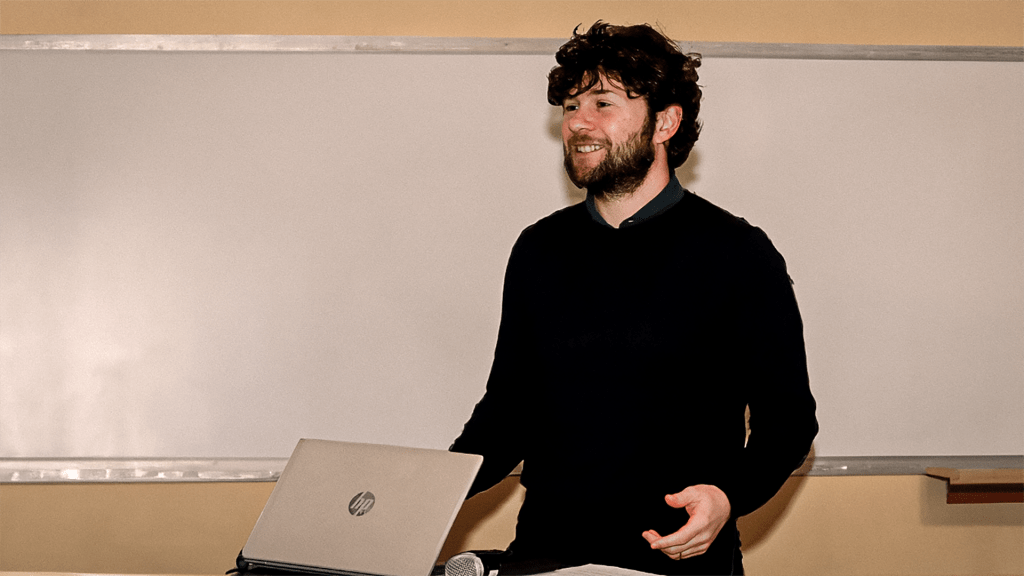
Francesco Ripanti is Assistant Professor in Heritage and History at the University of Birmingham (School of History and Cultures). Previously, he has been a Marie Skłodowska-Curie Postdoctoral Fellow at Trinity College Dublin, doing research on archaeology and wellbeing through the LOGGIA project.
His research covers several themes related to public and digital archaeology, heritage and museum studies. His PhD in public archaeology (University of Pisa, 2019) proposes an operational workflow for evaluating public participation in excavation-based projects, applying it in three Italian case studies. Additionally, he has contributed to various archaeological and heritage projects in Italy, Greece and Cyprus.
Like our content? Consider donating to Peopling the Past. 100% of all proceeds support honoraria to pay the graduate students and contingent scholars who contribute to the project.
Make a monthly donation
Make a yearly donation
Choose an amount
Or enter a custom amount
Your contribution is appreciated. Please note that we cannot provide tax receipts, as we are not a registered charity.
Your contribution is appreciated. Please note that we cannot provide tax receipts, as we are not a registered charity.
Your contribution is appreciated. Please note that we cannot provide tax receipts, as we are not a registered charity.
DonateDonate monthlyDonate yearly Peopling the Past
Hello! This was such an insightful and important read. Breaking barriers to participation in archaeology is crucial for inclusivity and well-being, and it’s inspiring to see efforts being made in the Mediterranean. Thank you for shedding light on this meaningful topic!
LikeLike