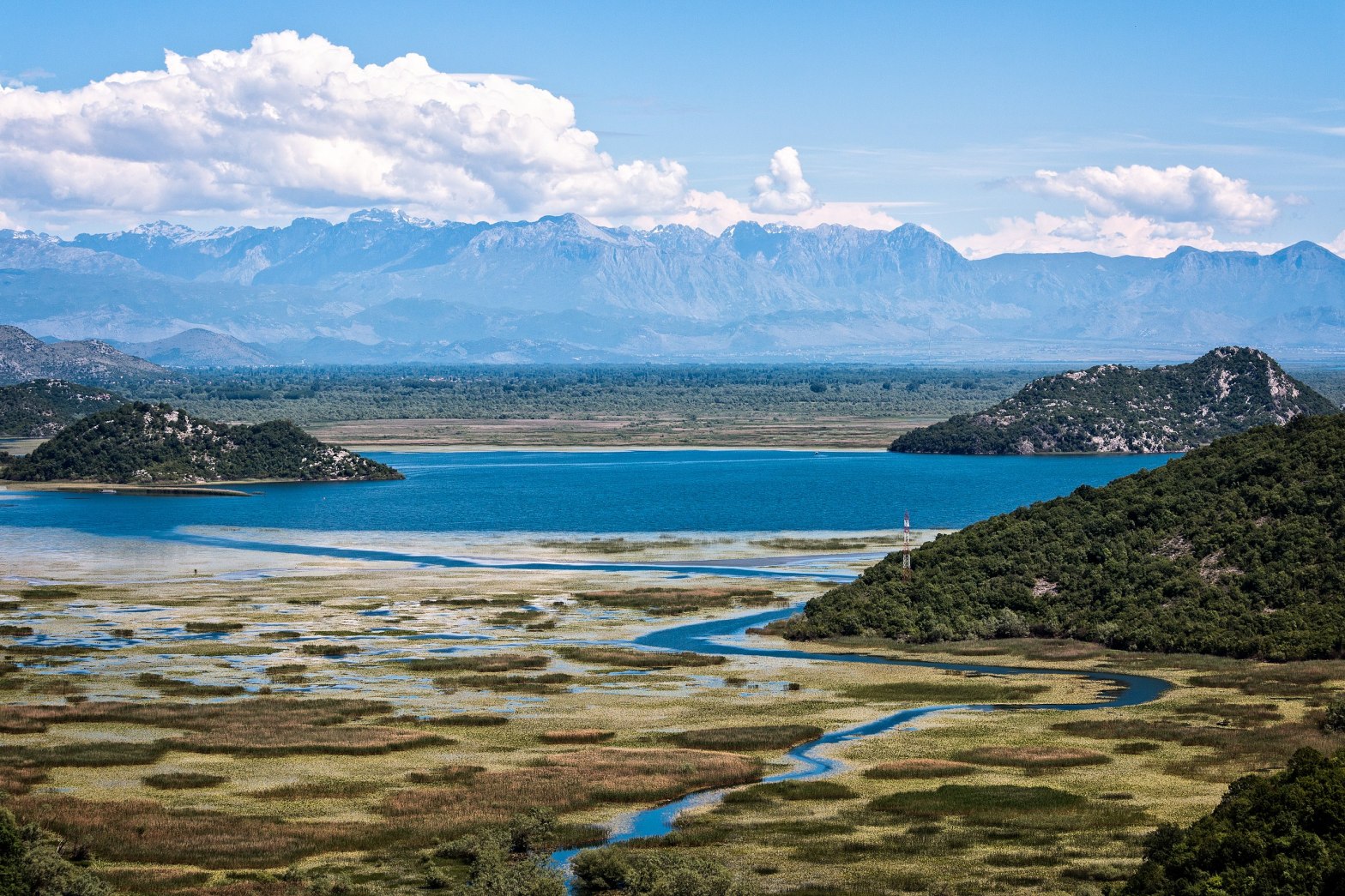
National Park Skadarsko Jezero (photo by Martin de Lusenet)
Peopling the Past brings you an ongoing blog series, “Unknown Peoples”, featuring researchers who investigate understudied and/or marginalized peoples in the past.
Who were the ‘Illyrians’?
The ‘Illyrians’ were indigenous Iron Age populations inhabiting the eastern Adriatic and its surroundings, encompassing present-day Croatia, Bosnia-Herzegovina, Montenegro, Albania, Kosovo, parts of Serbia, and Northern Macedonia. The terms ‘Illyrians,’ ‘Illyria’, and ‘Illyricum’ were fluid in Graeco-Roman sources, reflecting literary perceptions rather than a shared identity or defined territory. This fluidity persisted into later periods, especially when ‘Illyrians’ were perceived as ‘ancestors’ in early modern and modern era, most notably in Albanian national discourse.
Archaeological evidence reveals constantly evolving ethno-political diversity among the Iron Age ‘Illyrians’. Before approximately 400 BC, they exhibited limited social complexity, with only a few groups and regions benefiting from exchange with the Aegean area and with Amber roads stretching from the Baltic Sea. The most influential in this early period were the communities living on the Glasinac plateaux east of modern Sarajevo, who were probably called Autariatae by the Greeks. After 400 BC, Greek colonization of Central Adriatic islands and the spread of the La Tène culture in central Europe led to increased social complexification, resulting in the emergence of new, more sophisticated political institutions among groups like the Delmatae, Iapodes, Liburni, Daorsi, Pirustae, Ardiaei, Labeatae, Dardanians, etc. In the Dinaric mountains of modern-day Bosnia and Herzegovina and the southern Pannonian plains, the sources mention wider groups of the Pannonians, akin to ‘Illyrians’ with the most significant political groups being the Desitiates, Mezaei, Breuci, Segestani, etc.

Little is known about the languages spoken by these communities, except for few words and personal names. The ‘Illyrians’ from the eastern Adriatic were renowned for shipbuilding and maritime prowess, with ships like the liburnian, later adopted by the Roman imperial navy, originating by the Liburni from northeastern Adriatic. The other type of ship was the Illyrian lemb, a sub-type of the Aegean lemb, a small and fast ship used in southern Adriatic for trade, piracy, and transport of troops. Very little is known about their spiritual life, except that a cult of the snake held special place amongst southern Adriatic groups. This is probably preserved in the Greek myth of the Theban hero Cadmus and his wife Harmonia, who went to Illyria when they grew old and there turned into snakes. Worship was likely performed in caves or open spaces, and the only building which could be interpreted as a small temple was discovered in the village Gorica close to the township of Imotski. There were no cities, with wide-spread network of hillforts which served various purposes, including refuges, markers of communal identity, and sacred sites. Proto-urban settlements began to appear on some hillforts in Liburnia and southern Adriatic from the 5th-4th centuries BC. In the last centuries BC, cultural influences from the Mediterranean world increased on the eastern Adriatic coast, while the La Tène (Celtic) culture was prevalent north of the Sava River. Warrior ethos seems also to be important in most of these groups with defensive weapons such as Illyrian type of helmets (variant of the Greek hoplite helmet) used as a status symbol amongst the elite. Geographer Strabo records a habit of tattooing amongst the ‘Illyrians’, which is still not confirmed by archaeology.
The Illyrians in History
The history of the ‘Illyrians’ is mainly derived from Greek and Roman writers since these groups lacked their own written records. Greek and Roman accounts often depicted them as uncivilized ‘barbarians’ and focused on their conflicts with Greeks, Macedonians, and Romans. Notable sources include geographer Strabo of Amasia, historians Appian of Alexandria, and Cassius Dio. The most significant political entity described by the sources was the Illyrian kingdom, which stretched over parts of modern-day northern Albania, Montenegro, and Croatia between the 4th and 2nd centuries BC. This kingdom was a confederation of indigenous groups with a shifting power centre, which was in the 3rd and 2nd century BC located in the Boka Kotorska gulf (the Ardiaei) and around the Lake of Shkoder (the Labeatae). This is the only area in the eastern Adriatic and its hinterland where some local communities minted their own coinage, often depicting distinctive images of ships, believed to be Illyrian lembs.

In the 3rd and 2nd centuries BC, the Illyrian kingdom faced competition from the Roman Republic and the Antigonid Macedonian kingdom. Roman intervention in 229 BC, caused by ‘Illyrian’ pirate activities and obstruction of Adriatic trade, led to conflicts with king Agron and his wife – queen Teuta. Subsequent conflicts resulted in the defeat of the last king, Genthius, in 168 BC, leading to the division of the kingdom into semi-independent tribute-paying regions. During the 2nd and 1st centuries BC, occasional Roman conflicts with other groups like the Delmatae, Iapodes, and Segestani resulted in the imposition of tribute rather than permanent conquest.
The establishment of Roman trading settlements in the coastal areas led to decision of the Roman Senate to establish provincia (zone where Roman magistrate has power to act) Illyricum and entrust it to Gaius Julius Caesar in 59 BC. Caesar’s nephew Octavian, future emperor Augustus, was fighting his Illyrian wars between 35 and 33 BC, defeating a number of indigenous groups and political alliances – most notably Iapodes, Delmatae and Segestani. Octavian’s victories led to the establishment of the province of Illyricum between 32 and 27 BC, later extended northward towards the Sava and Danube. The Batonian War (AD 6-9), led by Bato of the Daesitiates and Bato of the Breuci, was the last major Roman conflict with indigenous populations, ultimately suppressed by future emperor Tiberius. Subsequently, the province of Illyricum was divided into Dalmatia in the south and Pannonia in the north.
The inclusion of ‘Illyrians’ in Roman imperial networks resulted in a change of identity amongst indigenous populations in a course of several generations. Roman imperial culture was selectively accepted, and a degree of acceptance varied amongst different groups, depending on their positive or negative experience of Roman imperialism. By the beginning of Late Antiquity in the 4th century AD, indigenous ‘Illyrian’ Iron Age identities largely gave way to shared Roman and provincial identities of their descendants.

Additional Resources
Boršić, Luka, Džino, Danijel, Radić Rossi, Irena, (2021). Liburnians and Illyrian Lembs: Iron Age Ships of the Eastern Adriatic. Oxford: Archaeopress.
Dzino, Danijel, (2010). Illyricum in the Roman politics 229BC – AD 68. Cambridge: Cambridge University Press.
Šašel Kos, Marjeta, (2005). Appian and Illyricum. Ljubljana: National Museum of Slovenia.
Wilkes, John, J. (1992). The Illyrians. Oxford/Cambridge: Blackwell.

Danijel Džino is Senior Lecturer in the Department of History and Archaeology, Macquarie University in Sydney. He is historian and archaeologist of Balkan prehistory, Antiquity and Middle Ages, author and co-author of numerous publications and books, including Hum and Bosnia in early Middle Ages 450-1200. Beyond myths (Routledge, 2023); From Justinian to Branimir. Making of the Middle Ages in Dalmatia (Routledge, 2020); (with L. Boršić and I. Radić Rossi) Liburnians and Illyrian Lembs: Iron Age Ships of the Eastern Adriatic (Archaeopress, 2021); Illyricum in the Roman politics 229BC–AD 68 (Cambridge University Press, 2010); Becoming Slav, Becoming Croat: Identity transformations in post-Roman and early medieval Dalmatia (Brill, 2010).
 Peopling the Past
2 thoughts on “Blog #90: The Illyrians with Danijel Džino”