This post is part of a featured blog series on cultural heritage and the legacies of colonialism in the fields of ancient Mediterranean, West Asian, and North African history and archaeology, which is the topic of the fourth season of the Peopling the Past podcast.
First, what is the Foundation for Ethical Stewardship of Cultural Heritage (FESCH) and the Mediterranean Antiquities Provenance Research Alliance (MAPRA)?
The Foundation for Ethical Stewardship of Cultural Heritage (FESCH) is a 501(c)3 nonprofit dedicated to the preservation of cultural heritage, broadly defined. FESCH was established in 2022, so we are still relatively new. Our inaugural program, The Mediterranean Antiquities Provenance Research Alliance (MAPRA), specifically addresses the problem of undocumented antiquities in academic collections. MAPRA is a collective endeavor, with an Advisory Council of seventeen experts in both the material culture of the ancient Mediterranean and provenance research. The project is generously funded by a Tier II Research and Development Grant from the National Endowment for the Humanities, Division of Preservation and Access.
What experiences in your own career pushed you to establish this foundation and its inaugural project, MAPRA?
I have taught courses on archaeological ethics and the antiquities market for the past two decades, but my specific interest in provenance research stems from my work on ancient Greek bronze mirrors, the vast majority of which have no known archaeological context. In tracing the modern histories of these ancient objects, I realized the tremendous need for training and resources specific to provenance research on Mediterranean antiquities, which led to the creation of MAPRA.
Since one of the major goals of MAPRA is to train students in provenance research, can you walk us through what this training module looks like? What skills and steps do students learn in this process?
We are still developing the MAPRA protocol for provenance research, with the guidance of our museum colleagues. The protocol is designed to guide students through the process of analyzing the objects themselves in conjunction with any accompanying documentation (catalog records, object files, and the like) to reconstruct the modern histories of these objects. Students learn to approach the material and documentary evidence with a critical eye, and to investigate possible new sources of information. The process is often slow, with many dead-ends, but it can also lead to important discoveries. We will be testing the protocol in academic year 2025-20206 with students at the University of California, Berkeley; the University of Cincinnati; Miami University; and the University of Oklahoma.
Can you tell us more about the shared, open-access database of objects you are creating? What are the processes of consolidating all of these objects under one umbrella and how do you envision researchers using this database in the future?
While most major museums make their collections accessible online, academic collections are more difficult to access. Antiquities might be housed in campus museums or galleries, or they might be in special collections or archives, or even in departments of Classics or anthropology, for example. These latter collections are often uncatalogued and unknown outside of the department. While the MAPRA protocol will provide a tool for institutions to catalogue and conduct provenance research on individual objects, the MAPRA database will bring together all these collections, allowing researchers to analyze objects and collections across institutions. We know, for example, that some early academic collections were acquired from the same sources, so information about one collection can be useful for understanding collections at other institutions. Taken together, the MAPRA protocol and the MAPRA database will make previously unknown – and often moribund – collections useful in a new way.
What conversations do you envision FESCH and MAPRA opening up between descent communities, other stakeholders, museums, universities, as well as individual scholars and students?
The purpose of the MAPRA database is to make objects known, including to so-called source countries. While institutions might be apprehensive about potential claims for restitution, we believe that most cases can be resolved through shared stewardship agreements that may be beneficial to both the institution and the country of origin. We envision such agreements as a prelude to further educational and cultural exchange, creating new opportunities for students and researchers.
Do you think museums, overall, are becoming more committed to provenance research and addressing the unethical histories of their collections? Is there a general willingness to contribute to making knowledge about looted antiquities public?
There has been a major shift in public awareness and attitudes towards cultural objects generally. After many years of news stories about major museums having to return objects for which they paid millions of dollars, people are asking new questions about the histories of the objects on display. And institutions have learned from NAGPRA (the North American Graves Protection and Repatriation Act) that ignoring potential problems only creates bigger headaches down the line. MAPRA provides an opportunity for institutions to be proactive regarding undocumented antiquities, and creates positive teaching and learning outcomes for faculty and students.
What types of avenues exist for museums and universities who discover looted objects in their collections? How does the process of reparation typically play out and what could be changed for the better in these scenarios?
There is a major difference between the seizure and forced restitution of an object purchased from a known trafficker versus an institution voluntarily disclosing information about an object it suspects might have been looted. After decades of denial and deception by earlier generations of curators, most museum professionals want to do the right thing and be transparent about the histories of the objects in their collections. This transparency has been welcomed by countries of origin and resulted in collaborative agreements that are beneficial to all.
Where does real change lie, in your opinion? Does it come through changing the educational curriculum or by directly compelling institutions to acknowledge their past histories of collecting and make reparations to stakeholders?
While the “shame and blame” approach to undocumented antiquities has resulted in some high-profile restitutions, it has also scared smaller institutions from addressing their own provenance issues. But the vast majority of museums, large and small, contain undocumented antiquities. Instead of hiding from the problem, we can create opportunities to learn from these objects, and care for them according to current ethical standards.
What is the future of FESCH and MAPRA?
We are just getting started! We look forward to the testing of the MAPRA protocol and, eventually, making it accessible for anyone to use. The next phase of MAPRA will be focused on building the database and creating transparency around undocumented antiquities. In the future, I hope that we can help resolve the problem of undocumented antiquities in private collections, which cannot legally or ethically be donated or sold. These objects deserve our care.


Additional Resources
Brodie, Neil; Morag M. Kersel; Christina Luke; and Kathryn Walker Tubb, eds. Archaeology, Cultural Heritage, and the Antiquities Trade (Gainesville: University Press of Florida, 2006).
Carpino, Alexandra; Tiziana D’Angelo; Maya Muratov; David Saunders, eds., Collecting and Collectors: From Antiquity to Modernity. Selected Papers in Ancient Art and Architecture vol. 4 (Boston: Archaeological Institute of America, 2018).
Hopkins, John North; Sarah Kielt Costello; and Paul R. Davis, Object Biographies: Collaborative Approaches to Ancient Mediterranean Art (Houston: The Menil Collection, 2021).
Milosch, Jane C. and Nick Pearce, eds. Collecting and Provenance: A multidisciplinary approach (Lanham, MA, 2019).
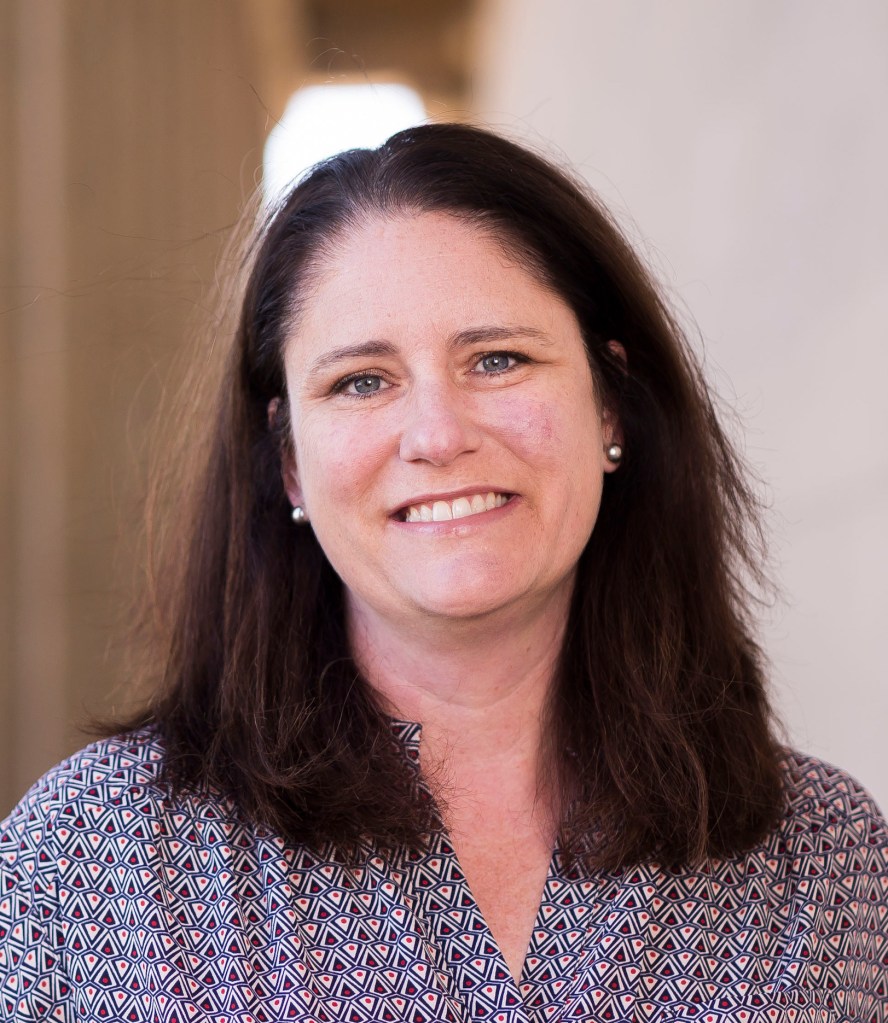
Dr. Mireille Lee is a Classical Archaeologist by training, with over two decades of experience in higher education. Increasingly concerned about the legal and ethical status of objects in academic, public, and private collections, she established the Foundation for Ethical Stewardship of Cultural Heritage in 2022. Dr. Lee is a Consulting Scholar for the University of Pennsylvania Cultural Heritage Center, and has served on the Committee for Cultural Heritage for the Archaeological Institute of America.
Like our content? Consider donating to Peopling the Past. 100% of all proceeds support honoraria to pay the graduate students and contingent scholars who contribute to the project.
Make a monthly donation
Make a yearly donation
Choose an amount
Or enter a custom amount
Your contribution is appreciated. Please note that we cannot provide tax receipts, as we are not a registered charity.
Your contribution is appreciated. Please note that we cannot provide tax receipts, as we are not a registered charity.
Your contribution is appreciated. Please note that we cannot provide tax receipts, as we are not a registered charity.
DonateDonate monthlyDonate yearly Peopling the Past
One thought on “Blog Post #102: The Mediterranean Antiquities Provenance Research Alliance with Mireille Lee”