Peopling the Past brings you an ongoing blog series, “Unknown Peoples”, featuring researchers who investigate understudied and/or marginalized peoples in the past.
The Paeonians were one of the oldest proto-historical communities in the Central Balkans, inhabiting the region throughout the 2nd and 1st millennia BC. At its greatest extent, the Paeonian territories spanned the whole valley of the River Axios, stretching from its spring (located in the modern village of Vrutok) in North Macedonia, to its flow into the Aegean Sea, in the North Aegean (Fig. 1). The Paeonian territory was bordered by Thrace to the east, Illyria to the west, Dardania to the north, and ancient Macedonia to their southwest.

The earliest reference to ancient Paeonia appears in Homer’s Iliad, where the Paeonians are described as allies of Troy, brave archers with crooked bows from the city of Amidon, at the Axius River (present-day Vardar; Homer, Illiad 2.845, 10.425, 17.350, 21.140 and 205). Ancient geographers and historians, including Herodotus, Strabo, and Thucydides, mention various Paeonian tribes, including the Agrianes, Laiaioi, Derrones, Paioplai, Siriopaiones, Derriopes, Pellagones, and Lynkestai, as well as their respective territories (Fig. 2). Regarding the origin of the Paeonians, their ethnicity, and language, on the other hand, our sources are unclear and inconsistent. For example, Herodotus’ Histories (5.13) makes reference to a conversation between two Paeonians and King Darius of Persia, in which they relate that the Paeonians were “colonists from the Teucrians of Troy,” that is – their ancestors migrated from Troy to Paeonia in the ancient past. According to Pausanias, however, the eponymous ancestor of the Paeonians, Paion, was of Hellenic descent and came from Olympia in the Peloponnese (Merker 1965, 36). Finally, according to Strabo (Geography VII, fr. 38), the Paeonians were colonists from Phrygia.
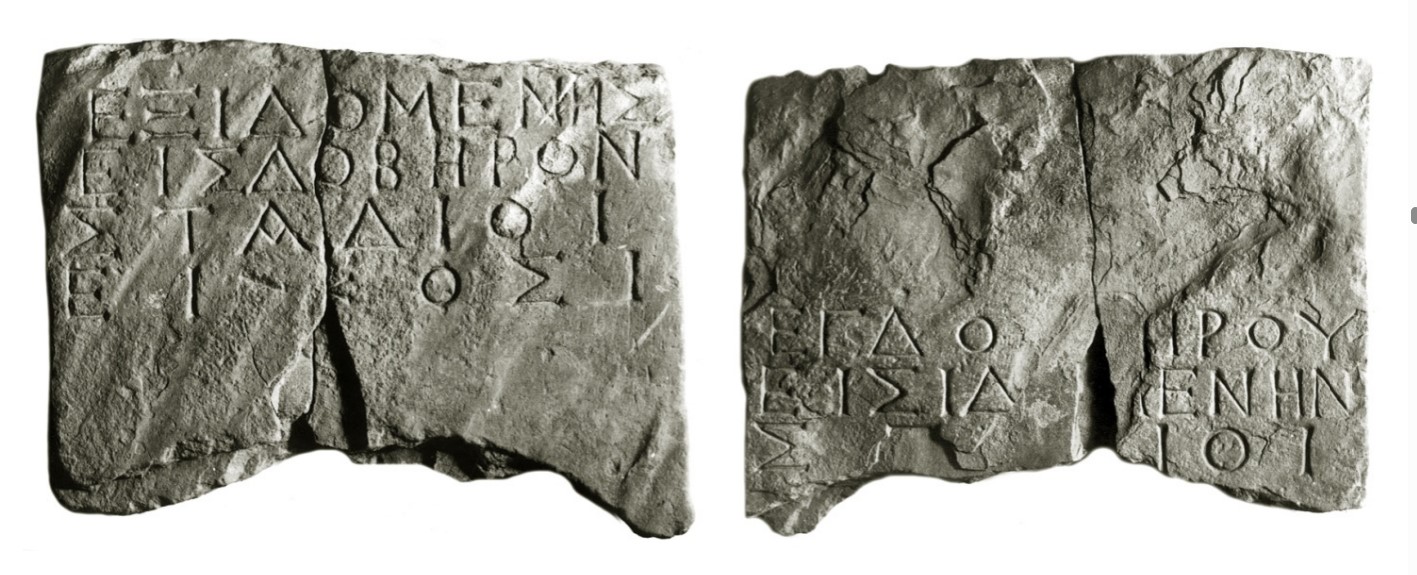
We encounter a similar problem when attempting to determine the origin of the Paeonian language, a topic that has been debated by scholars since 1890 (Petrova 1999, 148–52). The scarce evidence for their language, which consists exclusively of the names of several Paeonian tribes and Paeonian kings, as well as two inscriptions from Delphi and Athens, respectively, has led scholars to suggest a number of different possible languages as its source origin, including Greek, Thracian, Illyrian, Dardanian, and Daco-Mysian (i.e. Phrygian/Brygean). Although each theory lacks firm evidence in support (Merker 1965, 36), the latter slightly prevails among contemporary scholars as the most acceptable (Katičić 1976, 119; Petrova 1999, 150–53).
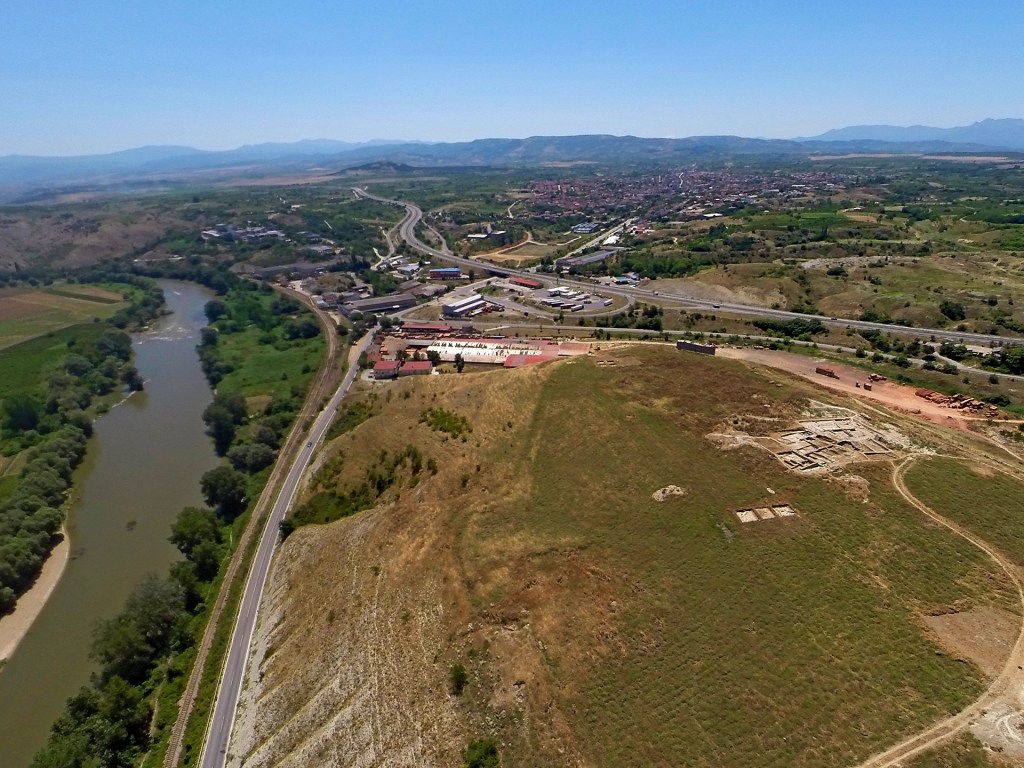
While the linguistic origins of the Paeonians remain obscure, their presence in the region is substantiated by the archaeological record of North Macedonia, which clearly distinguishes Paeonian material culture and customs from those of the neighbouring regions (Fig. 3). The uniqueness of the finds and their archaeological context, as well as the changes in material culture and customs, have helped scholars reconstruct the chronology of Paeonia, which begins in the Bronze Age (2400–1100 BC), continues through the Iron Age (1000–450) and Classical (450–323 BC), and the Hellenistic (323–168 BC) period.

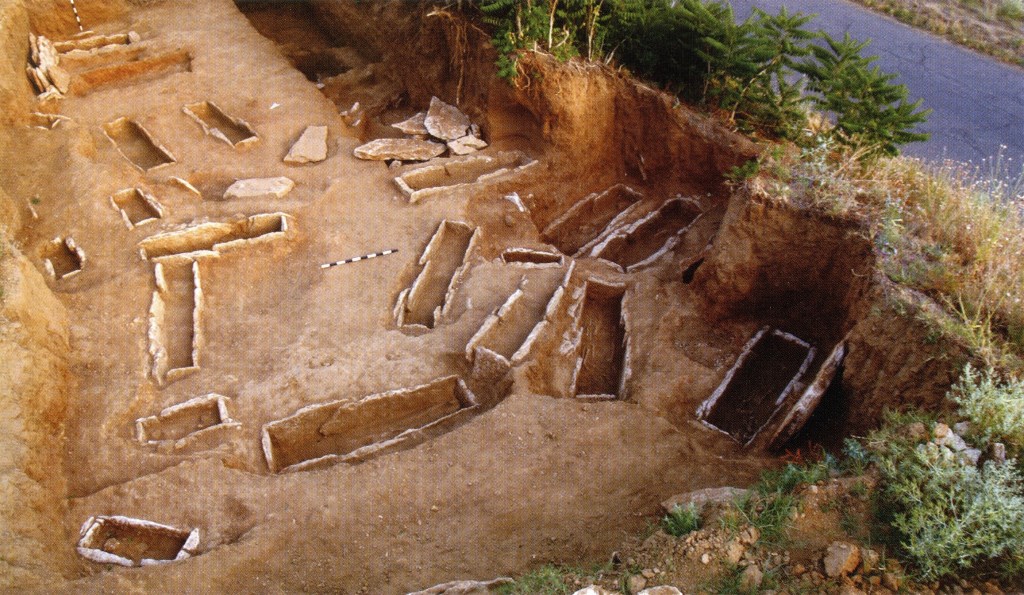
The transitions between these phases were often triggered by foreign incursions of either a violent or peaceful nature. For example, the period of Paeonian prosperity in the Late Bronze Age (ca. 1400–1100 BC) came to an end around the 12th century BC, when peoples from the north led destructive raids along the Axios route and burned many of the settlements to the ground. The presence of these northern invaders is attested by the presence of cremation urns, which appeared as a new burial practice in Paeonia, as well as pottery and weapons typical of the North and Central Balkans that were found in the burnt layers. Despite the incursions of northern peoples into Paeonia, we see a continuity of Paeonian cultural practices – including traditional inhumation burials – and material culture (Fig. 4; Papazovska 2018, 14–16; Mitrevski 2013, 193–94; Petrova 1999, 43).
Following the turbulent transition from the Bronze Age, the Iron Age marks a period of stability and progress, representing the final phase in the evolution of prehistoric communities in the Balkans and their cultural and ethnic differentiation as Paeonians, Thracians, Dardanians, Illyrians, and Macedonians (Mitrevski 2013, 218–19). The most famous and distinctive representatives of Paeonian Iron Age material culture are the bronze jewelry sets, also known as “Paeonian” or “Macedonian” bronzes. These included bow fibulae, omega-shaped double pins, and a variety of pendants, found predominantly in female graves, indicating their high status in the Paeonian social hierarchy. One of the most typical pendant shapes is that of a “poppy” flower. Archaeometric analyses have further revealed that these pendants were small containers for poppy seed – opium, which points to a possible role of these women as priestesses and/or healers (Figs 5 and 6; Mikulčić 1966, 10–11; Mitrevski 2013, 118–24, 220–21, 229).


The Late Iron Age (ca. 550-450 BC) in Paeonia was marked by rapid developments in crafts, metallurgy, agriculture, and urbanization. These changes are attributed to the intensification of trade relations with the Ionian colonies in the North Aegean (Hammond 1972, 440; Petrova 1999, 118–19; Bouzek 1988, 93–94). The establishment of these trade networks allowed local economies to prosper, and lead to changes in both Paeonian material culture and customs, while simultaneously contributing to the emergence of local aristocracies. This is evidenced by the famous princely graves at Trebenište and Gorna Porta near Ohrid, containing imported Corinthian and Athenian pottery, iron weapons, and luxury wares and jewelry made of bronze, silver, gold, glass, and amber, which were produced in major Mediterranean commercial centers (Bouzek and Ondrejova 1988, 84–94; Arjanliev et al. 2018). In the sixth century BC, we also see the first instance of the minting of coins in Paeonia, which represents the most elaborate expression of Paeonia’s growing economic and political role and power in the region (Fig. 7; Petrova 1999, 93).

Following the Persian invasion of the Balkans in 513 BC (Hammond 1967, 179), the political and economic stability of Paeonia, as well as its military power in the region, began to decline. According to Herodotus, on their quest to Athens, the Persians conquered the Thracians, Paeonians, Eordaei and Macedones, and made them vassals, to use them as infantry against the Greeks. As new allies of Persia, the Paeonians regained some control over their lost lands and received Persian protection, especially from Macedonian expansionism. However, the defeat of the Persians by the Greeks at the Battle of Marathon in 490 BC, led to their withdrawal from the Balkans, leaving the Paeonian territories in the Amphaxitis region and the North Aegean unprotected, which facilitated the eastwards expansion of Macedonia, probably during the reign of King Alexander I (Petrova 1999, 9, see nos 34–35). The Paeonian struggle to regain possession of their territories resulted in frequent armed conflicts in the Classical Period, and the constant pressure from Macedon and Thrace finally led to a permanent withdrawal of the Paeonians northwards, particularly to the canyon of Demir Kapija (ancient Stenae), which remained their southern border from the mid-4th century BC until the Roman conquest of the Balkans in 146 BC.

Despite the conflicts that plagued the Paeonians throughout the fourth and third centuries BC, archaeological evidence demonstrates that the Paeonians maintained their relationships with Athens and other various Greek apoikia in the Aegean. Moreover, the abundance of pottery imports, coins, metalware, and other small finds, as well as burial rites and evidence of Athenian masonry throughout Paeonia, leaves the impression of uninterrupted trade, which brought wealth, growth, and urbanization of Paeonian settlements, while simultaneously facilitating the movement of people from the south (both Greece and Macedon) to the Balkan inland (Fig. 8; Tsetskhladze 2013, 1619).

After the Roman conquest of Macedon and the Balkans in the 2nd century BC, Paeonia was integrated into the Roman province of Macedonia. Most of the Paeonian cities continued to exist and modernize; however, the overwhelming cultural trends, customs and fashion of the new era affected the previously distinct Paeonian material culture and identity, ultimately leading to its “romanization” and complete disappearance from archaeological and historical records.
Additional Resources
Arjanliev, Pero, Krastyu Chukalev, Tatjana Cvjetićanin et al., eds. 100 Years of Trebenishte. National Archaeological Institute, 2019.
Bouzek, Jan, and Iva Ondřejová. “Sindos—Trebenishte—Duvanli. Interrelations between Thrace, Macedonia, and Greece in the 6th and 5th Centuries BC.” Mediterranean Archaeology 1 (1988): 84–94.
Hammond, Nicholas Geoffrey Lemprière, Guy Thompson Griffith, and Frank William Walbank. A History of Macedonia. Clarendon Press, 1972.
Hammond, Nicholas Geoffrey Lemprière. A History of Greece. Clarendon Press, 1967.
Herodotus. The History of Herodotus. Translated by George Campbell Macaulay. Project Gutenberg, 2008. EPUB. https://www.gutenberg.org/ebooks/2456
Homer. The Iliad of Homer. Translated by Alexander Pope. Project Gutenberg, 1899. https://www.gutenberg.org/files/6130/old/6130-pdf.pdf.
Homer. The Iliad. Translated by Robert Fagles. Viking, 1990.
Katičić, Radoslav. “Ancient languages of the Balkans, (3. The Northern border area).” In Trends in linguistics – State-of-the-art reports IV. Edited by Werner Winter and Walter Bisang. De Gruyter Mouton, 1976.
Merker, Irwin L. “The Ancient Kingdom of Paionia.” Balkan Studies 6 (1965): 33–54.
Mikulčiḱ, Ivan. Pelagonija u Svetlosti Arheoloških Nalaza. Od Egejske Seobe Do Avgusta. Skopje, Arheološki muzej, 1966.
Митревски, Драги. “Праисторија на Република Македонија.” In Македонија: милениумски културно-историски факти, ed. Паско Кузман, vol. 1. Media Print Makedonija, 2013.
Митревски, Драги. Протоисториските заедници во Македонија преку погребувањето и погреб-ните манифестации. Скопје, 1997.
Папазовска, Александра. Некрополите на Мали Дол. Археолошкиот музеј на Македонија, 2018. Exhibition catalogue.
Papazovska Sanev, Aleksandra. “Pottery Imports and Their Local Imitations along the Vardar River Valley in the 6th and 5th Centuries BC.” In Archaic Pottery in the North Aegean and Its Periphery (700–480 BC). Edited by Michalis A. Tiverios, Vasiliki Misailidou-Despotidou, Eleni Manakidou and Anna Arvanitaki. Archaeological Museum of Thessaloniki, 2013.
Petrova, Ėleonora Borisovna. Paeonia in the II and I millennia BC. Editio Monumenta Macedoniae III, 1999.
Romiopoulu, Katerina. “Northern Greek Markets.” In Pottery Markets in the Ancient Greek World. Edited by Athena Tsingarida and Didier Viviers. Université Libre de Bruxelles Press, 2013.
Sanev, Goran. “Olynthian Red-Figure Pottery from Isar Marvinci.” In Classical Pottery in the North Aegean and Its Periphery. Edited by Eleni Manakidou and Amalia Avramidou. Archaeological Museum of Thessaloniki, 2017.
Санев, Горан.”Еден Коринтски Арибалос од Скопје.” Патримониум.мк V (2012): 139–144.
Соколовска, Викторија. Античкиот град на Исар-Марвинци, Валандово. PORTA ARCHAEOLOGICA, 2011. http://www.kalamus.com.mk/pdf_spisanija/e-book/ANTICKIOT%20GRAD%20NA%20ISAR%20MARVINCI,VALANDOVO.pdf
Sokolovska, Viktorija. “The Classical Imports in Paeonia.” Folia Archaeologica Balcanica 2 (2011): 159–164.
Strabo. The Geography of Strabo, Book 3. Edited by Jeffrey Henderson. Translated by Horace Leonard Jones. Harvard University Press, 1923.
The Encyclopedia of Global Human Migration, “Greek Migrations and Colonies, Ancient Era,” by Gocha Tsetskhladze, 4 February, 2013. https://onlinelibrary.wiley.com/doi/abs/10.1002/9781444351071.wbeghm261.
Tsetskhladze, Gocha. “Greek Migrations and Colonies, Ancient Era.” In The Encyclopedia of Global Human Migration. Edited by Immanuel Ness and Peter Bellwood. Wiley-Blackwell, 2013.]
Thucydides. History of the Peloponnesian War. Edited and translated by Jowett Benjamin. Clarendon Press, 1881.
Tiverios, Michalis A. “Greek Colonisation of the Northern Aegean.” In Greek Colonisation: An Account of Greek Colonies and Other Settlements Overseas. Edited by Gocha R. Tsetskhladze. Brill, 2008.
Вучковиќ-Тодоровиќ, Душанка. “Античка Демир Капија.” Старинар 12 (1961): 229–269.

Goran Sanev is a field archaeologist and curator adviser at the National Archaeological Museum of North Macedonia in Skopje, North Macedonia, and a PhD candidate in Archaeology at Simon Fraser University. His research interests are in Classical Archaeology, with a focus on classical pottery and its dissemination in the Central Balkan region, including questions of demographics, urbanism, trade, and trade routes in Ancient Macedonia and Paeonia during the Archaic and Classical periods. As a museum curator, he has authored and contributed to the preparation of various temporary and permanent exhibitions of the museum, including international exhibits. He has also participated in and directed numerous local and international archaeological projects at different sites in North Macedonia. Goran Sanev is the author or co-author of many articles on various topics in Classical and Late Antique archaeology of North Macedonia, many of which can be accessed via his Academia.edu page.
Like our content? Consider donating to Peopling the Past. 100% of all proceeds support honoraria to pay the graduate students and contingent scholars who contribute to the project.
Make a monthly donation
Make a yearly donation
Choose an amount
Or enter a custom amount
Your contribution is appreciated. Please note that we cannot provide tax receipts, as we are not a registered charity.
Your contribution is appreciated. Please note that we cannot provide tax receipts, as we are not a registered charity.
Your contribution is appreciated. Please note that we cannot provide tax receipts, as we are not a registered charity.
DonateDonate monthlyDonate yearly Peopling the Past
Hopefully one day we revive the Paeonian Language 🤞
LikeLike