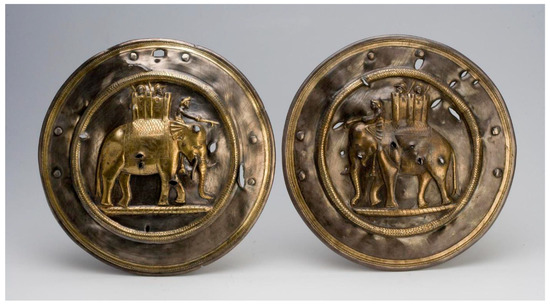
One of Peopling the Past’s goals is to amplify the work of young and/or under-represented scholars and the amazing research that they are doing to add new perspectives to the fields of ancient history and archaeology (broadly construed). We will thus feature several blog posts throughout the year interviewing graduate students on their research topics, focusing on how they shed light on real people in the past.
What topic do you research?
My research is driven by dual motivations: to present a diverse “peopling” of the ancient past, uncovering and rethinking experiences of racial difference in an interconnected Mediterranean world; and to integrate critical methodologies from Black Studies, Postcolonial Studies, and critical race theory into the study of antiquity. My dissertation project addresses these two avenues by focusing on a surprising but revealing figure: the elephant.
A Classics classroom is full of elephants. You might think of the beasts transported across the Alps by Hannibal, vanquished by Alexander, paraded by Pompey, dissected by Galen, admired by Aristotle. The most menacing to classicists, however, are the spectral, the things excluded by the rigid geographical and methodological confines that the discipline sets on the study of antiquity—namely the presence Africa and India and the work of African and Asian diaspora scholars. These exclusions have left me feeling alienated throughout my early career—from being a Latin student in high school to a fifth-year PhD candidate—often looking around for a face like mine, feeling like the elephant myself, asking: where is the room for my background and culture? I have channeled my experiences into my work, and I aspire to produce something that would have reassured and inspired me as a young student ten years ago, hoping it can do so for the next generation of students of color.
In my dissertation, therefore, I develop the elephant as a metaphor for these exclusions in the discipline of Classics and, to flip the coin, as a symbol for cross-cultural connections serving to collapse borders, in antiquity itself and between modern disciplines.
How does your research shed light on real people in the past?
While I am deeply enamoured with elephants, modern and ancient, what I am really interested in is their closeness to humans, especially with their riders and trainers (mahouts). This relationship is unique in how it permeates the border between human and non-human. It is also almost exclusively specific to India. I explore how the Greek and Roman understanding of this relationship may have contributed to their formulation of racial and geographical difference as concerned dark-skinned peoples from India and Africa (where the beasts originated), as well as how elephants and their accompanying peoples served as vehicles for cultural exchange and transmission of knowledge as they traversed land and sea in antiquity.
What brought me to this point? Serendipity. In the spring of 2022, during my coursework, worn out from the difficult intellectual debates that come with navigating race in antiquity and its relationship to modern racism, and as an exercise to refresh my brain, I challenged myself to write all my assignments on something arbitrary and unrelated to my research interests: elephants. Then, in a serendipitous turn, I discovered several instances in iconography—from Carthage, to Pompeii, to Bactria—where an association is made between elephants and black-skinned people. Ultimately, it took little convincing that it was worth investigating this association within a wider context of understandings of racial difference in Greek and Roman antiquity.
What sources/data do you use?
This project originated from material culture, which is my primary specialization in terms of ancient evidence. I focus on objects from the late first millennium BCE-early centuries CE (the Hellenistic and Roman periods), from what I describe as an extended ancient Mediterranean world stretching from the Carthaginian empire to the west and south, through central Asia to northern India in the east. Though my research is primarily object-based, my dissertation project also has a substantial philological component. This year, I have scoured Greek and Latin literature for mentions of elephants and found them scattered across zoological works, geographies, ethnographies and even histories. Serendipitously (or expectedly, if I’m onto something), their relationship with humans, especially mahouts, is a predominant feature which begs the question: how did Greek and Roman authors gain this knowledge? To answer that, I decided I needed to compare their work with contemporaneous Sanskrit literature. And to do that authentically, I would have to learn Sanskrit.
How did you spend your summer?
This summer, I spent two months learning Sanskrit in the Indian city of Pune with the American Institute of Indian Studies. Sanskrit has long been the elephant in the Classics classroom for me. I think I avoided it because it was always assumed, or expected, that as a classicist of Indian origin I should know it. I’ve lost count of the number of times I’ve been met with a comment like “Greek? Latin? What made someone like you interested in that? What about Sanskrit?” It also skirts my discomfort at not being able to speak a modern Indian language and my long absence from India. So, when, a year ago I googled summer Sanskrit course and found this program in my family’s home city, it felt like serendipity had struck again.
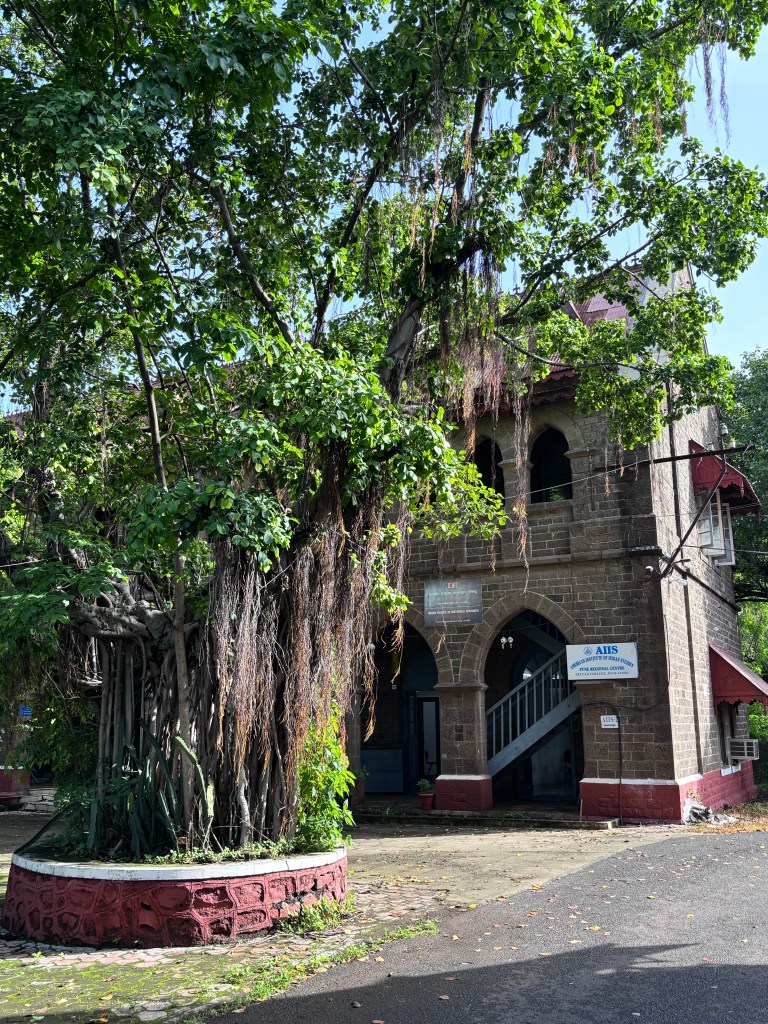
Photo: Lylaah L. Bhalerao
So it did again when, on day one when I was wondering what I had got myself into and doubting myself, the first word our teacher wrote on the board was gaja (गज)—elephant. All I could do was laugh. Here, I also learnt the true meaning of serendipity from one of my peers, coined by Horace Walpole in 1754 with its etymological origins in the old Persian word for Sri Lanka, and its impact as a force in our lives became a frequent topic of conversation.
Learning Sanskrit, and putting myself in a beginner’s seat at this stage of my studies, is one of the most challenging things I’ve done. At times, it even made me nostalgic for learning Greek intensively as an undergraduate! Methodologically, geographically, linguistically, it’s the furthest I’ve gone outside my comfort zone as a scholar and during the course I felt more insecure and self-conscious about my abilities than I have in a long time. Nonetheless, I was also reminded of the importance of continuing to learn and push your own boundaries as a scholar, as well as of putting yourself in new environments. And it was definitely fruitful and rewarding. Conversations with my peers have given me ideas that have expanded the way I think about antiquity, and how I want it to be presented in my dissertation. It also reignited my interest in ancient languages, particularly the Indo-European tradition. Greek and Sanskrit best preserve proto-Indo-European verb formations—I’ve never been so excited to see reduplicated perfects and sigmatic aorists. Knowing Greek and Latin certainly helped and clinging to grammatical similarities was grounding. However, though Sanskrit may be an ancient language, unlike its sisters it is not dead. This is evident in the pedagogy, which had a strong focus on listening, speaking and writing in Sanskrit. Most classicists’ worst nightmare. It was also valuable for me to be in community with other students in the humanities of Indian origin, as I’m the only one in my program, and to be taught by Indian women (people who look like me!) for the first time.
I cannot, however, discuss my experiences this summer without addressing the almightiest elephant in the room: grief. What is the tragic counterpart of serendipity? I do not know the word, but I am familiar with the feeling. Two thirds of the way into the program, I lost a close relative in New York not much older than myself. That day, before I found out, I had said that I felt like I was hitting my stride with Sanskrit, but sudden grief knocked the wind out of my sails. When I should have been committing declensions to memory, I instead replayed our last few interactions. I did what I could, seeking refuge in the similarities between Sanskrit and Greek verbs and, once again, writing about elephants (in Sanskrit). It would not have been possible without the understanding of my teachers and the support and companionship of my peers, who showed immense kindness to someone they’d only known six weeks.
I think my learning journey with Sanskrit and overcoming the challenge will always be intertwined with processing grief. As the new semester begins, I am still navigating it and trying to find motivation. I am continuing with Sanskrit and looking forward to rebuilding my relationship with it. Opportunities for me to learn a new language at this stage in my studies have reaffirmed my commitment to preserving classical language teaching and ensuring it is widely accessible—especially as language programs are disappearing across the country.
I owe a lot to serendipity: it brought me to New York, giving me the years with my late cousin that I had. It led me to a thesis topic that excites me, motivates me, and pulled me back to India and my heritage. There, in a city of banyans, I followed the branches of the Indo-European tradition and reconnected with my roots.
I would like to thank the Institute for the Study of the Ancient World at NYU and the American Institute of Indian Studies for funding my studies in India. I would also like to thank, dearly, the teachers in Pune under Dr. Madhura Godbole for their instruction and support, and my course peers for a wonderful shared experience. Last, but not least, I express my gratitude to my family in Pune, especially my aunt and uncle who housed and fed me for two months.
Further Resources
Blouin, K., and B. Akrigg, eds. 2024. The Routledge Handbook of Classics, Colonialism, and Postcolonial Theory. London: Routledge.
Derbew, S.F. 2022. Untangling Blackness in Greek Antiquity. Cambridge: Cambridge University Press.
Haley, S.P. 1993. “Black Feminist Thought and Classics: Re-Membering, Re-Claiming, Re-Empowering.” In Feminist Theory and the Classics, edited by Nancy Sorkin Rabinowitz and Amy Richlin, 23–43. New York: Routledge.
Hartman, S.V. 2008. “Venus in Two Acts.” Small Axe 12 (2):1–14.
Myers, J. 2023. Of Black Study. London: Pluto Press.
Padilla Peralta, D. 2025. Classics and Other Phobias. Princeton: Princeton University Press.
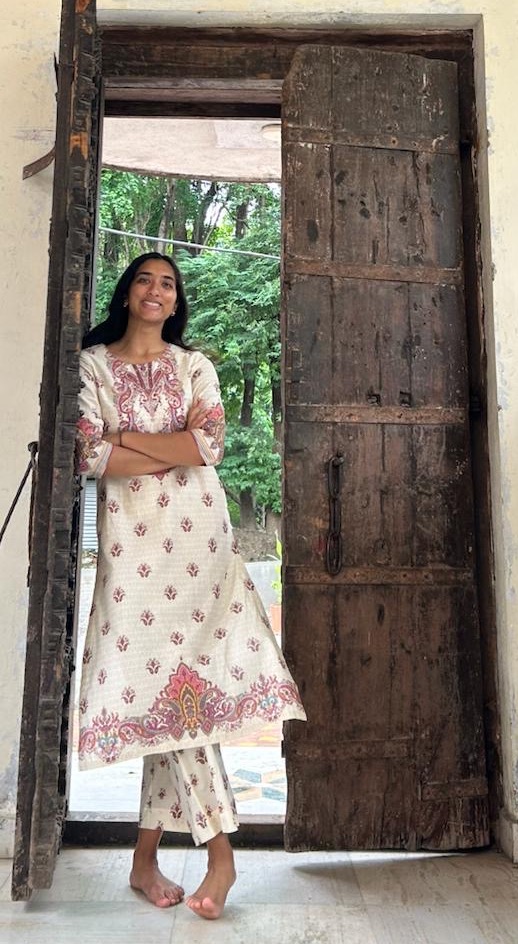
Lylaah L. Bhalerao is a PhD candidate at the Institute for the Study of the Ancient World at New York University. She came as a Fulbright scholar (All Disciplines Award 2021-22), having received a BA (2020) and MPhil with Distinction (2021) in Classics from the University of Cambridge. Lylaah is committed to a critical, intercultural study of antiquity from the Mediterranean to South Asia and Africa, exploring cultural exchange, transmission of knowledge, and movement of people (and beasts). She is interested in the material culture of, broadly defined, the Greco-Roman world—stretching east through central Asia to India, south to north Africa, and west to the Punic world and Roman Britain. Lylaah is also interested in museology and object-based pedagogy, both of which she is involved in at ISAW through the Exhibitions department and the Expanding the Ancient World program. She is committed to dismantling barriers to engagement with higher education and museum institutions for underrepresented groups and she is happy to speak to young people of color interested in studying the ancient world and help them navigate fields where they may find they are underrepresented.
Like our content? Consider donating to Peopling the Past. 100% of all proceeds support honoraria to pay the graduate students and contingent scholars who contribute to the project.
Make a monthly donation
Make a yearly donation
Choose an amount
Or enter a custom amount
Your contribution is appreciated. Please note that we cannot provide tax receipts, as we are not a registered charity.
Your contribution is appreciated. Please note that we cannot provide tax receipts, as we are not a registered charity.
Your contribution is appreciated. Please note that we cannot provide tax receipts, as we are not a registered charity.
DonateDonate monthlyDonate yearly Peopling the Past