Over the last decades, evolving digital landscapes and emergent technologies have been rapidly transforming teaching practices and educational standards. In fields engaged in the study of the past and ancient history, this has led to new opportunities for scholarly connection and data sharing, complex analysis using digital tools, and multimedia production for academic, education, and general audiences. These new resources have helped to enhance ancient history and archaeology curricula, but have created challenges for educators to keep pace with shifting student expectations and learning needs. For students, evolving digital technologies have led to new types of literacies and competencies that have become central for career success post-college. The recent growth of generative AI—with its negative cognitive consequences and environmental, social, and economic impacts—has made critical data and digital literacies even more crucial for supporting student success within digital futures (Johnston 2025).
Many instructors in Ancient Mediterranean studies and related departments have not had the opportunity to properly familiarize themselves with and learn how to use the myriad digital resources that are now available for use in the classroom. A recent survey of Ancient Mediterranean Studies faculty demonstrated that many who were keen to incorporate digital media and tools into their research and teaching were struggling to identify quality resources that were both accessible and affordable, and were frustrated by issues such as digital obsolescence (i.e., link instability, content shift, outdated software; Johnston and Gardner 2024). To address this growing need, Christine Johnston and Leigh Anne Lieberman will be leading Teaching Ancient in a Digital Age, an Institute for Higher Education Faculty funded by the National Endowment for the Humanities. This institute offers ancient Mediterranean studies faculty and advanced graduate students the training needed to facilitate data and digital literacy teaching within our interdisciplinary fields.

Teaching Ancient in a Digital Age will provide participants with hands-on training using digital methods and resources available for the study and analysis of ancient texts and material evidence. The institute curriculum includes a series of virtual (May and September/October 2026) and in-person workshops (August 2026, held at Western Washington University in Bellingham, WA) during which participants will work with expert faculty to familiarize themselves with emerging technologies and the ethics and considerations surrounding their use. The first virtual block (May 2026), offers an introduction to data basics; data management and cleaning; community-based engagement in data collection; ethical considerations and data sovereignty; and strategies for digital communication. During the in-person component held at Western Washington University (August 3–14 2026), participants will dive more deeply into the practical aspects of digital work while they develop lesson plans that focus on teaching data and digital methods and literacy to students. In the final block of workshops (held virtually in September/October 2026) participants will continue refining their lesson plans in collaboration with their institute colleagues. By the end of the institute, participants will have well-developed lesson plans centering on one or more of the digital tools, resources, or competencies covered in the institute, which will be shared collectively in an open access pedagogically-oriented publication.
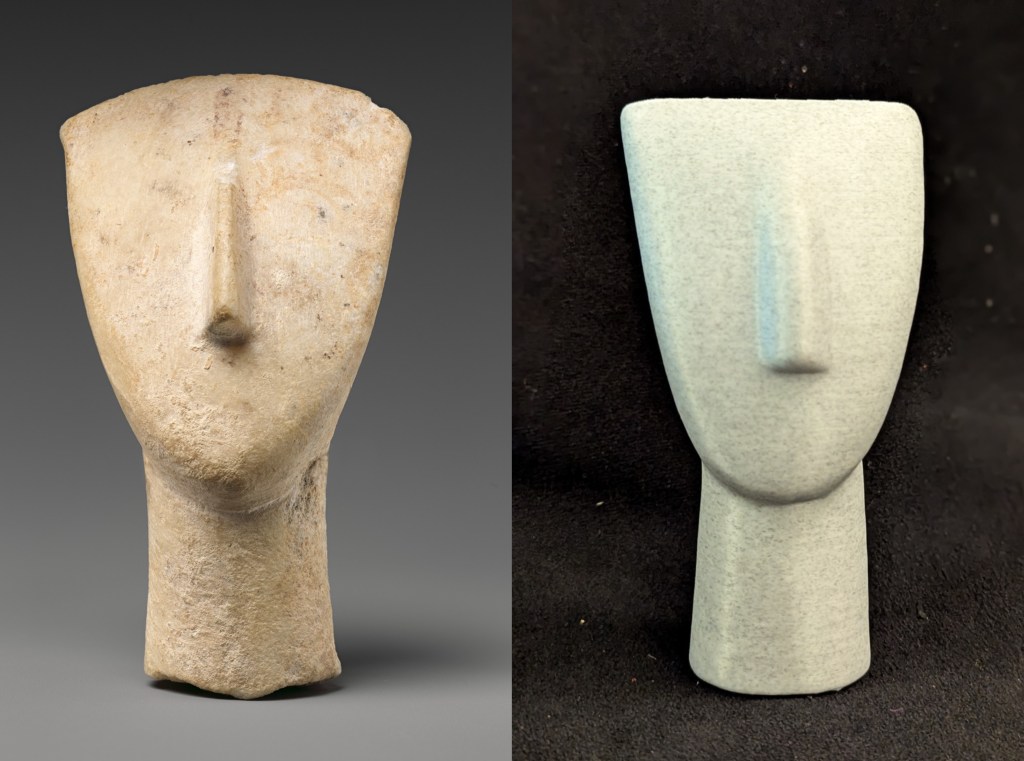
As an open-access resource, this publication will help to make critical data and digital literacies accessible to educators teaching within ancient Mediterranean studies fields. It will also support the integration of multimedia resources and digital tools into the classroom, which has demonstrated benefits for achieving learning outcomes and enhancing learning retention according to learning science research (Mayer 2009; Bates 2015; Johnston et al. 2025a). Digital platforms like ORBIS (The Stanford Geospatial Network Model of the Roman World), which offers a network analytics-based platform for modelling Roman transportation and communication networks, or collaborative text markup platforms like EpiDoc and Papyri.info’s Papyrological Editor, can be integrated into classroom activities that give students opportunities for active and collaborative learning (Bodard and Stoyanova 2016; Ratzan 2020). Recent advances in virtual reality and 3D printing are also proving to be particularly effective in enhancing student experiences, empowering them to form stronger experiential connections to cultures and histories that can otherwise feel far removed (Lucarelli 2023; Johnston et al. 2025b). Enhancing student experiences using digital resources has been shown to support stronger enrollments in the sorts of humanities courses that are habitually threatened with cuts (Muir and Oliver 2021). Most importantly, practical training in transferable digital skills can support student learning around the foundational knowledge of the field, while also preparing them for a variety of future careers.
For more information about the program, for guidelines about eligibility, and to apply, please visit the Teaching Ancient in a Digital Age website. Applications close March 6th, 2026 at 11:59pm Pacific Time. As per NEH policy, the institute is open to: United States citizens, including those teaching abroad at U.S. chartered institutions and schools operated by the federal government; residents of U.S. jurisdictions; and foreign nationals who have been residing in the United States or its jurisdictions for at least the three years immediately preceding the application deadline. Participants are required to participate in both the virtual and in-person components of the institute, and are provided with a fixed stipend of $3450 USD to support the costs of transportation and accommodation.

Any views, findings, conclusions, or recommendations expressed in this program do not necessarily represent those of the National Endowment for the Humanities. The Teaching Ancient in a Digital Age project has been made possible in part by a major grant from the National Endowment for the Humanities: Democracy demands wisdom.
Further Reading
Hellen Beetham – How the Right to Education is Undermined by AI
Gabriel Bodard and Matteo Romanello (eds.) – Digital Classics Outside the Echo-Chamber
Adam Crymble – Technology and the Historian: Transformations in the Digital Age
Sebastian Heath (ed.) – DATAM: Digital Approaches to Teaching the Ancient Mediterranean
Chelsea Gardner and Sabrina Higgins (eds.) – Ancient Pasts for Modern Audiences: Public Scholarship and the Mediterranean World
Like our content? Consider donating to Peopling the Past. 100% of all proceeds support honoraria to pay the graduate students and contingent scholars who contribute to the project.
Make a monthly donation
Make a yearly donation
Choose an amount
Or enter a custom amount
Your contribution is appreciated. Please note that we cannot provide tax receipts, as we are not a registered charity.
Your contribution is appreciated. Please note that we cannot provide tax receipts, as we are not a registered charity.
Your contribution is appreciated. Please note that we cannot provide tax receipts, as we are not a registered charity.
DonateDonate monthlyDonate yearly Peopling the Past