When studying past civilizations, trying to understand entire cultures and peoples through limited written and material evidence, it is tempting to wish for a time machine. As educated as Classics scholars are, however, we are not necessarily equipped to build one, or, at least, a successful one. The same is true for many digital projects – while some Classicists may have or can acquire the technical skills needed to digitize an exhibit, archive, or commentary, other projects require collaboration with scholars and students, even in other disciplines, to help bring a vision to fruition. The latter has proven to be true for Lingua Vitae, a Latin language supplementary learning program encased within an historically authentic, ancient environment in virtual reality (VR).
Conception and preliminary development began in 2018, after I attended a ten-week faculty course on VR, where nearly all of the applications presented were for engineering, science, or social science courses, none for humanities. In reading scholarship about VR and education, it was similarly clear that the research gravitated towards STEM fields. Frustration led to creative thinking – towards what application could VR be useful in Classics? The answer appeared in teaching Latin. My students had expressed to me the distance they felt in studying cultures that thrived thousands of years before, and they did not always see the value added by studying Latin. While my department had long worked on various ways to add more cultural, skill-linked, and other active Latin learning components to the course (all of which had helped to some extent), we needed something new.
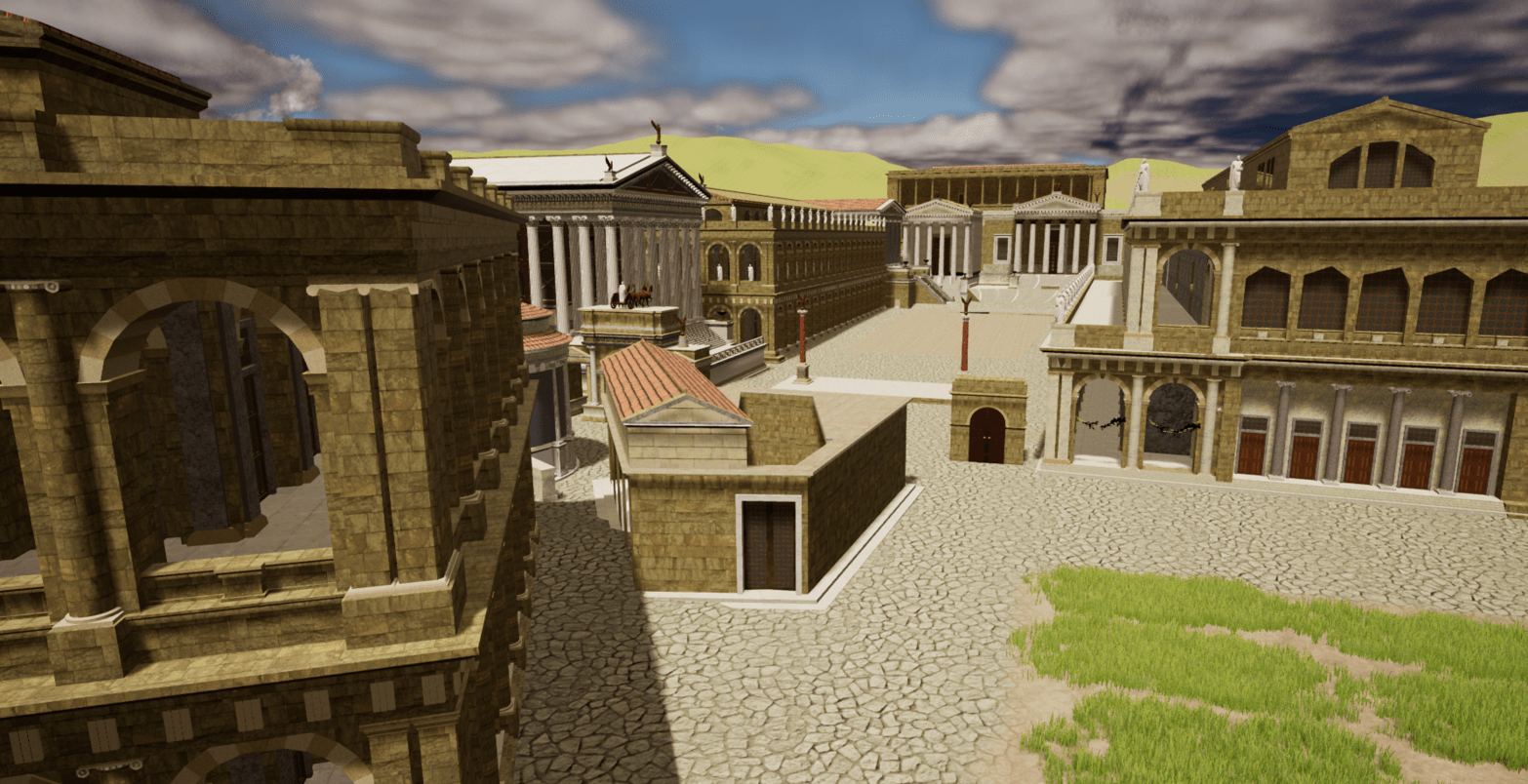
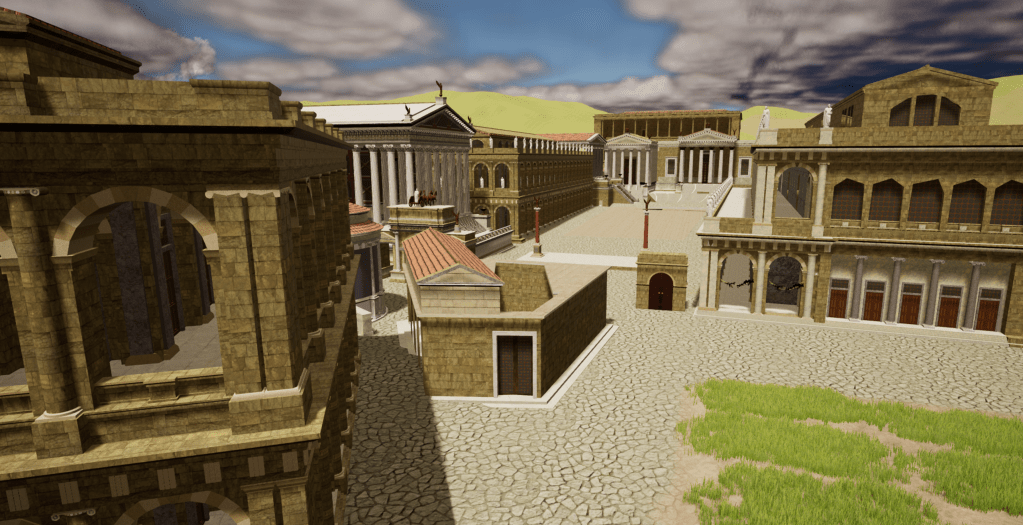
The clear appeal of VR for Classics centers around 3D reconstruction of historical sites. Countless video games (e.g, Rome: Total War, and Assassin’s Creed: Odyssey) have clearly indicated popular interest in reimagining antiquity, not to mention a multitude of films and other pieces of popular culture, and previous Classics VR projects like Rome Reborn offered some reconstruction models to follow. But in 2018, VR seemingly had only just begun being incorporated into modern language education, and had not yet reached Classical languages. The idea of VR as a virtual study abroad, open to anyone anywhere, to not only see buildings as they might have looked thousands of years ago, but to immerse oneself in the culture and in the people thriving in it (in reasonably authentic ways), was attractive. Unlike Rome Reborn, the focus would be not on the architecture or history, necessarily, but on the interaction between a modern user and an ancient Roman in Latin. I pitched this idea to Santa Clara’s VR lab manager at the time, Brian Beams, who helped to build out a narrative and development plan, and recruit a few team members on a shoestring budget. Since SCU is a primarily undergraduate institution that highly values faculty-student collaboration, the developers and researchers were all undergraduates, paid either through small grants or by serving as lab workers. One student built out 3D assets, including the Roman Forum, adapting a free, previously developed model under Brian’s (later, Em Dang’s) and my guidance (Fig. 1).
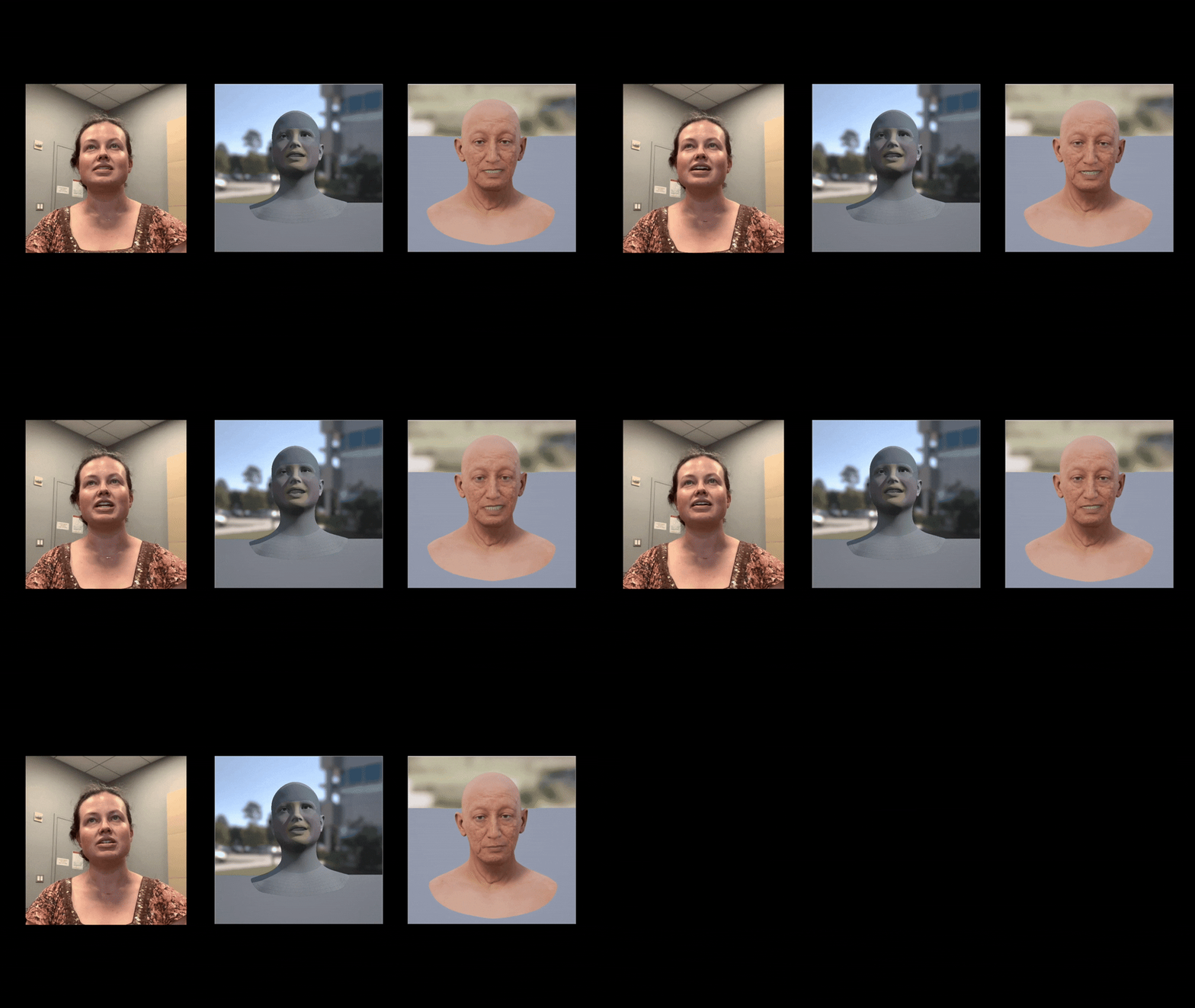
Other students worked on motion and facial capture, cloth simulation, animation and digital art restoration (Fig. 2), and audio / dialogue systems (Fig. 3) We also relied on free labor, asking faculty colleagues and volunteer actors to voice characters and physically act out the script, capturing audio, facial expressions, and bodily motions, and transferring those to the virtual characters (Fig. 4)

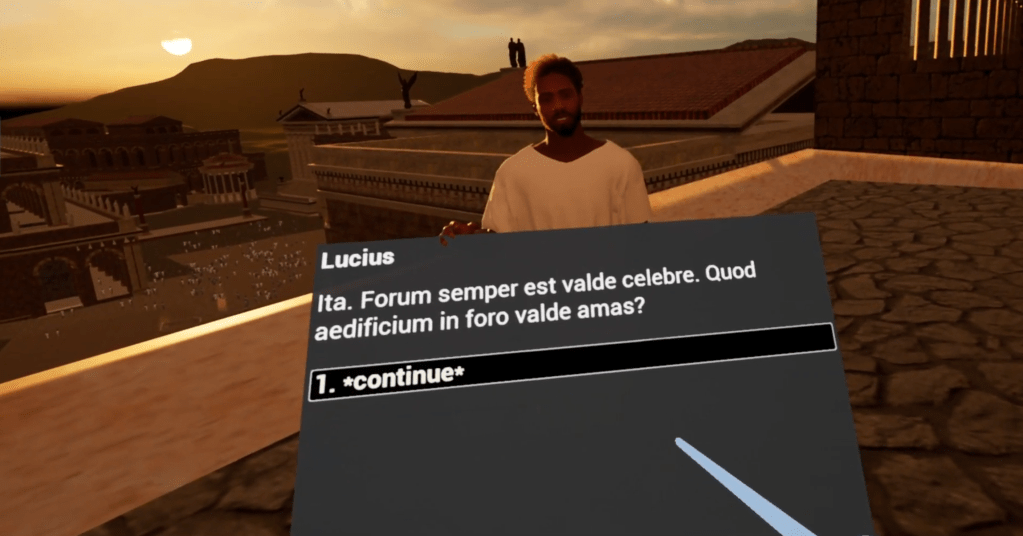
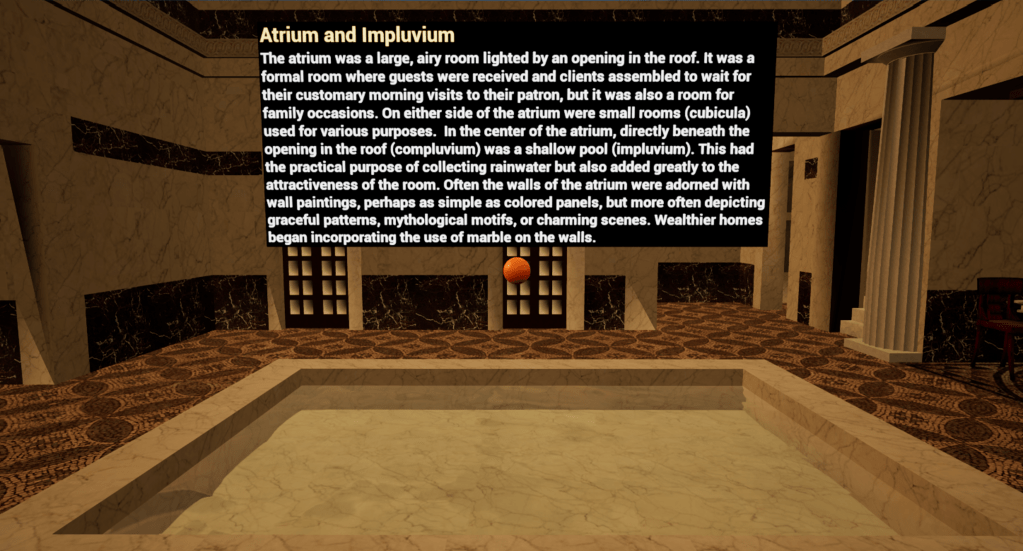
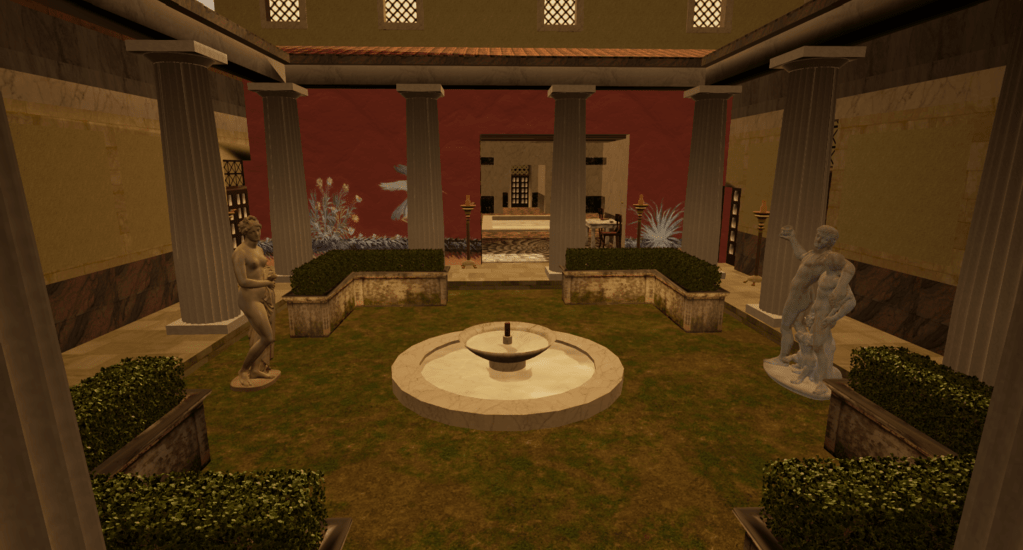
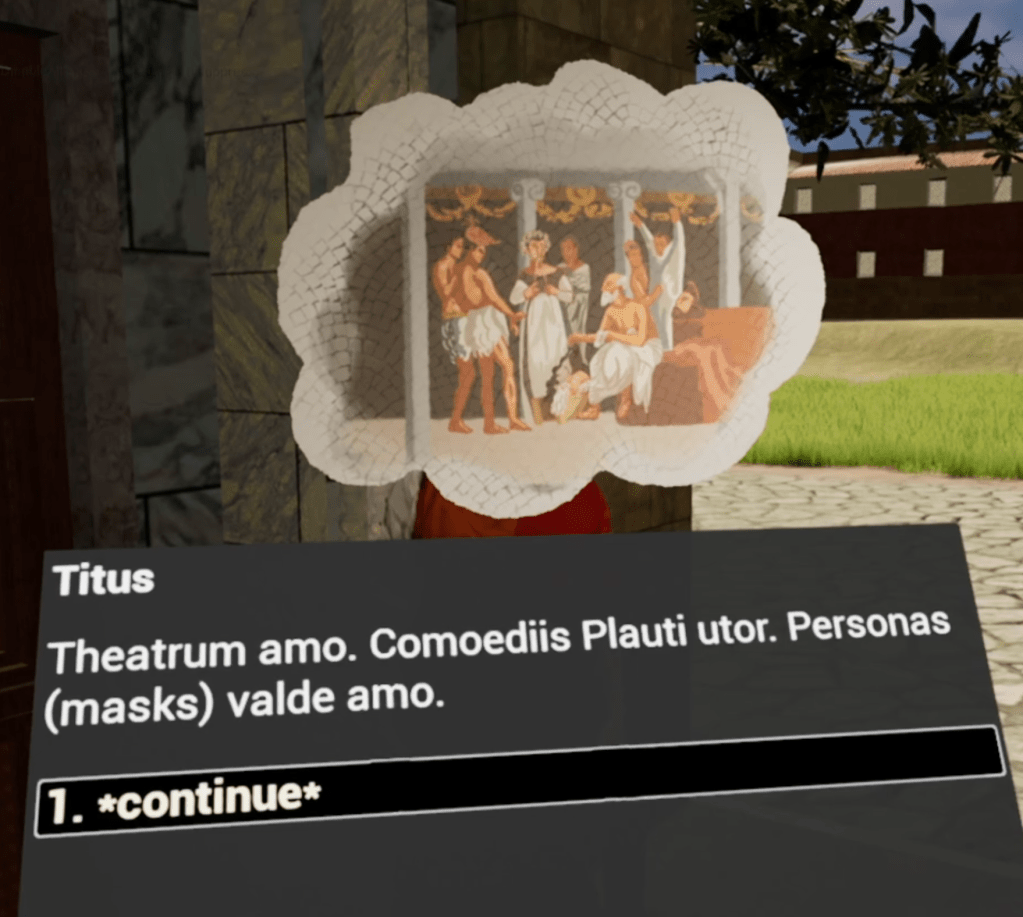
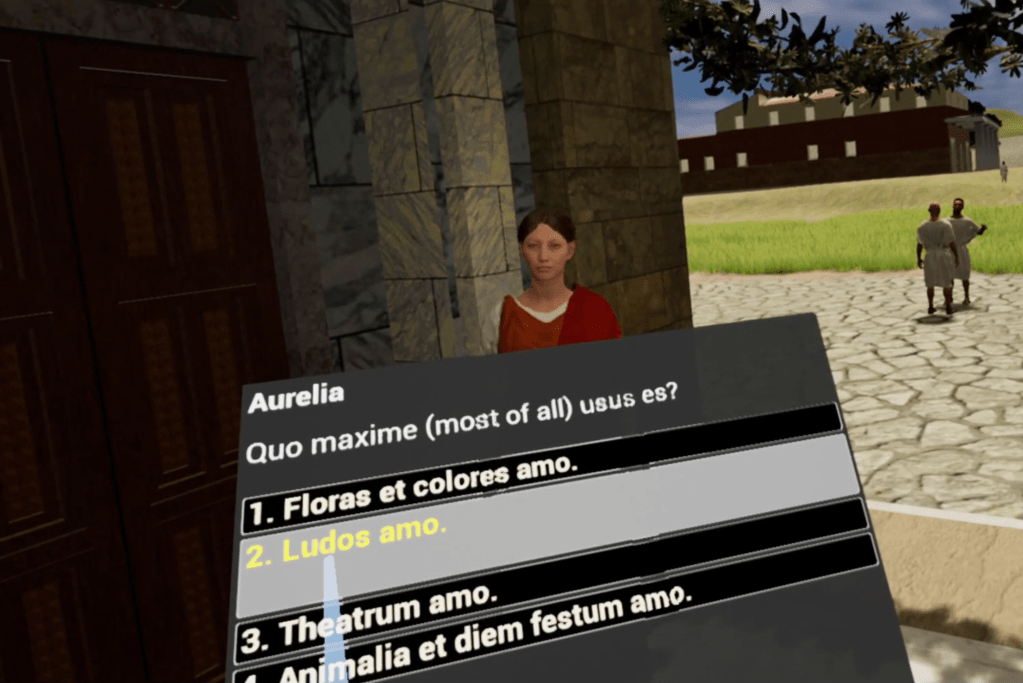
The focus of the storyline highlights daily existence in Rome. Warfare and gladiators, the typical attractions for video games and other creative works set in ancient Rome, merely serve as the backdrop for gathering quotidian ancient Romans. Set in 46 BCE, Lingua Vitae features the skint poet Titus. He attends Julius Caesar’s Gallic military triumph, in the hopes of finding inspiration to write something good enough to attract a patron, and interacts with other everyday Romans in the process, such as a centurion, a shopkeeper, and a little girl eager to know more about the triumph. Moments of culture and history appear throughout, including information on the Gallic Wars, domestic architecture (as Titus attends a party at the home of a potential patron) (Figs 5 and 6), and the Floralia (Fig.7), where Titus faces his final test before possibly acquiring a patron. Each chapter increases in difficulty of Latin grammar, based primarily on the order of grammar in Wheelock’s Latin (Chapter 1 incorporates the first ten chapters of Wheelock, and each subsequent episode includes a few more chapters after that. Later on, we adapted the last few chapters to the grammar of Latin for the New Millennium, as my department had decided to switch to that textbook). As for the dialogue, the VR user hears the Latin and sees it on screen, and selects a response using a hand-held controller (Fig. 8).
After more than seven years of development, Lingua Vitae is finally complete (in beta form). While seven years is not long for VR development, delays often arose – COVID, onboarding new team members while losing others to graduation or new jobs, and simply being too busy with other aspects of our jobs, like teaching! But the benefits of working collaboratively outweighed the negatives: working with students firsthand meant that we began to understand how they liked to think and learn. We were able to reach new audiences, working and sharing with those inside and outside of Classics, presenting our project at conferences in various fields, and completing an edited volume on uses of XR technology in the arts and humanities. And we are pleased that preliminary user survey results have shown our efforts to be worthwhile. Many students have enjoyed the virtual interactions with ancient Romans, remarking that their vocabulary and retention skills were improved and that it was fun experiencing the language in a different, more immersive, conversational way.
Of course, this project is one small fish in a vast sea of global educational endeavors to make the ancient world accessible and relevant to all of our students. Common to all these projects is dispelling the notion that antiquity is antiquated, or that the ways we teach it are. And being more public facing in showcasing the excellent work we do every single day, whether through publishing, hosting websites, or other outreach, means that we can also support fellow Classicists, removing conversations and projects from isolated silos and spurring connection and collaboration across the field (in other words, thank you, Peopling the Past!).
Epilogue/Afterword: Try out Lingua Vitae and let us know what you think! You can download the six chapters for free on Itch and our website (currently, these chapters require a VR headset, but we hope to provide a PC-friendly version in the future).
Additional Resources and Information
Itch: linguavitae.itch.io
Website: www.scu.edu/linguavitae
Trailer and Demo videos: https://www.youtube.com/channel/UCHVY-3wXfRLAtzRJKbAJGRg
Edited Volume: Past and Future Presence: Approaches for Implementing XR Technology in Humanities and Art Education (Amherst College Press, 2024). https://doi.org/10.3998/mpub.14371789
Questions? Email us: linguavitae@scu.edu
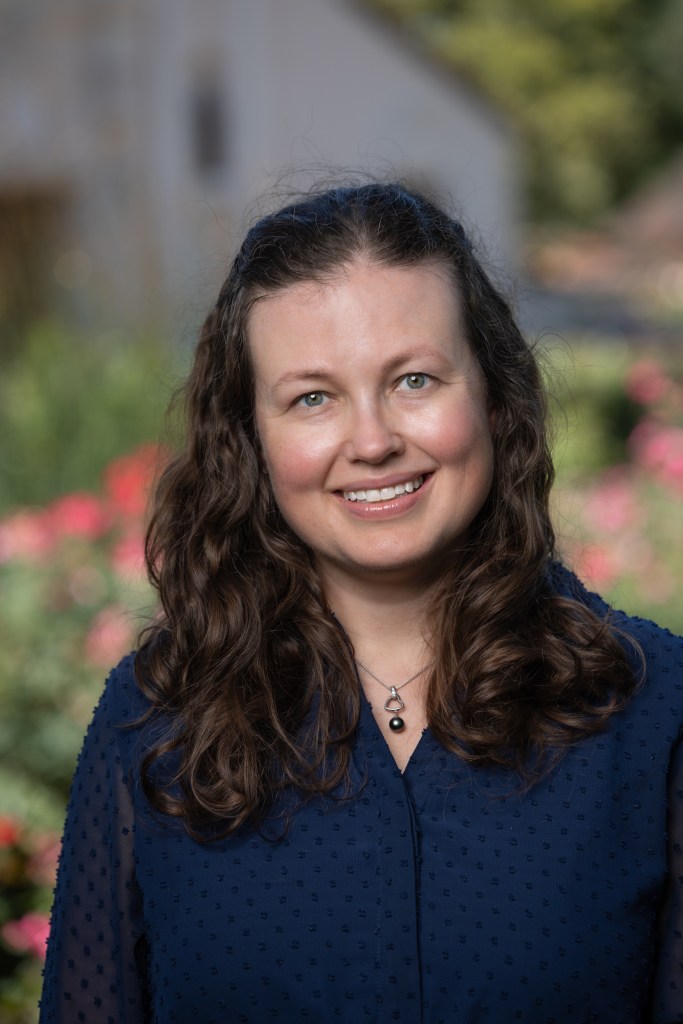
Lissa Crofton-Sleigh received her B.A. in Greek and Latin (with a minor in Music History) from the University of California, Los Angeles and her Ph.D. in Classics from the University of Washington, Seattle, with a dissertation on architectural ekphrases in Roman poetry. Her dissertation research led to what has been a persistent fascination with visual culture and how to visualize antiquity. She is currently a full Teaching Professor in and Chair of Classics at Santa Clara University in Santa Clara, CA, about 50 miles south of San Francisco.
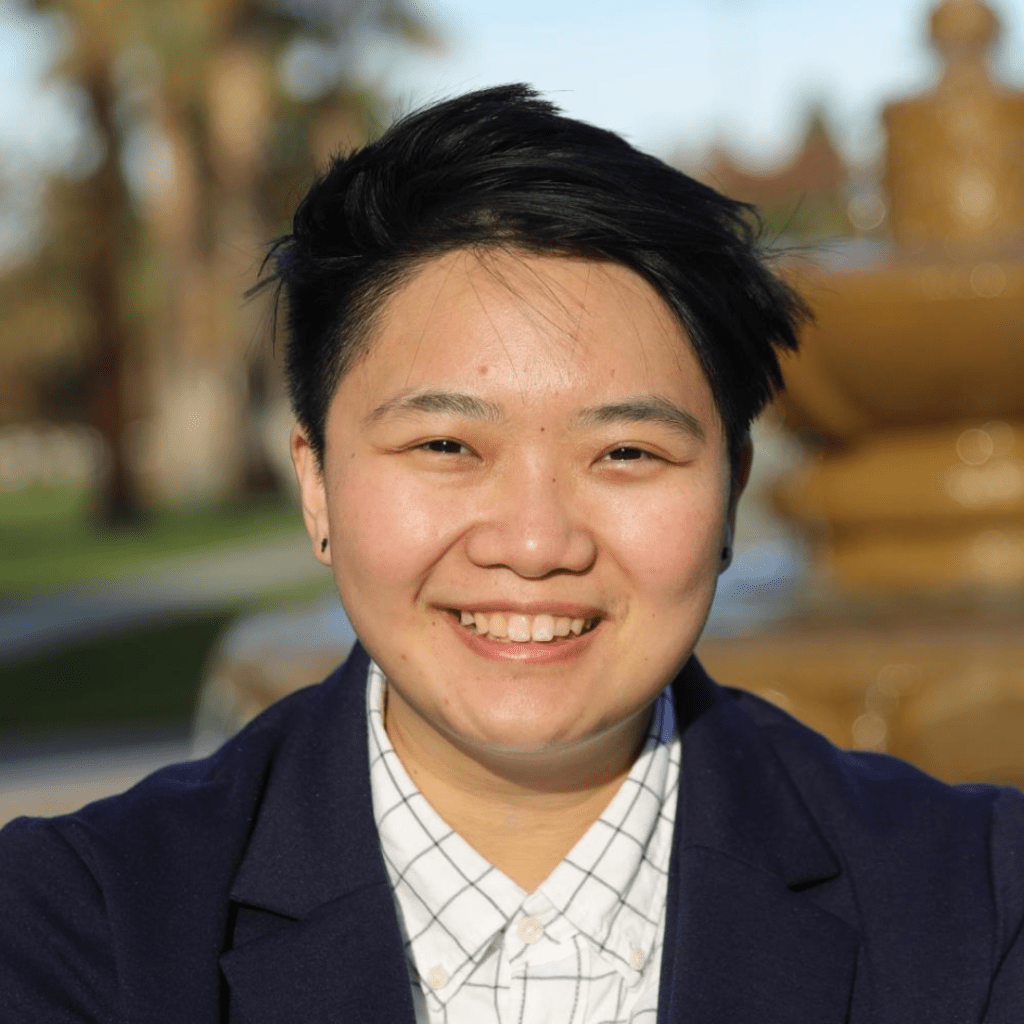
Em Dang is a game developer and digital artist who graduated with a B.S. and M.S. in Computer Science and Engineering from Santa Clara University, where they now run the Imaginarium, an interdisciplinary research lab that interrogates the way people communicate and learn in virtual spaces. As lab manager they serve as a technical lead on VR research projects, a mentor to student game developers, and an XR curriculum creator.
Like our content? Consider donating to Peopling the Past. 100% of all proceeds support honoraria to pay the graduate students and contingent scholars who contribute to the project.
Make a monthly donation
Make a yearly donation
Choose an amount
Or enter a custom amount
Your contribution is appreciated. Please note that we cannot provide tax receipts, as we are not a registered charity.
Your contribution is appreciated. Please note that we cannot provide tax receipts, as we are not a registered charity.
Your contribution is appreciated. Please note that we cannot provide tax receipts, as we are not a registered charity.
 Peopling the Past