In recognition of Earth Day on April 22nd, this month’s special series of blog posts feature researchers who study human-environment relations in the past, specifically within the context of garden spaces.
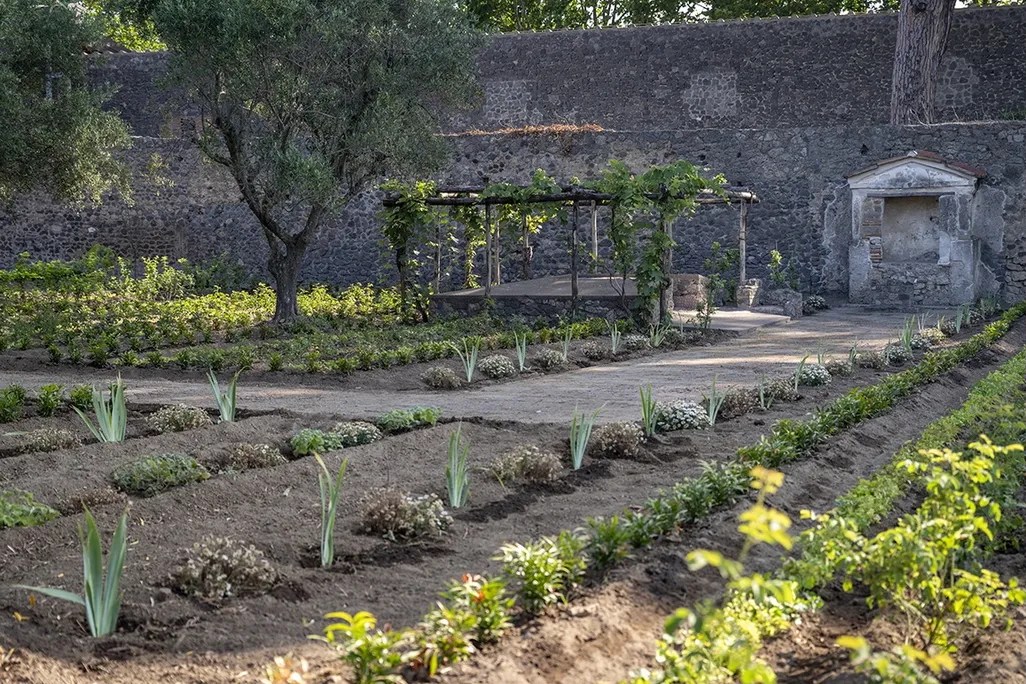
Though Pompeii as we know it today appears very grey and sparse, in AD 79, the city was alive with people, animals, colour, and green space. It is estimated that around one third of the city was green, with pleasure, perfume, and herb gardens, and vineyards, orchards, and vegetable plots filling the air with verdant smells and the sound of birdsong.
My research focuses on these spaces, viewing them as more than simply decorative and recreational backdrops to Roman life, but also as active, productive environments that played a central role in Pompeii’s socio-economic and nutritional status. By combining archaeological, archaeobotanical, and spatial data, it becomes possible to reconstruct not only where these gardens were, but how they operated and why they became so prominent in the city’s final decades.
A key turning point in both the story of Pompeii and its urban agricultural gardens is the earthquake of the 5th of February AD 62. The ancient writers Tacitus and Seneca describe the scale of destruction, while Pliny the Younger later records the continued tremors that came to plague the region of Campania in which Pompeii sits. The damage was extensive. Public infrastructure, including parts of the Aqua Augusta and the Temple of Jupiter, were compromised, and many private buildings were left unstable or partially destroyed. Even a flock of 600 sheep was said to have been killed during the event. Seventeen years on, at the time of the eruption, much of the city was still in a state of repair.
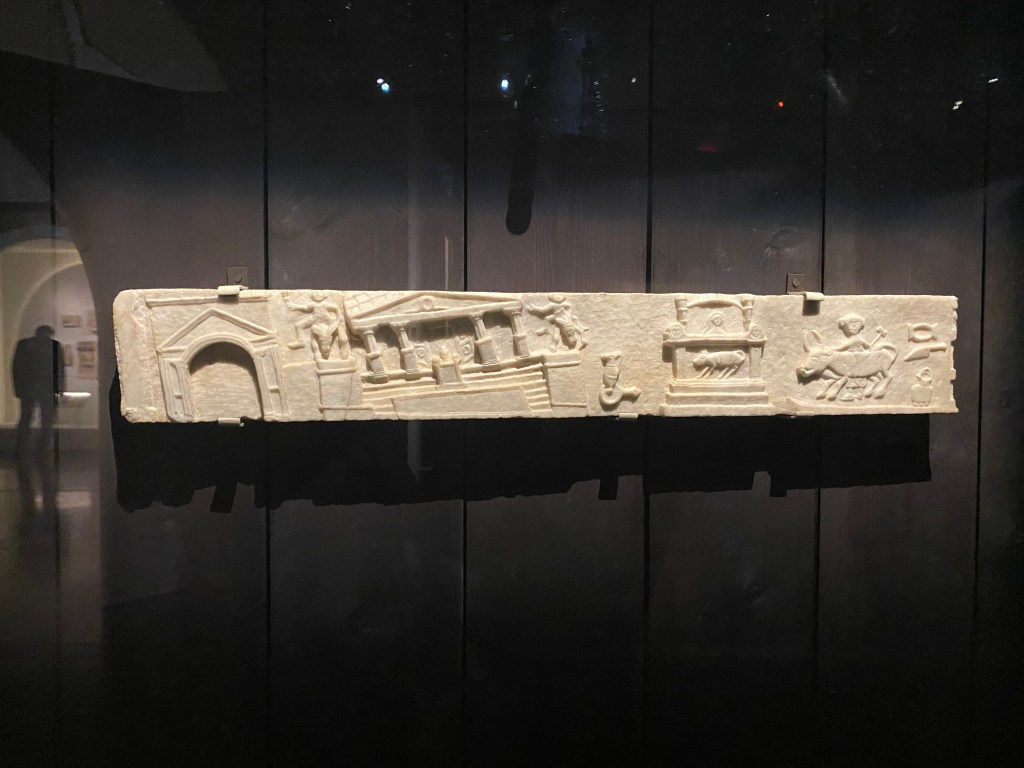
Rather than treating this as a simple story of decline, my work approaches the post-62 city as a landscape of transformation. What happened in the aftermath of the earthquake was a series of adaptive and resilient responses to a natural disaster, as well as to commercial opportunities which were beginning to gain traction in the mid-first century AD. One of the clearest expressions of that shift can be seen in the rise of urban agricultural gardens.
What counts as an urban agricultural garden?
In my research, I define urban agricultural gardens as productive cultivated spaces located within the city walls. These could operate at different scales. Some were commercial, producing crops and by-products for sale in local markets. Others were more domestic, supporting household consumption while generating small surpluses. Many also sat somewhere in between.
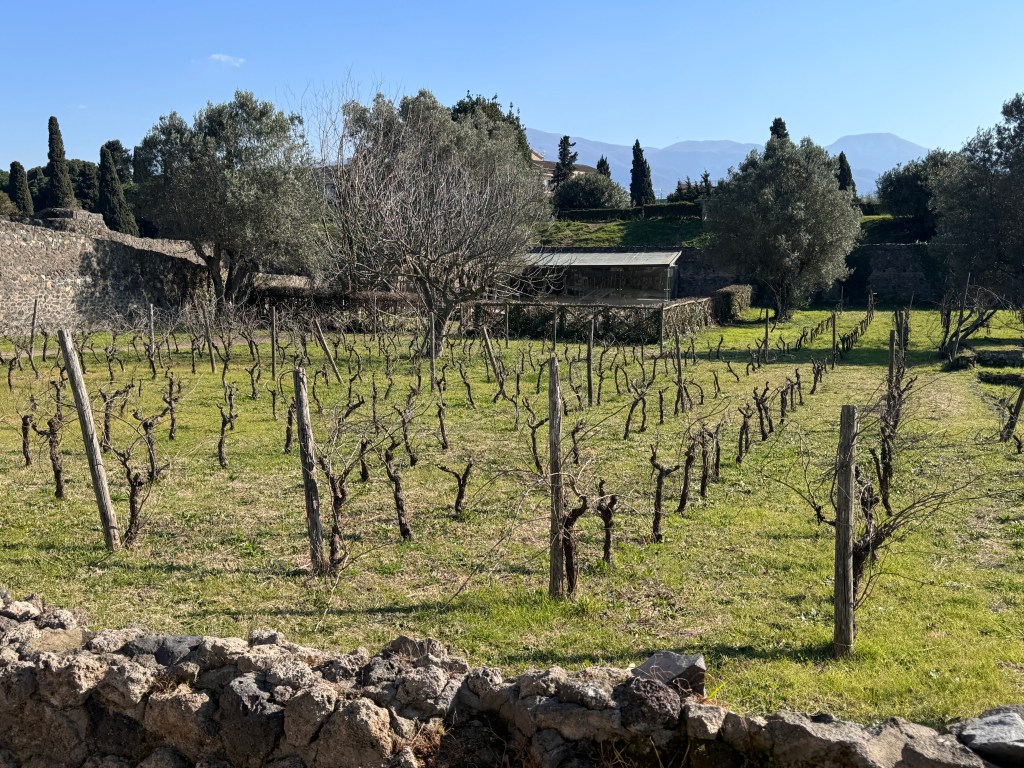
These gardens can be identified through root cavities preserved in volcanic ash, planting beds cut into the soil, carbonised plant remains, material remains (e.g. tools, planting pots), and built features such as boundary walls and irrigation systems. In some cases, fixed masonry dining installations, known as triclinia, are incorporated into these spaces, indicating that they were not purely sites of labour, but also of social activity.
Using excavation reports and spatial analysis, I have been able to track the distribution of these gardens across the city, with a particular focus on Regions I and II in the southeastern corner. What emerges is not a scattering of isolated plots, but a dense and structured pattern of cultivation woven into neighbourhoods, workshops, and former domestic spaces.
The impact of the AD 62 earthquake
One of the most striking findings from this work is the scale of change after the earthquake. Across Pompeii, 35 gardens show signs of having been created or expanded after AD 62, compared to just 12 agricultural spaces that can be securely identified before it. What is particularly significant, however, is where this change is concentrated. Of these 35 post-62 gardens, 24 are located in Regions I and II, forming a clear cluster of activity in the southeastern part of the city, while the remaining 11 are spread more thinly across the rest of Pompeii. This pattern shows that the expansion of cultivation was not uniform or gradual, but a deliberate and responsive form of adaptation, concentrated in areas most affected by structural damage. Rather than slow development, it represents a targeted reorganisation of urban space as part of a broader process of adaptive response to disruption.
From a methodological perspective, these transformations are identifiable through the material and spatial signatures left behind, as well as archaeobotanical information. Evidence for repurposing is visible in the observation of demolished or reused walls, the levelling of demolition debris, the blocking of doorways, and observation of original block (insula) layouts. By mapping cultivated plots against evidence for structural damage, it becomes possible to move beyond site-by-site description and identify broader trends across the city. This approach revealed that the expansion of cultivated space clustered in areas most affected by seismic disruption, i.e. Regions I and II. In methodological terms, this spatial correlation provides a basis for linking land use change directly to the material consequences of the AD 62 earthquake.
At the same time, these transformations speak to economic decision making. Rebuilding required significant investment, materials, and stability in a city still experiencing tremors. Cultivation, by contrast, offered a lower risk alternative. It allowed landowners and tenants to bring damaged plots back into use quickly, generating both food and income. Furthermore, demand for fresh produce was growing around this time, making garden cultivation a healthy business decision.
Rethinking resilience through everyday practice
The gardens of Pompeii provide a way to rethink what resilience looked like in the ancient world. Rather than a coordinated, state led recovery, what we see is a series of localised responses carried out by individuals, households, and occupational groups. This aligns with a broader pattern in the archaeological record. There is little evidence for large scale, centrally directed rebuilding in the years after AD 62, and no evidence for state intervention. Instead, the city appears to have been reshaped through cumulative acts of adaptation.
Importantly, these spaces were not purely economic. The presence of triclinia and other built features suggests that they also functioned as social environments. This raises questions about who was using them and how. To this end, I am now investigating the involvement of occupational and community groups in the management of these spaces, and how they embedded their activities within the urban landscape in visible ways.
A different Pompeii
What emerges from this research is a very different image of Pompeii in its final decades. Pompeii was not a city in terminal decline, but a place in flux; a city negotiating disruption through everyday decisions about space, labour, and investment. Urban agricultural gardens sit at the centre of that story. They reveal how inhabitants responded to crisis not by withdrawing, but by engaging more directly with their environment. By cultivating the city itself, they transformed damage into opportunity.
Additional Resources
Penelope Allison, Pompeian Households (2004)
Steven Ellis, The Roman Retail Revolution (2018)
Steven J. R. Ellis, Allison L. C. Emmerson, Kevin D. Dicus, The Porta Stabia Neighborhood at Pompeii Volume I: Structure, Stratigraphy, and Space (2023)
John J. Dobbins & Pedar Foss (eds.), The World of Pompeii (2007)
Kathryn Gleason (ed.), A Cultural History of Gardens in Antiquity (2013)
Wilhelmina F. Jashemski, The Gardens of Pompeii, Herculaneum, and the Villas Destroyed by Vesuvius (1979; 2 vols)
Wilhelmina F. Jashemski & Frederick Meyer (eds.), The Natural History of Pompeii (2002)
Wilhelmina F. Jashemski, Kathryn Gleason, and Dexter E. Brown (eds.), Gardens of the Roman Empire (2018)
Ray Laurence, Roman Pompeii: Space and Society (2007)

Bio: Dr Jessica Venner is a Roman archaeologist and Leverhulme Early Career Fellow at the University of Oxford (2025–28). She received her PhD from the University of Birmingham (AHRC/Midlands3Cities DTP), where her research focused on urban agricultural gardens in Pompeii and their role in the city’s economy, diet, and social organisation, particularly after the earthquake of AD 62. Her work has been recognised with major awards including a Rome Award at the British School at Rome, and she is an Associate Fellow of the Royal Historical Society. She is a Trustee of the Herculaneum Society and has excavated in Italy, including at Oplontis. Jessica is Directing Editor of Vesuvian Sites for the Gardens of the Roman Empire project and the author of The Lost Voices of Pompeii (HarperCollins).
For more of Jessica’s work, visit https://www.jessvenner.com/
Like our content? Consider donating to Peopling the Past. 100% of all proceeds support honoraria to pay the graduate students and contingent scholars who contribute to the project.
Make a monthly donation
Make a yearly donation
Choose an amount
Or enter a custom amount
Your contribution is appreciated. Please note that we cannot provide tax receipts, as we are not a registered charity.
Your contribution is appreciated. Please note that we cannot provide tax receipts, as we are not a registered charity.
Your contribution is appreciated. Please note that we cannot provide tax receipts, as we are not a registered charity.
 Peopling the Past