For Halloween in 2026 we are exploring the scary things in Homer’s (and sometimes Nolan’s!) Odyssey. Our writers investigate how the monstrous and mysterious are narrated, adapted, and situated in both ancient and modern societies through the many iterations of this wondrous tale. What are the deeper meanings of these characters and scenes, and why do they continue to captivate us into the twenty-first century?
Christopher Nolan’s Odyssey has certainly got people talking – talking not just about the movie, but about Homer, too. Viewers disagree about the film’s merits, of course. We ourselves found it lacking in emotional complexity in its evocation of Odysseus’ relationships with women other than Penelope, and the final shoot-out with the Suitors goes on way too long. But there are many spectacular successes, with several impressively-realised characters, notably Penelope and Eumaeus. Among the best episodes is that featuring a Cyclops (i.e. Polyphemus), imagined as a facially distorted, gruesomely cannibalistic, cave-dwelling rock-hurler reminiscent of your typical hairless sci-fi alien à la ‘Roswell incident’, yet still dedicated to his flocks and his cheese. One thing he doesn’t do (unlike in Homer) is to interact with other Cyclopes (the plural of Cyclops), of whom there’s no sign. Nor, at first, does he give any hint of being capable of articulate speech, until at last he invokes his father Poseidon’s curse on the intruders who have just blinded him. The ‘Outis/Nobody’ trick – one of the unforgettable triumphs of the Homeric narrative – doesn’t get a look-in. But this is Nolan’s Odyssey, not Homer’s, and it deserves to be evaluated on its own terms.
Nolan is just the latest in a millennia-long roll-call of those who have had their say about the Cyclopes, including writers, artists, and indeed movie-makers: Mario Camerini’s cinematic Ulysses featured a mighty performance by Kirk Douglas, while half a century earlier, in Georges Méliès’ silent The Island of Calypso: Ulysses and the Giant Polyphemus, the standout moment is the ogre’s blinding.
But it all started in classical antiquity. Greek and Roman myth-tellers distinguished three types of giant who went by the name of Cyclopes. First there were the ones who, in primordial times, used massive, rough-hewn boulders to construct walls around cities (the Greek word kuklos denotes something circular, whence ‘cycle’). Secondly there were the blacksmith Cyclopes, who forged, among other things, Zeus’ thunderbolts. They got their name because, so it was said (by, for example, the poet Hesiod), they were ‘circle-eyed’, with a single round eye set in their forehead. Last and certainly not least, there was the race of cave-dwelling pastoral ogres, most famously the one called Polyphemus.
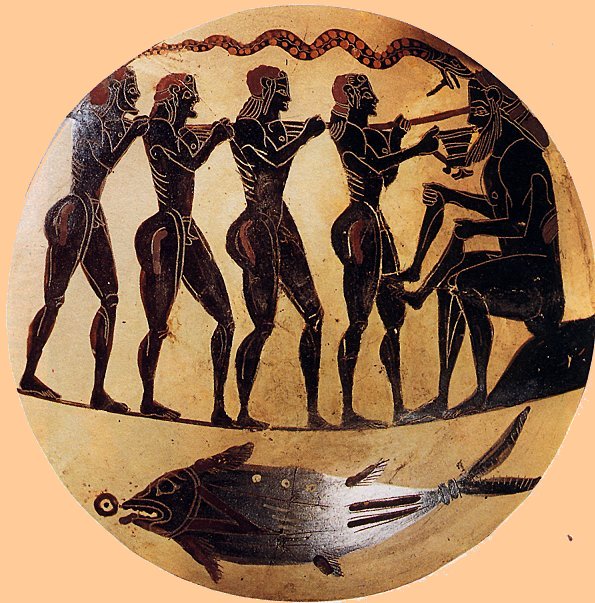
Polyphemus starred in two mythical encounters. One was the episode where Odysseus outwitted him. It was a confrontation with many variations in different versions, not least in terms of the ogre’s diet: whereas in Homer he eats his human victims raw, in Euripides’ satyr-play Cyclops he practises devilishly cannibalistic cookery. We find the same dietary variations in art: on a Laconian cup (fig. 1) he grasps a presumably raw human leg in each hand, whereas on a krater from Cumae he grills a couple of hapless humans on a spit.
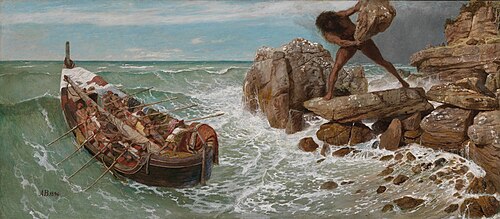
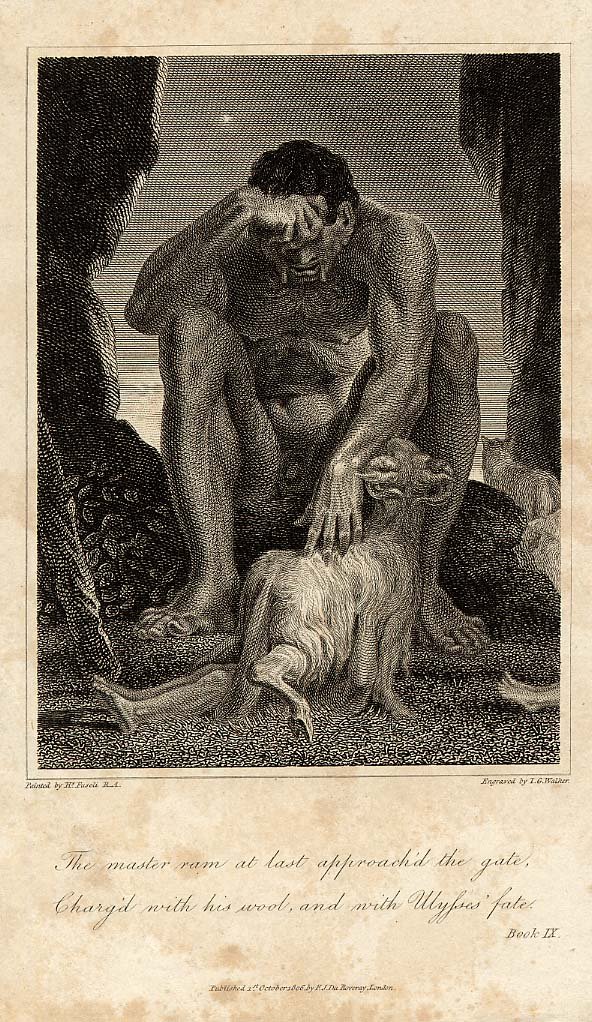
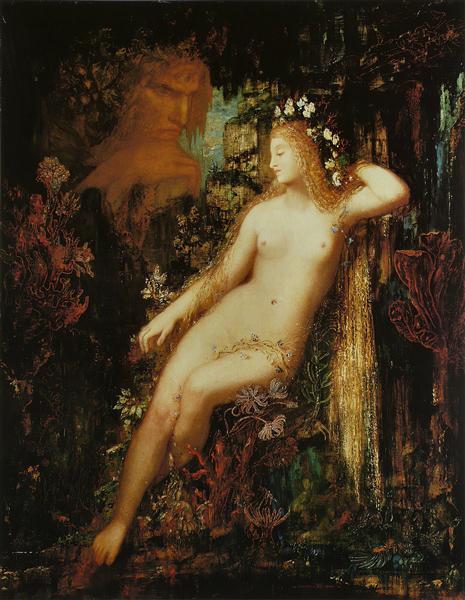
The second encounter, of which there is no hint in Homer, is erotic. It pairs him off with a sea nymph called Galatea (‘Milky’) – a nice match for a giant who specialises in cheese. In most versions, as in two pastoral odes by the Greek poet Theocritus, she disdains her ugly would-be lover, but some frescoes from Pompeii show them in a steamy and apparently mutually satisfying embrace. Their story concludes violently when Galatea falls for a handsome young shepherd called Acis; the furiously jealous Polyphemus hurls a trademark Cyclopean boulder at him and crushes him to death, though the lad is metamorphosed post mortem into a gently flowing river. Ever since classical antiquity, re-imaginings of Cyclopean myths have continued to raise all kinds of fascinating issues, especially about ugliness, cannibalism, monstrosity, and the imagery of the single eye. Although people sometimes implicitly remember the master-builder Cyclopes by referring to the ‘Cyclopean masonry’ of some ancient Greek walls, and although there have been many powerful evocations in art of the blacksmith Cyclopes (with or without Hephaestus, for whom they usually worked), it is the pastoral-ogre Cyclopes, above all Polyphemus, who have held centre stage. A stunning example is Arnold Böcklin’s painting (fig. 2) of a naked and (unlike in Nolan’s version) super-hairy giant poised to smash Odysseus’ ship. More wistful is the image (fig. 3) by the Swiss-born artist Henry Fuseli of the blinded giant feeling the back of one of his sheep as he searches for the escaping Greeks. As for representations of Polyphemus with Galatea, one of the sultriest was painted by Gustave Moreau; the artist came back repeatedly, almost obsessively, to the same scene (fig. 4)
The idea of a creature with a single eye has proved particularly fruitful for interpreters. Often such an image is full of symbolic menace, as in Ralph Ellison’s novel Invisible Man, where a doctor who subjects the title character to electric shock therapy possesses ‘a bright third eye that glowed from the centre of his forehead’. Differently scary is the one-eyed Ku-Klux-Klansman Big Dan Teague, played by John Goodman in the Cohen brothers’ take on the Odyssey (O Brother, Where Art Thou?): the name ‘Ku Klux’ is a play on words for Cyclops (in Greek, Kuklops). By no means always, though, does ‘one-eyed monster’ equate to ‘nastily threatening’. The hideous bell-ringer Quasimodo in Victor Hugo’s Notre-Dame de Paris, who is repeatedly likened to a Cyclops, is glorious in his heroism, and unbearably moving in his tender – but unrequited – love for the gipsy girl Esmeralda. More recent is a short story (‘Revenge’) by the Chilean writer Pedro Guillermo Jara, about a baby Cyclops born in the Andes who grows up and travels to Ithaca. There he shoots Ulysses (= Odysseus) dead, in revenge for the mistreatment previously suffered by his fellow-Cyclops Polyphemus.
To add to all the imaginative re-workings, including appearances of one-eyed ogres in the folklore of regions such as the Basque country (a giant called Tartalo), there has been no shortage of speculation about something rather different: the supposed ‘real’ origin of the Cyclopes. Some scholars have speculated that the hole in the middle of the forehead of prehistoric dwarf elephants, as visible in their fossils, might provide the magic interpretative key. Others have preferred the cone of a volcano – doesn’t it look like an eye? and wasn’t Polyphemus’ home sometimes located on Sicily near Etna? Well, it may be so… But myths can never be – or at least should never be – reduced to their hypothetical real-world origins. What makes a myth a myth is not its alleged origin, but its inherent symbolic power – which is exactly what makes it transmissible across the millennia. Myths about the Cyclopes contain as much symbolic power as you could possibly wish for. Nolan’s version of the ogre is merely the most recent example. You can bet that it won’t be the last.
To learn more about the Cyclops, check out the book, Cyclops: The Myth and its Cultural History by Drs Aguirre and Buxton, which will be re-released in paperback in 2027.
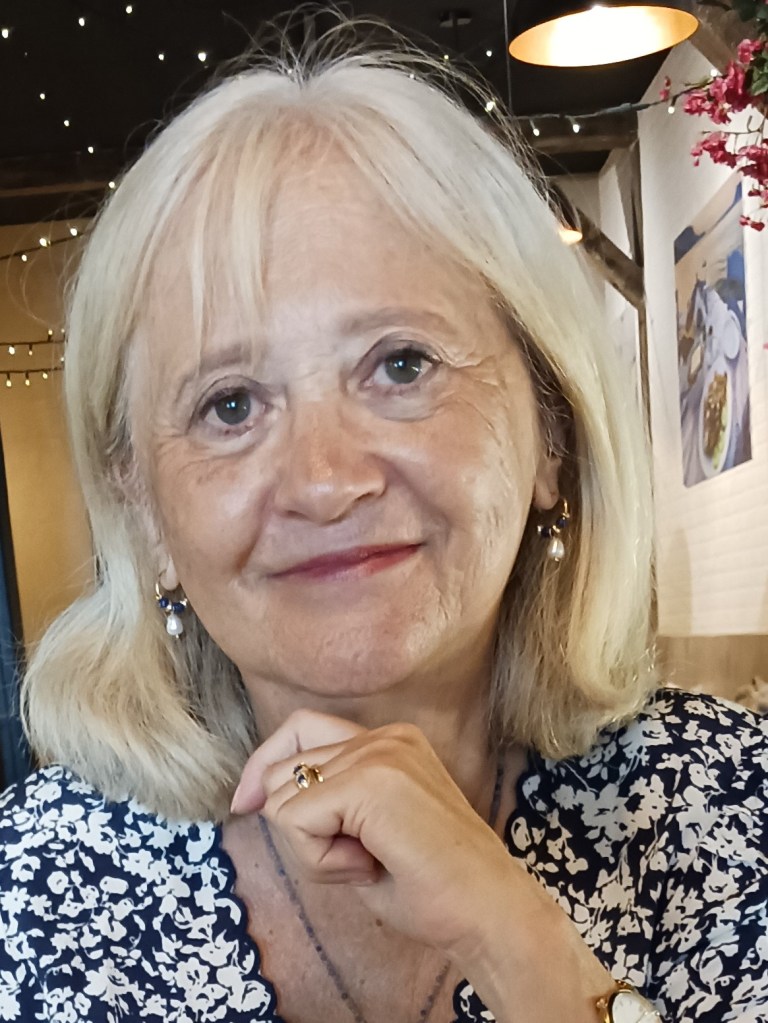
Mercedes Aguirre has a doctorate in Classical Philology from the Universidad Complutense in Madrid. For many years she was a lecturer in the Universidad Complutense. She is an Honorary Research Fellow at the University of Bristol, and has been elected a Life Member of Clare Hall in the University of Cambridge. Her areas of published research (in both Spanish and English) are: Greek literature, Greek mythology and iconography, and the reception of Greek mythology in the modern and contemporary world, particularly in literature and art. She is the author of a book in Spanish about Greek goddesses and heroines in Pre-Raphaelite painting: Diosas y heroínas griegas en la pintura prerrafaelita (Éride Ediciones 2025). With Richard Buxton she has co-authored Cyclops: The Myth and its Cultural History (Oxford U.P. 2020).
She is also the author of several books of fiction, some of them inspired by Greek mythology although situated in our contemporary world: Mythical Tales of the Everyday World (bilingual Spanish-English edition, Éride 2010), the novels El cuadro inacabado (Éride 2013) and its English version translated by Richard Buxton, The Unfinished Painting (The Book Guild 2020); Vidas, historias y cafés (Éride 2016) and Sangre de centauro (Éride 2019), and the collection of short stories La pared y otros cuentos de lo extraño y lo sobrenatural (Entrelíneas 2018). She is also the co-author of a series of ten books retelling Greek myths, one retelling Basque myths, one retelling Nordic myths and two retelling Celtic myths, all published by Ediciones de la Torre. She has published four short stories in Spanish in Proyecto Sherezade. University of Manitoba.
She has edited and contributed to two collective books of poems and short stories reimagining some Greek myths: Tras las huellas de los mitos (I y II) (Ediciones de la Torre). The first of these collective books includes Mercedes’ story ‘La escena del crimen’, a modern reworking of the myth of Polyphemus and Odysseus; it appeared in English translation as ‘Crime Scene’ in The Ancient Monsters Blog.
Webpage: www.mercedesaguirrecastro.com
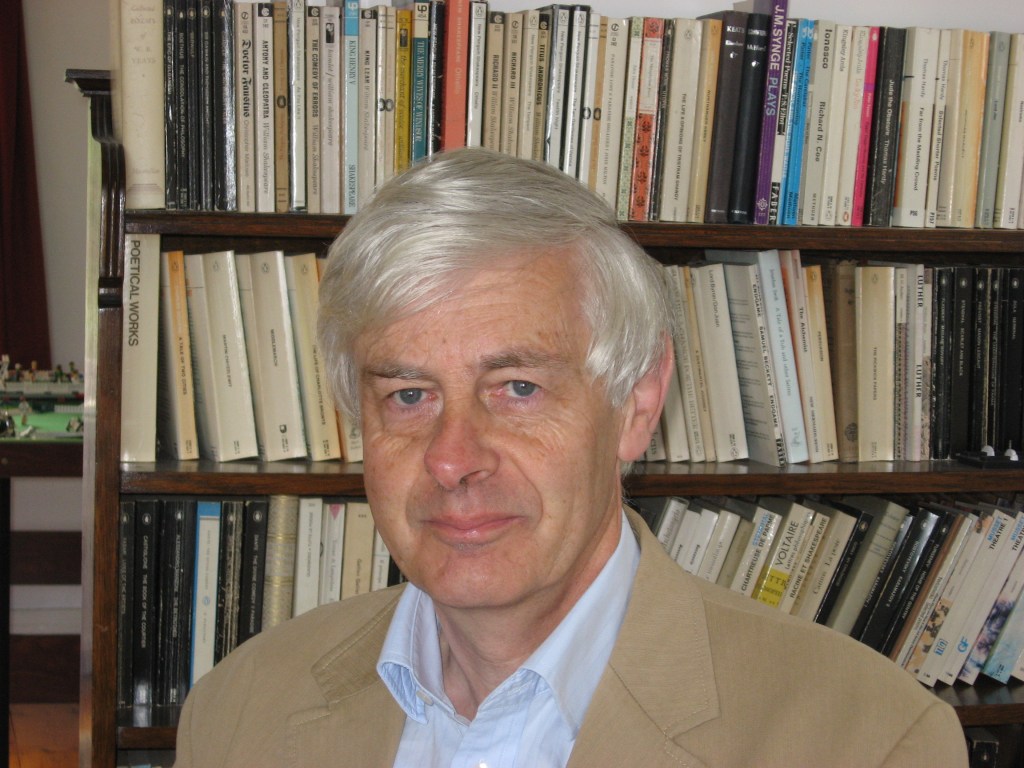
Richard Buxton read Classics at King’s College, Cambridge, and subsequently did postgraduate research both at Cambridge and at the Ecole Pratique des Hautes Etudes in Paris. He spent most of his academic career teaching at the University of Bristol, where he became Professor of Greek Language and Literature in 1995. He is now Emeritus Professor of Greek Language and Literature, and Senior Research Fellow, at the University of Bristol. He specialises in the mythology, literature and religion of ancient Greece. From 2006 to 2012 he was President of the Foundation for the Lexicon Iconographicum Mythologiae Classicae.
Among his many books are Persuasion in Greek Tragedy (Cambridge U.P. 1982), Imaginary Greece (Cambridge U.P. 1994), The Complete World of Greek Mythology (Thames and Hudson 2004), Forms of Astonishment (Oxford U.P. 2009), Myths and Tragedies in their Ancient Greek Contexts (Oxford U.P. 2013) and, with Mercedes Aguirre, Cyclops: The Myth and its Cultural History (Oxford U.P. 2020). Most recently he has written The Greek Myths that Shape the Way We Think (Thames and Hudson 2022). He has also edited From Myth to Reason? (Oxford) and Oxford Readings in Greek Religion (Oxford U.P.) His latest book, The Myths of the Greek Islands, is due to be published by Thames and Hudson in 2027.
Richard has participated in numerous radio and television broadcasts about the ancient Greek world and has lectured in many countries. He is a firm believer in bringing an informed awareness of ancient Greece, and particularly its mythology, to the widest possible public. His books have been translated into fourteen languages.
webpage: https://richardgabuxton.co.uk/
Like our content? Consider donating to Peopling the Past. 100% of all proceeds support honoraria to pay the graduate students and contingent scholars who contribute to the project.
Make a monthly donation
Make a yearly donation
Choose an amount
Or enter a custom amount
Your contribution is appreciated. Please note that we cannot provide tax receipts, as we are not a registered charity.
Your contribution is appreciated. Please note that we cannot provide tax receipts, as we are not a registered charity.
Your contribution is appreciated. Please note that we cannot provide tax receipts, as we are not a registered charity.

