For Halloween in 2026 we are exploring the scary things in Homer’s (and sometimes Nolan’s!) Odyssey. Our writers investigate how the monstrous and mysterious are narrated, adapted, and situated in both ancient and modern societies through the many iterations of this wondrous tale. What are the deeper meanings of these characters and scenes, and why do they continue to captivate us into the twenty-first century?
The goddess Circe is a special kind of monstrous woman, the kind that threatens the order of things.
Circe sits in an unusual position among the deathless gods. She is genealogically important, born of the Old Generation, but her realm is limited and her divine role very specific. She is the daughter of Helios, the Titanic god whose chariot draws the sun through the sky every day, and the equally Titanic Perse, a somewhat mysterious goddess whose name means destroyer. Like mother, like daughter… and son, for that matter. Circe’s brother is Aeëtes, the famously tyrannical father of the brilliant and murderous witch, Medea. Like her brother, Circe’s story expands enormously as the myths of Greece grow and evolve over time. But unlike her brother whose violent personality is very much visible on the surface, Circe’s monstrosity is something that’s more open to interpretation. Monstrosity is subjective, after all.
Stepping onto the island of Aiaia was like entering another dimension. Nothing was as it seemed: otherwise deadly beasts strolled through the forests and hills, harmless. Mountain wolves and lions rubbed their enormous bodies against the goddess’ side, docile as pet puppies. The air of Aiaia seemed lighter, the sky brighter, and the whole place sparkled. An unprepared visitor might think themselves in a dream rather than reality. And that’s just what the witch-goddess Circe wants. Her magic is ancient, it comes from a time when witchcraft and medicine were still intertwined. She was a practicer of pharmaka and so, in her own unique way, an early practitioner of pharmacology… though Circe’s medicine of choice didn’t cure so much as cause discomfort. But it’s the how and why of Circe’s magic—her pharmaka—that makes her special. In a world where women, even goddesses, wielded little power in the face of a man’s violent threat, Circe made an impact. It came naturally to her: when they deserved it, she transformed men into pigs.
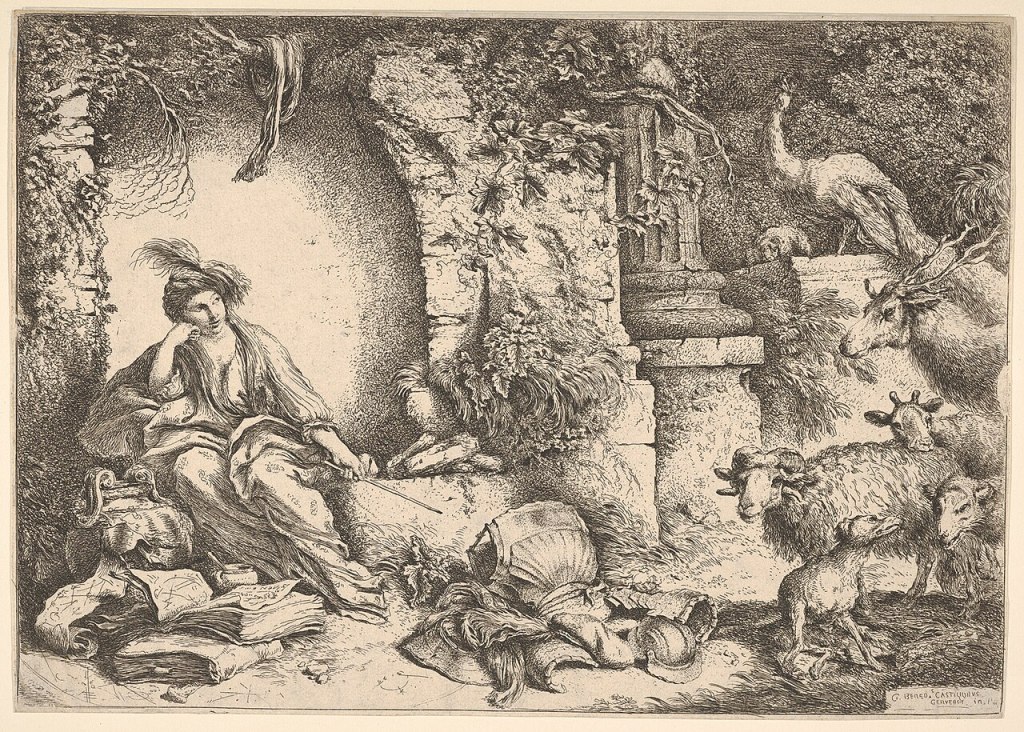
Odysseus’ ship landed on Circe’s island after a long saga that saw the violent deaths of hundreds of his men. Desperate and shaking, the few who survived parked their ship on the shore and hurled themselves onto Circe’s beach, kissing the pebbly sand. Terrified and traumatized from all they’d seen on their captain’s odyssey, the men wanted only to rest, but Odysseus decided otherwise. Half the men were sent on a reconnaissance mission to find out whose island they’d found themselves on, and whether the men who ruled it were a threat.
So when Odysseus’ men find only a beautiful woman in the island’s palace, one who was singing as she wove an equally beautiful tapestry, just like their wives at home would do, the men relaxed a little. They knew how to handle women, after all; surely this queen was more manageable than the man-eating giants they’d only just escaped. Relieved and distinctly more optimistic, the men called to Circe.
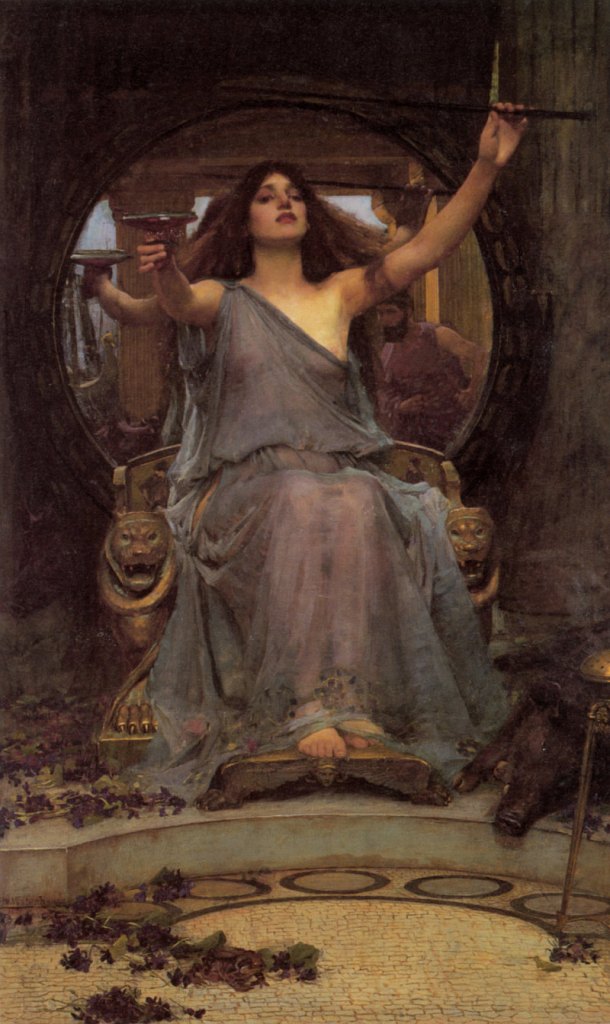
Without a word, the beautiful goddess welcomed them into her home with a soft wave and a demure smile. The men didn’t give her a second thought, this lovely woman with her sparkling voice and dainty hands was no threat to them!
Circe lowered her gaze as she waved the men inside her golden palace, but she watched them like a hawk. The men looked at Circe, then around at the wider space, and at her again, while she prepared refreshments. They were immediately comfortable, reminded of their old lives back in Ithaca, where their wives kept similar homes. Their wives would also have welcomed them home after a long journey with the same. The men think nothing of it when Circe hands each of them a cup of watered wine—at least, they assume it’s watered wine.
But it’s not wine. Sipping the drinks, the men slowly, and then much more quickly, begin to transform. A moment later and the witch-goddess Circe is surrounded not by men but by pigs. Little about her demeanour changes, but there’s a curl to her lips now as she ushers them from her home and into the pigsty where they belong.
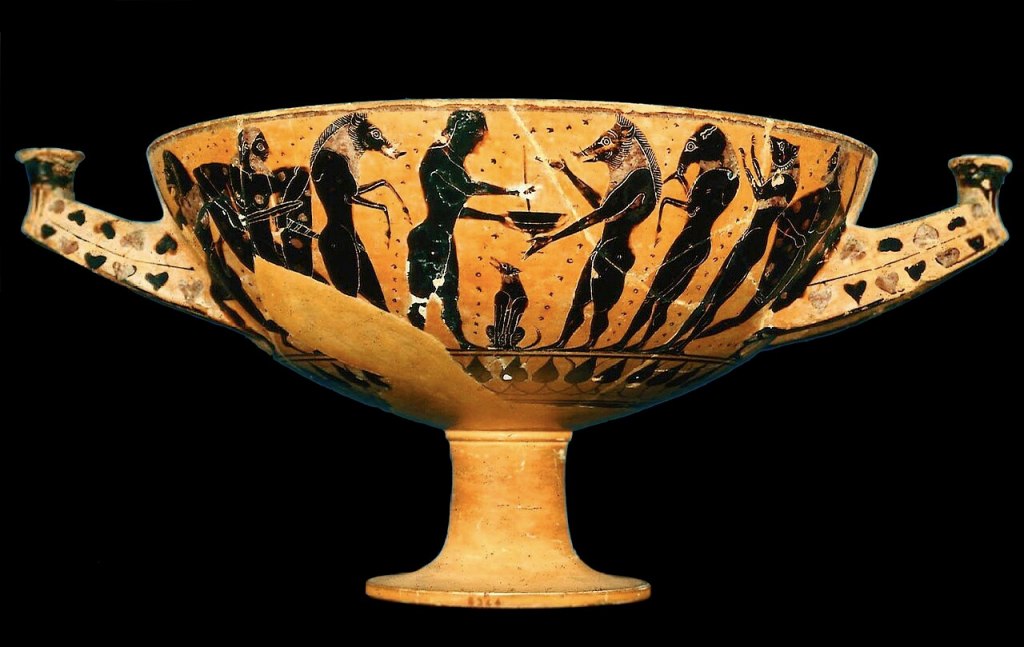
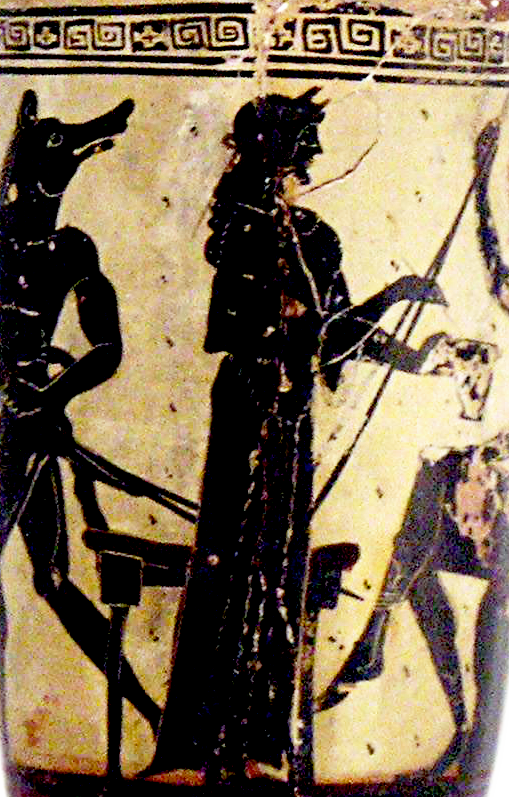
In the end, Odysseus returns and Circe happily reinstates his men in their human forms, but her control of them and their situation doesn’t change. For many who interpret Circe’s story it’s a simple tale of a seductively dangerous witch punishing men for the sheer fun of it and that’s what makes her monstrous. But in a world where women, goddess or otherwise, were understood to be distinctly inferior to men, Circe takes on a different tone. There are many ways to interpret her actions, she can be read as malicious but she can also be understood as a woman, simply, defending herself. Circe, in my reading at least, is a woman who would choose the bear. After all, statistically, if half-a-ship-full of hungry men showed up at the door of a woman living alone, the danger would be palpable… that is, unless she’d been practicing her pharmaka skills.

Liv Albert is the creator and host of the popular, chart-topping podcast Let’s Talk About Myths, Baby! where she retells Greek and Roman myths in intricate detail while focusing on marginalized voices of the time. Liv has a degree in English Literature and Classical Civilizations and loves all things ancient and nerdy. She is also the author of the bestselling children’s book, The Odyssey: a Modern Retelling (2026) along with other books on Greek Mythology. The Odyssey: a Modern Retelling is recounted in accessible language to a younger generation of Greek myth enthusiasts. You can find her at mythsbaby.com, and @mythsbaby on Instagram.
Like our content? Consider donating to Peopling the Past. 100% of all proceeds support honoraria to pay the graduate students and contingent scholars who contribute to the project.
Make a monthly donation
Make a yearly donation
Choose an amount
Or enter a custom amount
Your contribution is appreciated. Please note that we cannot provide tax receipts, as we are not a registered charity.
Your contribution is appreciated. Please note that we cannot provide tax receipts, as we are not a registered charity.
Your contribution is appreciated. Please note that we cannot provide tax receipts, as we are not a registered charity.

