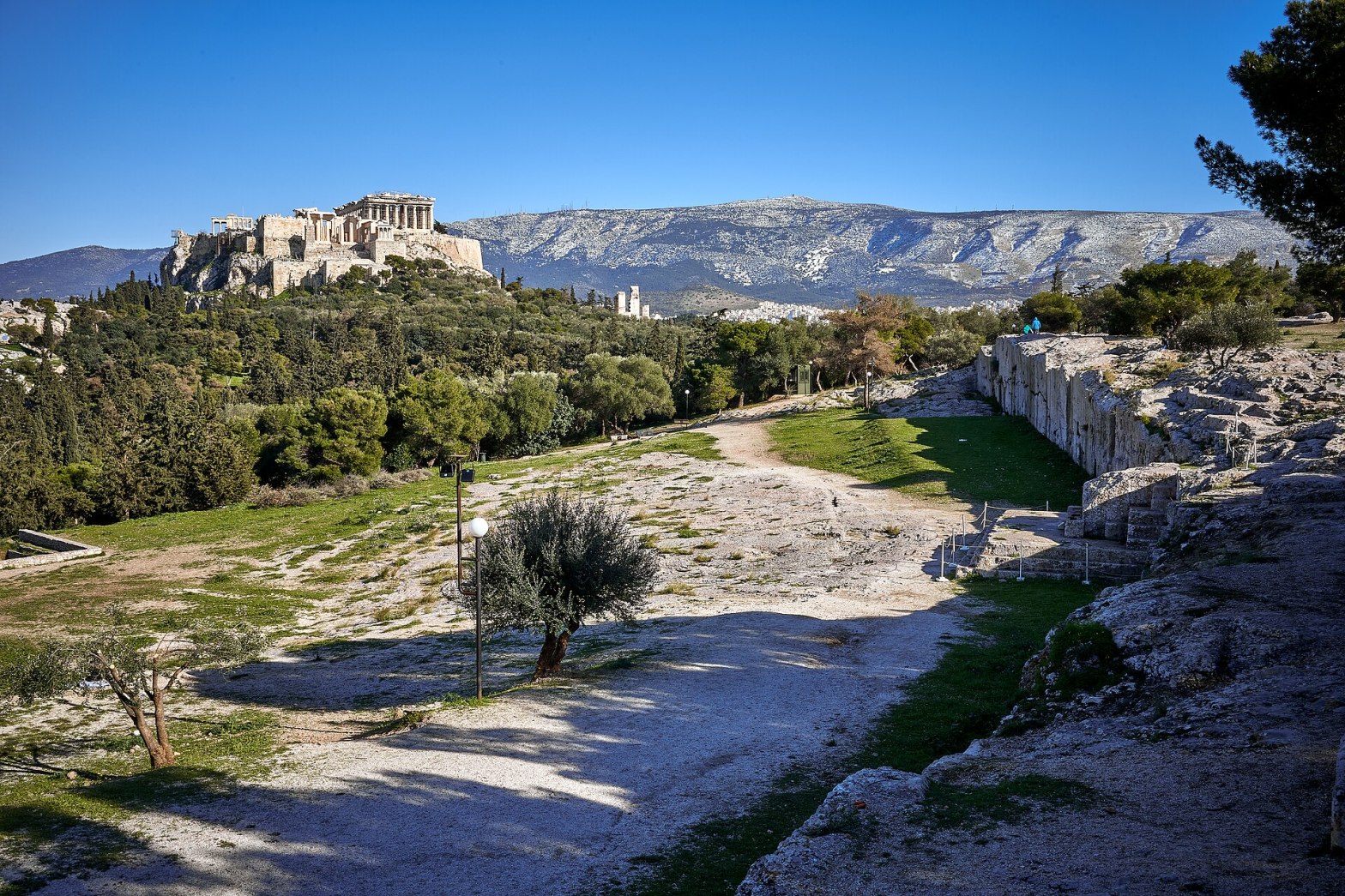
The ancient Greeks routinely formed interstate alliances. Evidence for these agreements survives in the works of ancient historians, poets, tragedians, inscriptions, and occasionally, in coins. Although alliances are commonly presented as a fait accompli, as though they simply passed through the appropriate political institutions and came into being, there are a few accounts revealing the negotiations that preceded them. One particularly illuminating example comes in Demosthenes’ On the Crown, which recounts the formation of the Athenian-Theban alliance of 339. This blog essay uses that episode to explore how ambassadors helped shape diplomatic agreements in ancient Greece.
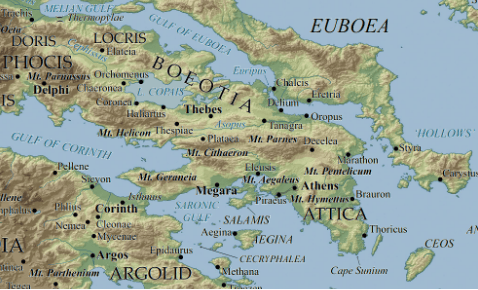
In November 339, Philip II of Macedon seized Elateia, the northern entrance to Boeotia and only a three days’ march from Attica. A messenger hurried to Athens with the news, prompting the council to convene an emergency meeting of the assembly. Demosthenes describes the tense atmosphere that followed:
The council arrived and the presidents reported what had been announced to them, and this man [the messenger], after being introduced, spoke to those present. Then the herald asked, ‘who wishes to speak?’ But no one came forward. Although the herald asked many times, still no one stood up (18.170).
Eventually, Demosthenes proposed that they dispatch ambassadors, including himself, to Thebes to propose a military alliance (symmachia) (18.177-178). The assembly approved his proposal and selected who would accompany on this mission.
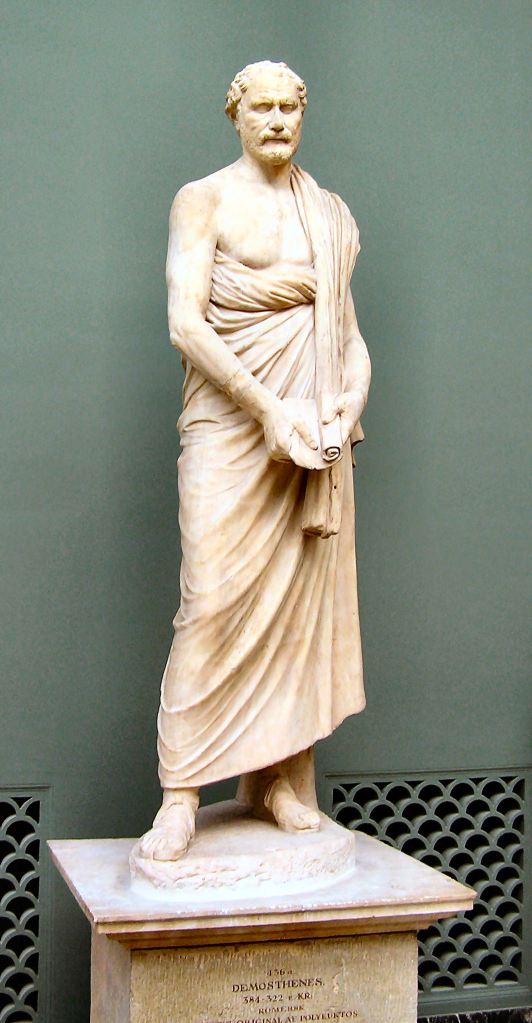
Demosthenes (18.187) names four of the ten ambassadors who joined him: Hypereides, Mnesitheides, Democrates, and Callaeschrus. Little is known about these men, but their selection would not have been arbitrary. Ambassadors were generally chosen for their political experience, speaking abilities, and personal connections. The Greek word for ambassador (presbys) originally meant “elder,” reflecting the association between age and political standing. Demosthenes himself was in his mid-forties and had already served on significant embassies before 339. Several of his speeches dealt with foreign relations. Moreover, he was probably a public guest-friend (proxenos) of the Thebans, a position that gave him particular insight into the relationship between the two communities.
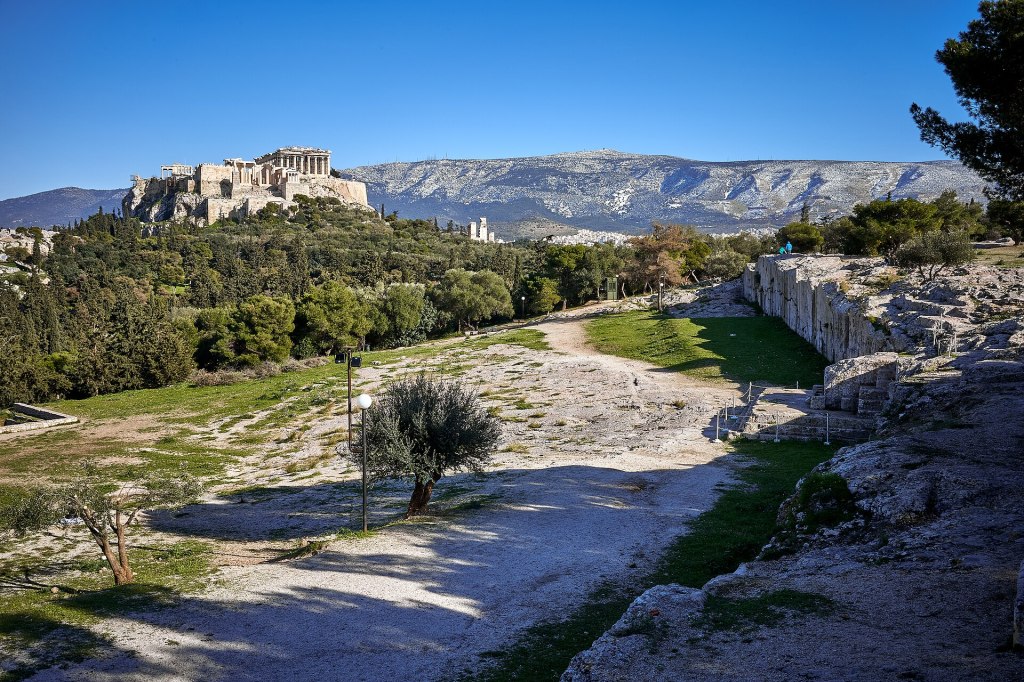
Demosthenes does not tell us precisely what instructions the assembly gave the ambassadors, but they were probably broadly defined. Political authorities often directed ambassadors to secure “whatever good they could” or to act “in the interest” of the community. Such language left room for negotiation instead of requiring ambassadors to follow a fixed script. Diplomatic discussions could even begin before ambassadors formally presented their case. They might meet privately with local friends or proxenoi who could advise them about present political conditions. Although Demosthenes fails to mention any preliminary meetings in 339, it is plausible that he consulted his Theban contacts before addressing the Theban assembly.
When the assembly convened, Philip’s representative Pytho of Byzantium spoke first. He urged the Thebans to join Philip in an attack on Attica or at least allow him free passage through Boeotia. Next, Demosthenes presented the Athenian case. According to him (18.187), the Athenian assembly had authorized the ambassadors to propose a symmachia, rights of intermarriage with the Thebans (epigamia), and the exchange of oaths (horkous dounai kai labein), referring to the formal ratification of an alliance treaty. But he does not mention anything more specific about the proposed agreement. For that we must turn elsewhere.
Demosthenes’ rival Aeschines (3.106, 140-143) called the ensuing alliance “an unjust and not at all equal” (adikon de kai outdamōs isēn). He accused Demosthenes of selling out Athenian interests by recognizing Thebes’ domination over Boeotia, agreeing that Athens would bear all the costs of naval operations and two-thirds of land campaigns, and promising the Thebans supreme command on land and joint command at sea. Dina Guth suggests that the Thebans, forced to decide between Philip and the Athenians, may have communicated these terms to Demosthenes before the assembly met. Guth proposes that they might have expected him to reject the terms, bringing negotiations to a standstill. If so, Demosthenes’ willingness to accept their proposals during his speech would have surprised his Theban audience, leaving them little reason to refuse an agreement built around their own demands. This interpretation remains a possibility rather than an established fact. Nevertheless, the negotiations do not appear to have taken very long. The two sides ratified the agreement through religious rites and then put it into practice.
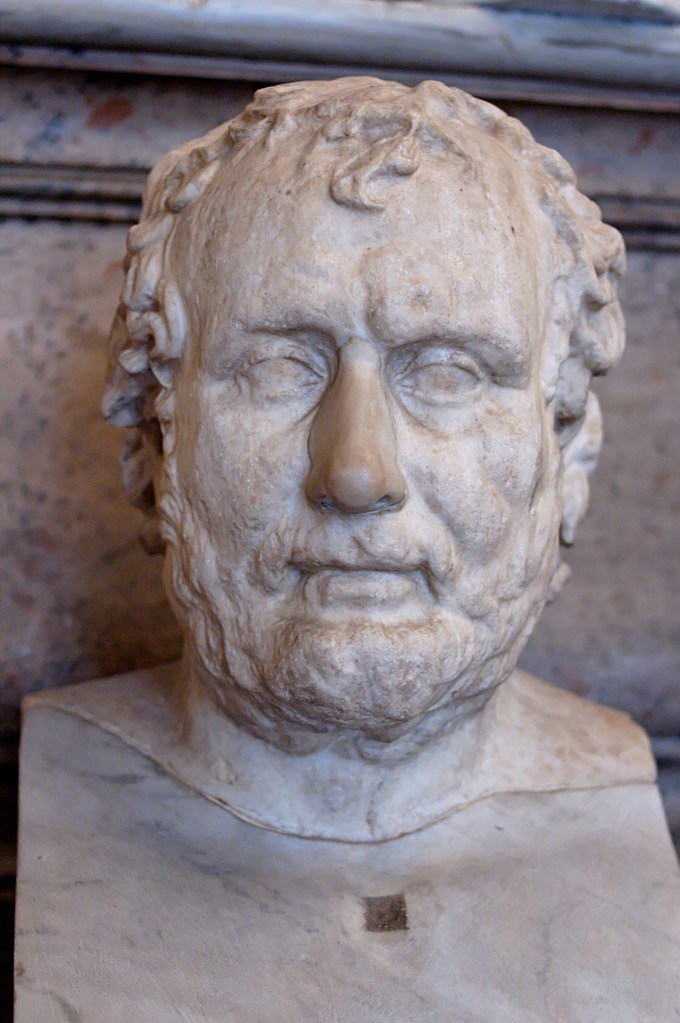
Demosthenes’ and Aeschines’ accounts, however, are not the only version of events. Hypereides’ speech Against Diondas, fragments of which were recovered in 2002 from inside the Archimedes Palimpsest, offers an alternative account. Hypereides (137r 2-6), who accompanied Demosthenes on the embassy to Thebes, says that the Thebans did not agree to the alliance until the Athenian army marched into Boeotia. But he also acknowledges that the Thebans welcomed the Athenian soldiers into their city and homes, a gesture of hospitality that Demosthenes and his embassy may have helped foster. Whether the alliance was concluded during the assembly, as Demosthenes indicates, or later, as Hypereides claims, what all accounts reveal is that the embassy mattered. Whether through persuasion in the assembly, the cultivation of personal relationships, or the confidence inspired by the arrival of Athenian troops, the ambassadors helped create the conditions in which an agreement became possible.
This case study points to a dynamic process of alliance formation in ancient Greece. Political institutions established broad diplomatic objectives, but ambassadors interpreted those objectives, cultivated relationships, persuaded foreign audiences, and negotiated the terms of agreements. Ambassadors were active participants in shaping alliances. The Athenian-Theban alliance of 339 BCE thus offers a glimpse of ancient Greek diplomacy in action: a process conducted both in private conversations and in the public forum of the assembly, where individual judgment and persuasive skill could influence the course of interstate relations.
Additional Resources
Adcock, Frank E. and Derek J. Mosley. 1975. Diplomacy in Ancient Greece. London.
Care, Chris et al. 2008. “Fragments of Hyperides’ ‘Against Diondas’ from the Archimedes Palimpsest.” Zeitschrift für Papyrologie und Epigraphik 165: 1-19.
Cross, Nicholas. 2026. The Roots of Cooperation: Constructing Interstate Alliances in Ancient Greece. Ann Arbor.
Guth, Dina. 2014. “Rhetoric and Historical Narrative: The Theban-Athenian Alliance of 339 BCE.” Historia 63: 151-65.
Mack, William. 2015. Proxeny and Polis: Institutional Networks in the Ancient Greek World. Oxford.
Mosley, Derek J. 1971. “Athens’ Alliance with Thebes 339 B.C.” Historia 20: 508-10.
Mosley, Derek J. 1973. Envoys and Diplomacy in Ancient Greece. Stuttgart.
Roismann, Joseph. 2006. The Rhetoric of Conspiracy in Ancient Athens. Berkeley.
Romm, James. Demosthenes: Democracy’s Defender. New Haven & London.
Steinbock, Bernd. 2013. Social Memory in Athenian Public Discourse: Use and Meanings of the Past. Ann Arbor.
Tchernetska, Natalie. 2005. “New Fragments of Hyperides from the Archimedes Palimpsest.” Zeitschrift für Papyrologie und Epigraphik 154: 1-6.
Trevett, Jeremy. 1999. “Demosthenes and Thebes.” Historia 48: 184-202.
van Wijk, Roy. 2024. Athens and Boiotia: Interstate Relations in the Archaic and Classical Periods. Cambridge.
Yunis, Harvey. 2001. Demosthenes, On the Crown. Cambridge.
Dr. Nick Cross is an Assistant Professor of Ancient Mediterranean History at the United States Naval Academy. His recent book is The Roots of Cooperation: Constructing Interstate Alliances in Ancient Greece (University of Michigan, 2026), and his next is Thrasybulus of Steiria: An Athenian Hero? (Bloomsbury, forthcoming). He is also the co-editor of The Ancient World in Rock Music: Playing the Classics in the 1960s and 1970s (Bloomsbury, 2026).
Like our content? Consider donating to Peopling the Past. 100% of all proceeds support honoraria to pay the graduate students and contingent scholars who contribute to the project.
Make a monthly donation
Make a yearly donation
Choose an amount
Or enter a custom amount
Your contribution is appreciated. Please note that we cannot provide tax receipts, as we are not a registered charity.
Your contribution is appreciated. Please note that we cannot provide tax receipts, as we are not a registered charity.
Your contribution is appreciated. Please note that we cannot provide tax receipts, as we are not a registered charity.

