Peopling the Past presents Power and the People: How Ancient States and Empires Worked. In this series, we explore the people, institutions, and everyday practices that sustained ancient states and empires, drawing on archaeological and textual evidence to uncover the workings of power across the ancient Mediterranean and Middle East. We especially aim to peer beyond kings, conquests, and monuments to investigate the individuals and communities who made these complex societies function.
When we picture politics in classical Greece, we usually imagine male citizens debating in the Athenian assembly or marching into battle as hoplites, and, in this familiar narrative, women are relegated to the shadows of the oikos (the household), treated as silent, passive figures excluded from civic life. My current research challenges this assumption by looking at women’s civic and political belonging in classical Athens and in Plato’s final, most institutionally detailed dialogue, the Laws. By placing Plato’s fictional city of Magnesia into dialogue with historical sources, such as Athenian court speeches, legal decrees, and inscriptions, we can look past the simpler voting-based definitions of citizenship. In antiquity, belonging to a state was not just about casting a ballot: it was about timai, the honours, legal protections and religious duties that sustained the entire community. Through this lens, we can begin to see women not as outsiders looking in, but essential participants at the very core of the polis.
Nowhere is this clearer than in the institution of marriage. Today, we tend to think of marriage as a private, romantic choice. In classical Athens, however, marriage was a foundational political mechanism, for the very survival and autonomy of the city depended on civic endogamy and the strict regulation of marriage to produce legitimate heirs and secure the transmission of ancestral land. Following Pericles’ Citizenship Law of 451/0 BCE, only children born to two Athenian citizen parents could legally participate in the state, which meant that the oikos was not an apolitical domestic sanctuary but was instead the basic political cell of the polis, and women were indispensable to its operation.
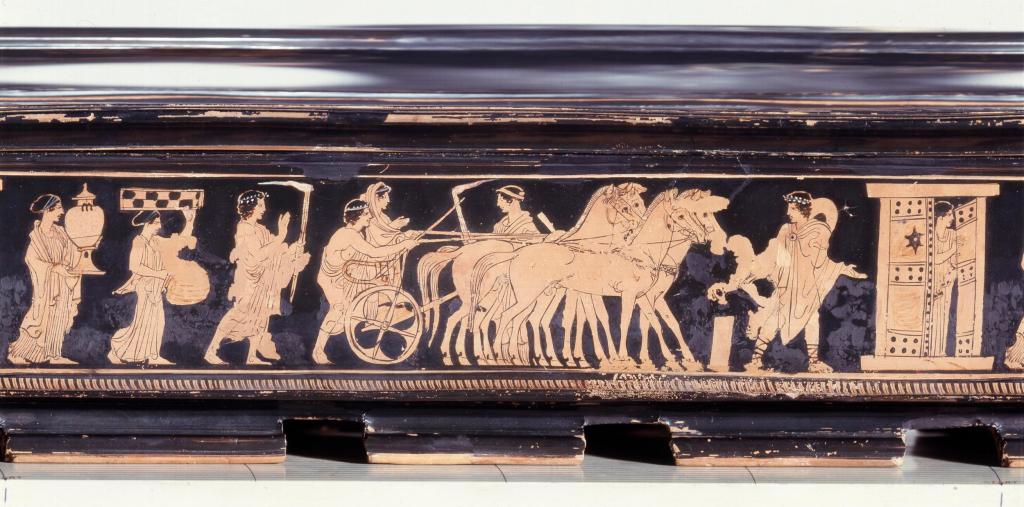
A vivid glimpse into how seriously Athenians took this comes from a fourth-century BCE courtroom speech, Against Neaira. In the trial, a citizen named Stephanos was accused of illegally living with Neaira, a foreign-born former courtesan, as his wife, and passing off her daughter, Phano, as a legitimate Athenian citizen. The scandal exploded when Phano was married to the Archon Basileus (one of Athens’ highest religious officials), a role that required her to perform ancient, secret rituals on behalf of the entire city. The prosecutor warned the all-male jury that acquitting Neaira would outrage their own wives, respectable citizen women whose primary source of civic pride and timai was their exclusive right to uphold the city’s bond with the gods. Marriage, lineage, and religious purity were inseparable, and citizen women were to have those boundaries guarded fiercely. Of course, this trial also lays bare a striking paradox: even when women’s civic standing and religious prerogatives were at the very heart of the debate, women themselves were indeed barred from the courtroom and the assembly, unable to participate in the formal deliberations that governed their own lives. Acknowledging their vital role in the polis does not mean erasing the harsh legal asymmetries they faced under male guardianship. Rather, it reminds us that looking to the past requires nuance; instead of flattening antiquity into a black-and-white narrative of either total exclusion or unrealistic equality, we must learn to see the complex, graded spaces where ancient women actually lived and exercised agency.
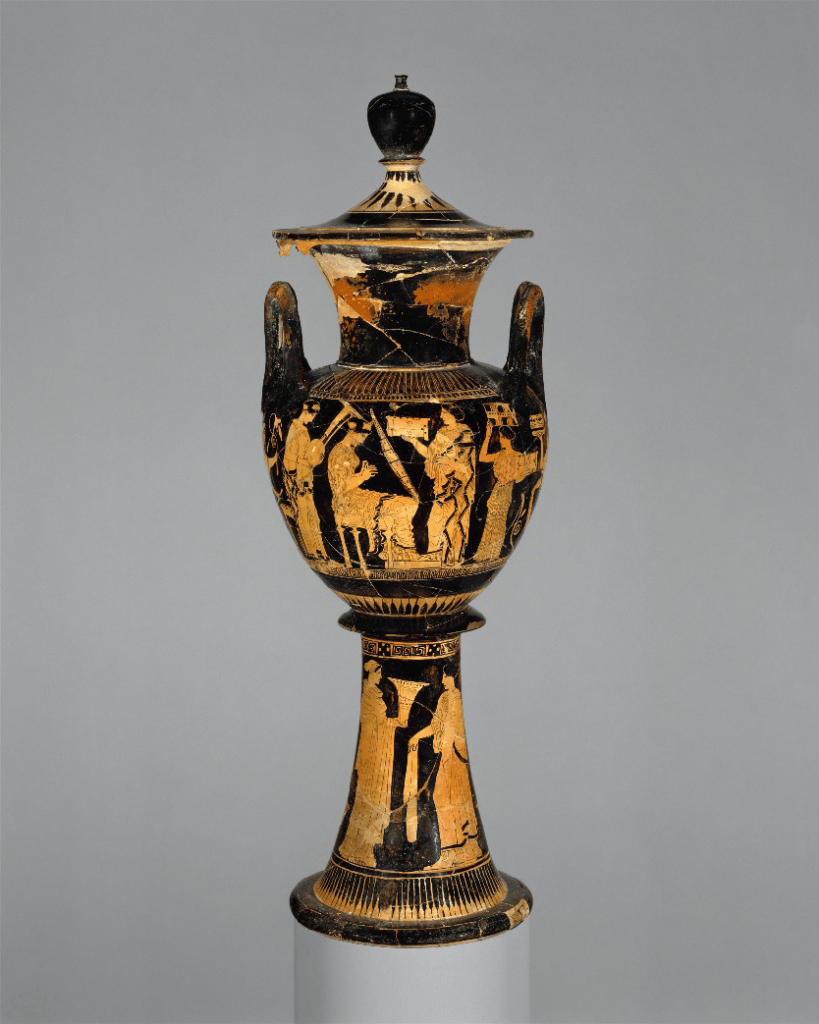
Plato is great ground for reflection on this historical reality: in the Laws, he designs a so-called “second-best” city called Magnesia that, unlike the radical, family-free utopia of his earlier Republic, retains private households and nuclear families. Yet Plato refuses to leave women unregulated in the shadows of the oikos, arguing that a city that neglects its women operates at only “half a happy life” (Pl. Lg. 806c). Instead, he drags the private sphere into the light of public scrutiny. In Magnesia, marriage is explicitly framed as a collective civic duty rather than a matter of personal whim or financial ambition, and to curb greed and prevent wealthy families from hoarding power, Plato abolishes the concept of dowry altogether, and even legislates the most intimate moments of married life, reminding both husband and wife to remain sober when trying to conceive, because producing healthy, virtuous citizens is a shared responsibility to the state. Most strikingly, Plato creates a formal public office for a group of “ruling women” (archousai gynaikes) (Pl. Lg. 784a-c), selected from among the city’s most virtuous female citizens, to supervise newlyweds during their childbearing years. These women are not a passive moral committee, as they hold tangible, coercive authority: they have the right to enter the homes of young couples, praise or reprimand them, deliberate on divorces if a marriage remains childless, and report negligent husbands to the city’s Guardians of the Laws. In classical Athens, the male head of the household (kyrios) held total legal sway over his home, but in Plato’s Magnesia, that dynamic is inverted: female magistrates police the private conduct of male citizens to enforce the interests of the state.
Looking at marriage through both Athenian law and Platonic philosophy reveals how ancient states actually functioned on the ground. Power did not reside solely in the decrees of generals or the votes of the assembly, but also lived in the everyday practices of the household, in the negotiation of family alliances, and in the ritual obligations that bound communities together. By peering beyond the assembly floor, we are able to recover the real women of the ancient Mediterranean and what agencies they possessed.
Additional Resources
Blok, J. (2017). Citizenship in Classical Athens. Cambridge University Press.
Blundell, S. (1995). Women in Ancient Greece. Harvard University Press.
Folch, M. (2015). The City and the Stage: Performance, Genre and Gender in Plato’s Laws. Oxford University Press.
Plato. Laws. Translated by Trevor J. Saunders (1997), in Plato: Complete Works. Hackett.
Sebillotte Cuchet, V. (2015). “Cidadãos e cidadãs na cidade grega clássica.” Revista Tempo, 21(38), 1–20.

Helena Franzon holds a Master’s degree in Metaphysics (Philosophy) from the University of Brasília (UnB), Brazil. Her research focuses on Plato’s political philosophy, gender studies, and the civic status of women in classical antiquity, with a particular emphasis on Plato’s Laws. She is interested in how ancient philosophical texts and historical practices intersect to shape ideas of citizenship and belonging. You can find updates on her publications on her Instagram, @hanestudies.
Make a one-time donation
Your contribution is appreciated. Please note that we cannot provide tax receipts, as we are not a registered charity.
DonateMake a monthly donation
Your contribution is appreciated. Please note that we cannot provide tax receipts, as we are not a registered charity.
Donate monthlyMake a yearly donation
Your contribution is appreciated. Please note that we cannot provide tax receipts, as we are not a registered charity.
Donate yearly
