In recognition of Earth Day on April 22nd, this month’s special series of blog posts feature researchers who study human-environment relations in the past, specifically within the context of garden spaces.
My name is Kaja Tally-Schumacher, and I’m a Roman landscape archaeologist at Harvard University. My research focuses on the individuals who designed, created, and maintained gardens and other designed landscapes in the ancient Mediterranean. I’m especially interested in how we can use a wide range of artifacts—from planting pots to inscriptions to ancient plant remains and more—to recover, reconstruct, and reflect on the presence, specialized knowledge, and experiences of laborers and other non-elite people in the Roman world.
What sparked your interest in labor and the experiences of everyday people in past societies?
My deep interest in the lived experiences of makers, craftspeople, and artists in the ancient world began during my first archaeological excavation in Messene, Greece, when I was an undergraduate. Despite the extreme heat waves, drought, and an overabundance of cucumbers, what I remember most clearly is the moment I came across a distinctive pottery sherd—a fragment classified as a diagnostic sherd because it could be identified and dated
This particular sherd had been pinched while the clay was still wet, preserving the finger pads and fingerprints of the potter. My own slender finger pads fit almost perfectly into the ancient impressions. These marks were clearly made by hands like mine—perhaps a woman’s hands, or those of a young man—since my hands are significantly smaller and narrower than those of most adult men. That moment of physically connecting with a stranger from thousands of years ago was transformative. It sparked the line of inquiry that has led to my first (and forthcoming) book project, Unseen Hands: Designing Gardens in the Age of the Roman Climate Optimum.
How do you gain insight from paintings of gardens if they omit the people you are studying?
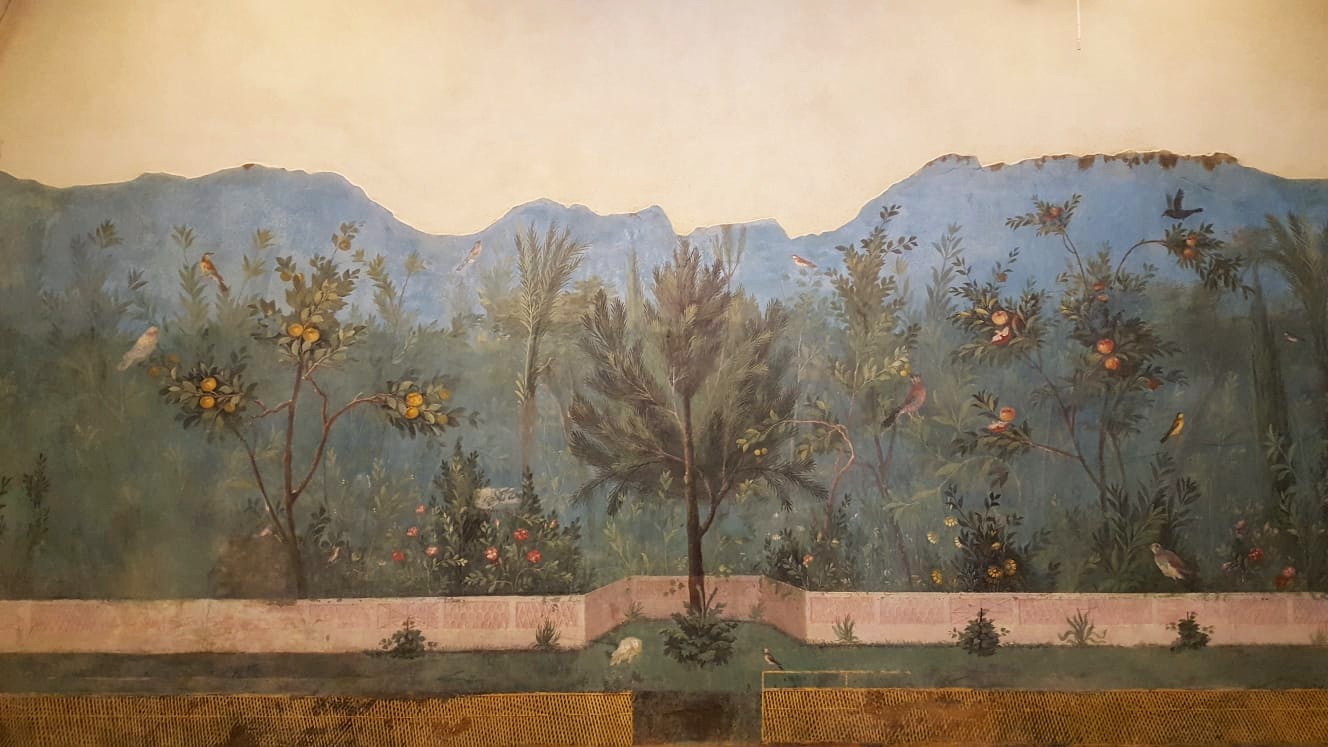
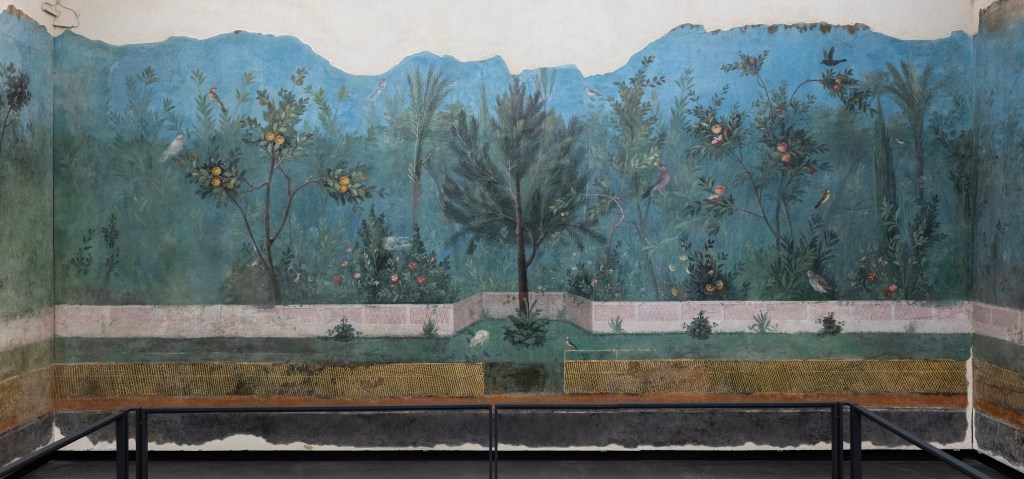
One of the central challenges of studying garden laborers and designers as an art historian and archaeologist is that there are no surviving visual representations of gardeners at work. Roman art offers numerous depictions of gardens and designed landscapes—most famously the so-called Garden Room at Livia’s Villa at Prima Porta, located about 20 kilometers north of Rome—but none that show pruning, weeding, or watering gardeners in action (Fig. 1).
This absence is striking because Roman visual culture is otherwise rich in representations of labor. We see scenes of construction workers (such as those from the Villa San Marco), numerous images of enslaved attendants at banquets (from sites across Pompeii, Herculaneum, and the wider empire), and commemorative depictions of specific professions, including midwives at Ostia and bakers in Rome, among many others.
Garden paintings, however, follow a different visual logic. In works such as the Prima Porta Garden Room, painters did not depict gardeners’ bodies, yet they painstakingly highlighted the traces of their labor. Pruning scars along branches, carefully spaced trees, and meticulously arranged plantings are brought close to the picture plane, making these interventions impossible for viewers to overlook. The gardeners’ hands are absent, but their work is everywhere.
Recovering these individuals—whose corporeal presence is deliberately omitted—requires drawing on a wide range of material and textual evidence. In my research, I turn to commemorative and funerary inscriptions that document the familial networks of enslaved, freed, and freeborn gardeners; the role of apprenticeship in training; and their participation in professional collegia (associations that helped negotiate contracts, wages, and collective burial arrangements). Because no texts written by gardeners themselves survive from antiquity, this epigraphic corpus provides a rare glimpse into the personal and professional lives of these non-elite craftsmen.
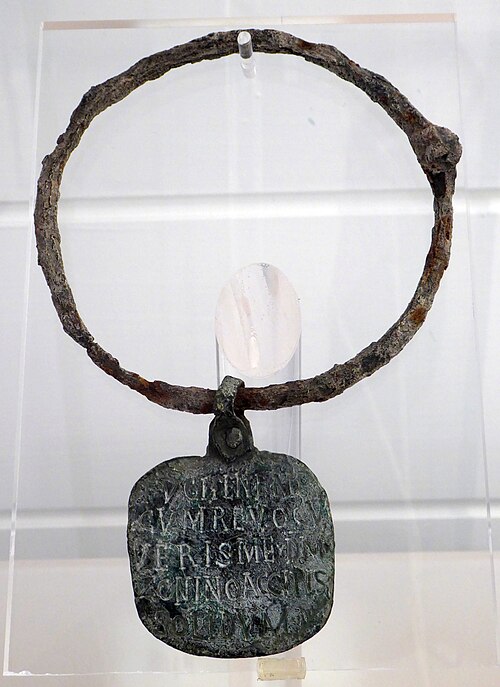
Literary texts, written from the perspective of elite villa owners, reveal another dimension: they often express deep anxiety that enslaved horticultural workers might steal the products of their labor. The only surviving gardener’s contract—a third-century CE ostracon (an amphora reused as scrap paper)—reflects similar concerns. In this document, a garden owner named Talames stipulates that she will inspect her gardener Peftumont’s feces multiple times a day in search of pips and seeds, evidence that he has eaten produce from her garden; she will then dock his pay according to the number of seeds she finds. While Peftumont was working for wages, many other gardeners were enslaved. This reality is starkly illustrated in another disturbing document: a pendant from a fourth-century CE slave collar (similar to the so‑called Zoninus collar depicted here). Its inscription warns readers not to detain the wearer, likely a topiarius (a place-maker or landscape designer), who belonged to the garden of a wealthy official (Fig. 2).
When we set these texts and inscriptions alongside garden paintings like the Prima Porta Garden Room, the picture changes. By analyzing plant species, pruning styles, and compositional choices in such paintings—and comparing them with archaeological, botanical, and textual evidence—we can reconstruct the routines, expertise, and constraints of the people whose labor made these idealized landscapes possible, even if they themselves remain unnamed and unseen.
What other work contributes to your interpretations of horticultural labor in the Roman world?
I am the assistant director of the Casa della Regina Carolina Project at Pompeii, where we are excavating one of the largest urban domestic gardens in the city. This property was first uncovered in the early 19th century, before the advent of modern archaeological methods, so very little documentation survives about the objects of daily life that once populated this space.
In the course of our work, we have identified over 100 planting locations—traced through root cavities, planting pits, and perforated planting pots (ollae perforatae)—as well as compacted working surfaces that suggest gardeners repeatedly walking through the garden beds. We have also collected archaeobotanical data, including ancient pollen, which allows us to reconstruct the range of plant species that once grew in the garden.
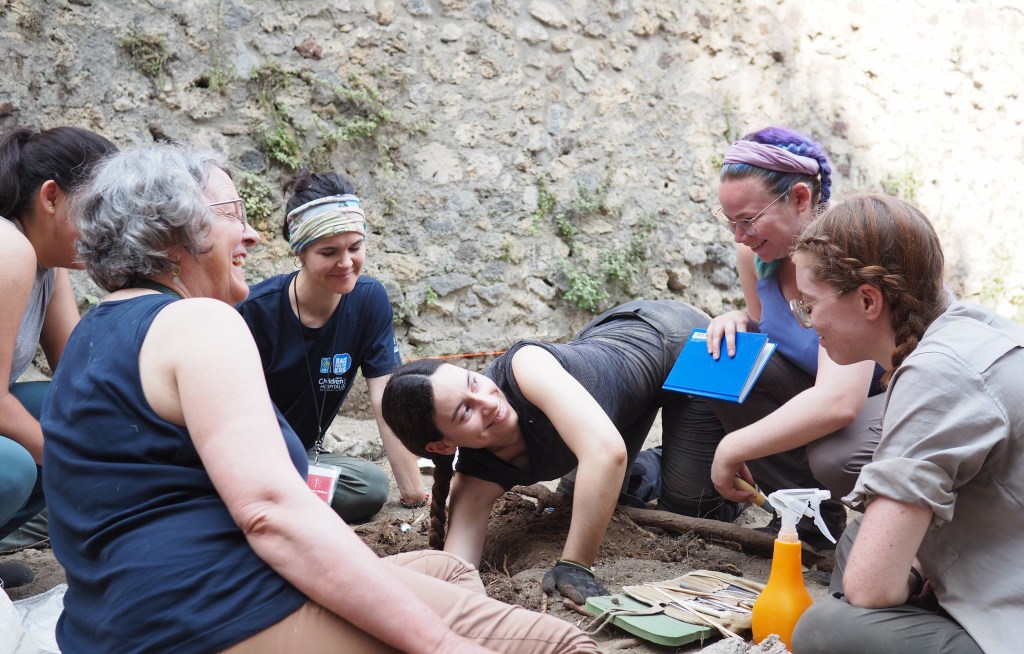
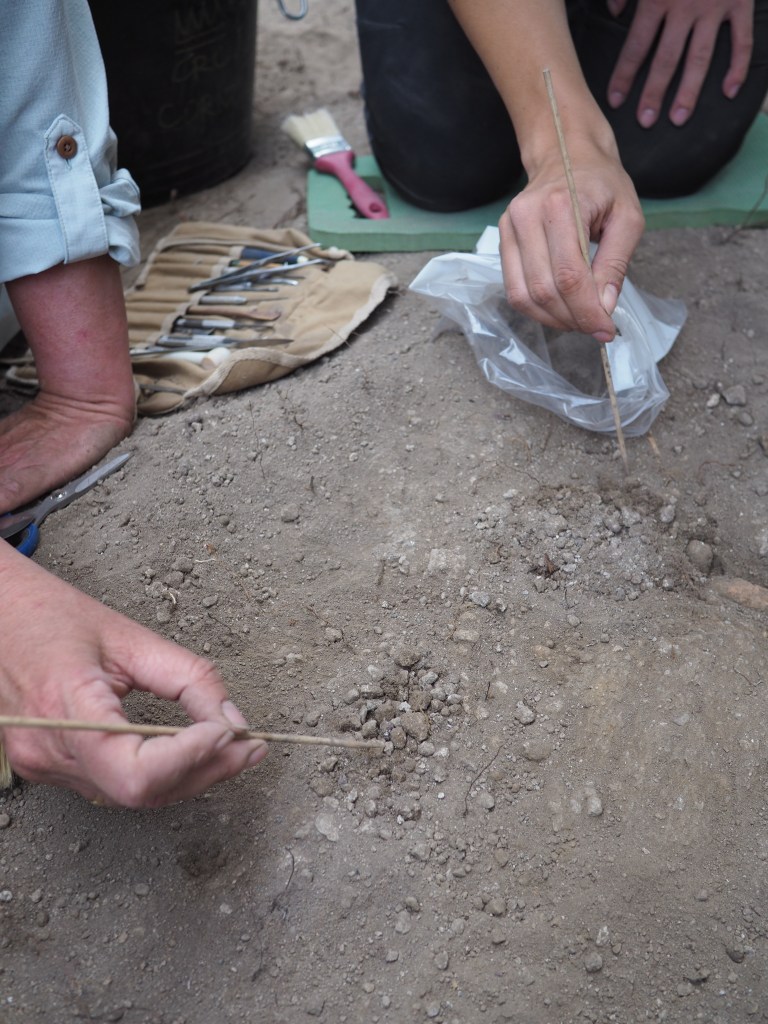
Together, these discoveries highlight the many different kinds of workers who contributed to the creation and upkeep of this landscape: laborers who moved rubble to create level ground, workers who carted in topsoil and planted new specimens, specialized gardeners who seasonally pruned fruit-bearing trees and shrubs, and likely enslaved members of the household who weeded and watered the beds.
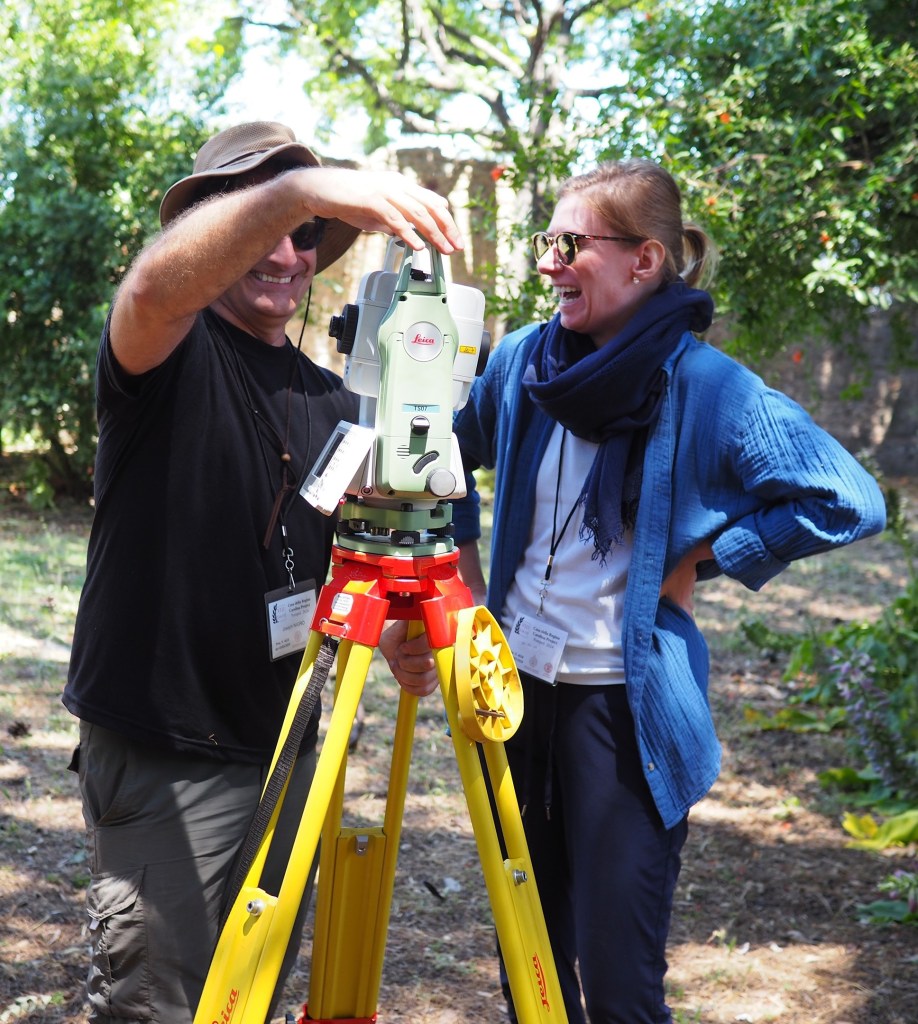
One of the most rewarding aspects of this project has been sharing our ongoing findings with the head gardener of the Archaeological Park of Pompeii, Maurizio Bartolini, and his team, who maintain the many reconstructed gardens across the site today.
Additional Resources
The Casa Della Regina Carolina Project at Pompeii
Austen, V. 2023. Analysing the boundaries of the ancient Roman garden: (Re)framing the Hortus. Bloomsbury Academic.
Jashemski, W. F., K. Gleason, K. J. Hartswick & A. Malek (eds.). 2019. Gardens of the Roman Empire. Cambridge University Press.
Landgren, L. 2004. “Lauro, Myrto, et Buxo Frequentata: A Study of the Roman Garden through Its Plants.” PhD thesis, Lund University.
MacDougall, E. B. & W. F. Jashemski (eds.). 1981. Ancient Roman Villa Gardens. Dumbarton Oaks Trustees for Harvard University.
Trimble, J. 2016. “The Zoninus Collar and the Archaeology of Roman Slavery”. American Journal of Archaeology, 120.3: 447–472.
Zarmakoupi, M. 2023. Shaping Roman landscape: ecocritical approaches to architecture and wall painting in early imperial Italy. J. Paul Getty Museum.
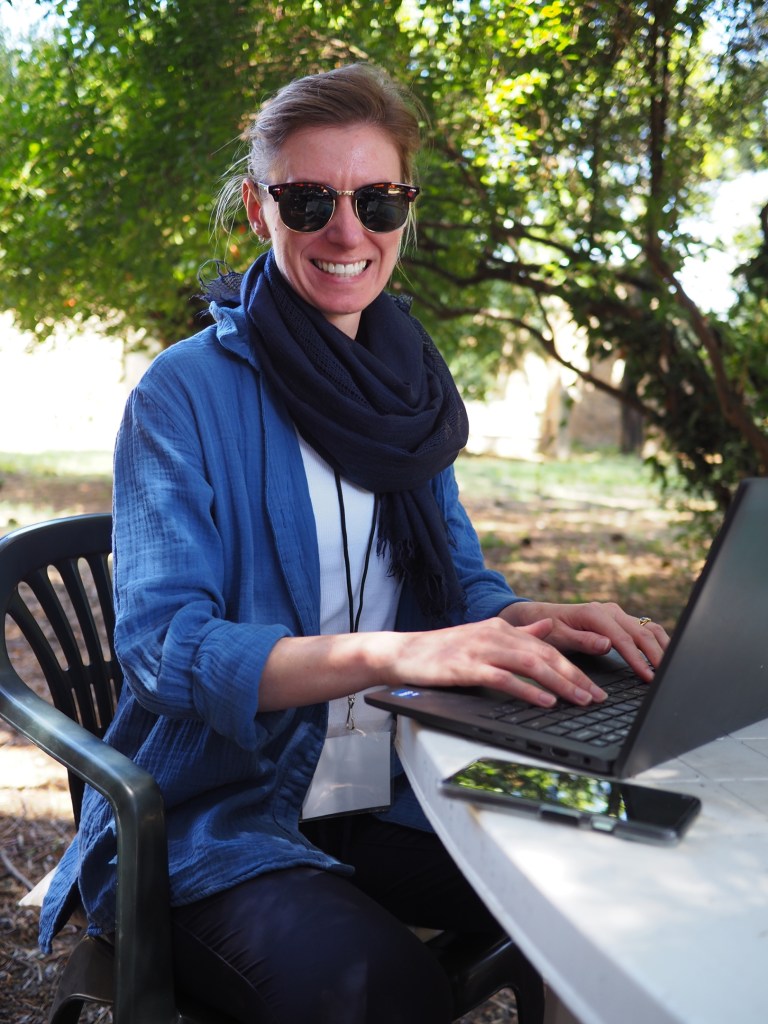
Kaja Tally-Schumacher is an Assistant Professor of Environmental History and a Faculty Associate at the Salata Institute for Climate and Sustainability at Harvard University. She has excavated in both the eastern and western Mediterranean, but has primarily worked on and led projects in the Bay of Naples in southern Italy. She is currently the Assistant Director of the Casa della Regina Carolina Project at Pompeii.
Originally from Warsaw, Poland, Kaja completed her B.A. in Classical and Near Eastern Archaeology at the University of Minnesota Twin Cities. She holds graduate degrees from the University of Massachusetts Amherst and from Cornell University, where she completed her doctoral work.
Like our content? Consider donating to Peopling the Past. 100% of all proceeds support honoraria to pay the graduate students and contingent scholars who contribute to the project.
Make a monthly donation
Make a yearly donation
Choose an amount
Or enter a custom amount
Your contribution is appreciated. Please note that we cannot provide tax receipts, as we are not a registered charity.
Your contribution is appreciated. Please note that we cannot provide tax receipts, as we are not a registered charity.
Your contribution is appreciated. Please note that we cannot provide tax receipts, as we are not a registered charity.
DonateDonate monthlyDonate yearly Peopling the Past