In recognition of Earth Day on April 22nd, this month’s special series of blog posts feature researchers who study human-environment relations in the past, specifically within the context of garden spaces.
One of Peopling the Past’s goals is to amplify the work of young and/or under-represented scholars and the amazing research that they are doing to add new perspectives to the fields of ancient history and archaeology (broadly construed). We will thus feature several blog posts throughout the year interviewing graduate students on their research topics, focusing on how they shed light on real people in the past.
In his 1855 manuscript documenting the excavations at Pompeii, Ernest Breton describes a square niche lined with marble in the House of Queen Carolina (VIII.3.14), which was “closed by a pane of glass and contained a lamp, the smoke from which issued through a little terracotta chimney”.
These architectural features—known as enclosed lighting systems or lamp tunnels—are found throughout Pompeii, mostly in baths, but also in corridors and gardens. Though often overlooked, these installations reveal how Pompeians engineered light to address the aesthetic, social, and practical concerns of the home, in environments where darkness, smoke, and fire posed real challenges.
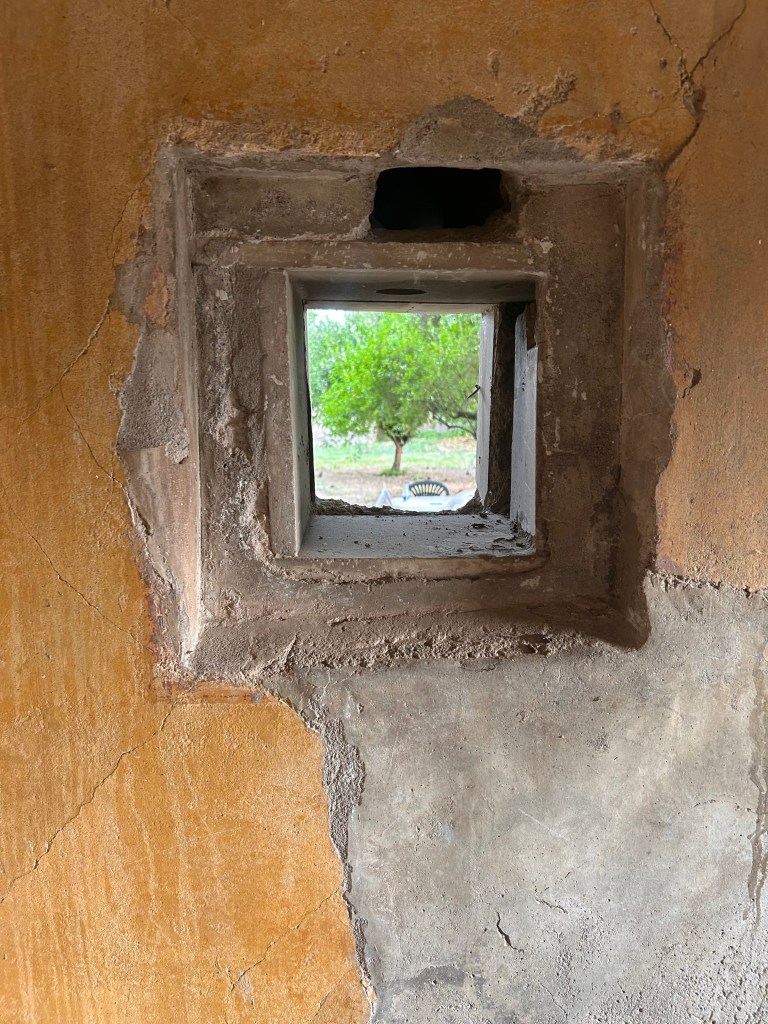
Enclosed lighting systems were designed to illuminate a space by oil lamp with a controlled flame, while minimizing the effects of soot and smoke. Built into the wall as small cavities, they emitted light through openings on either side and sometimes included a third opening in the threshold for inserting the lamp.
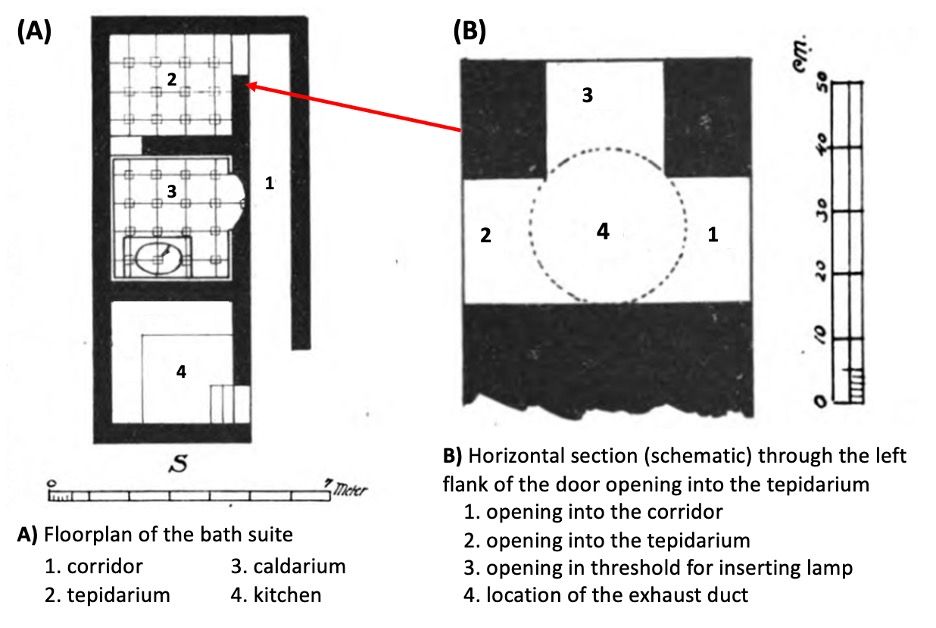
First appearing in private baths in the late first century BCE, these features provided lighting for dimly lit bath suites, where limited windows preserved heat but reduced natural light. Glass panes protected the flame from moisture, allowing it to burn effectively in the humid conditions of the bath. By the first century CE, enclosed lighting systems were a standard feature of bath architecture, present in at least fifteen domestic bath complexes at Pompeii. But in Pompeii’s final decades, these features also appear in new contexts—particularly in rooms opening onto porticoes and gardens—as seen in the House of Queen Carolina.
After the earthquake of 62 CE, the House of Queen Carolina underwent extensive renovations, with much of the standing architecture demolished for the construction of a large garden. The renovations dramatically altered the house’s layout, with the garden now occupying over two thirds of its surface area.
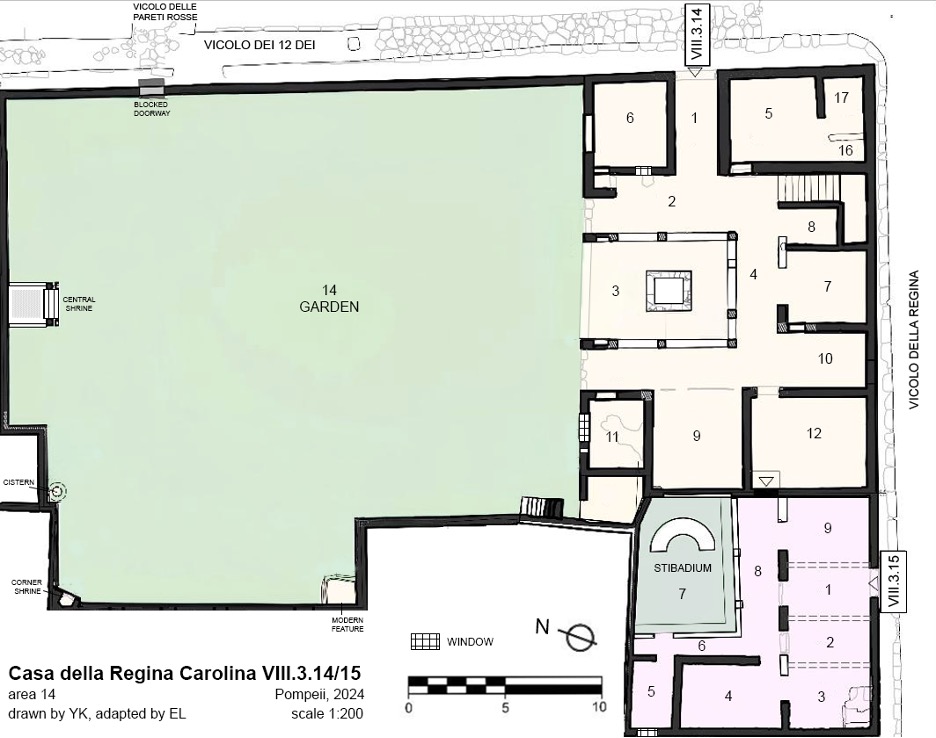
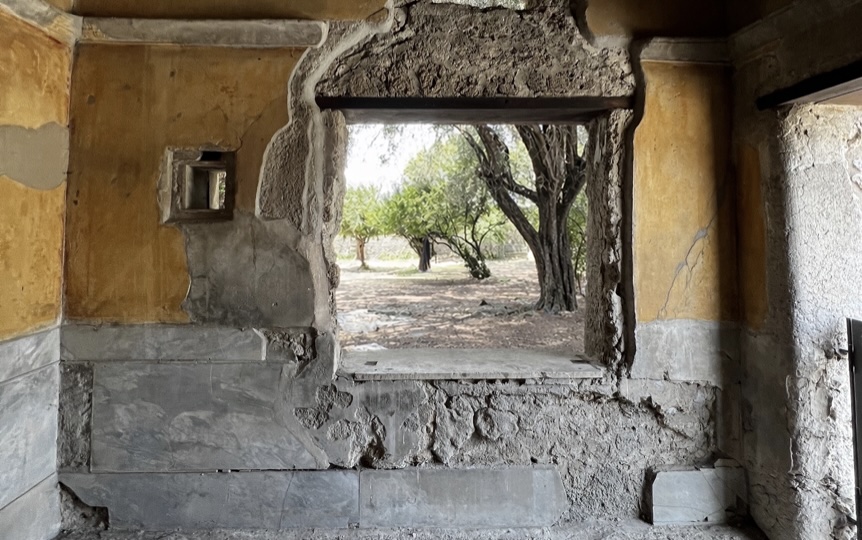
An enclosed lighting system was installed in Room 11, adjacent to a large window overlooking the garden (see Fig. 1). This lighting mechanism has the same technical components as those found in baths (see Fig. 2). Nineteenth-century reports describe glass panes in the opening on the garden wall, though none survive today. On the interior wall, the opening is framed by indentations in the plaster, evidence of a wooden shutter possibly set with glass panes. The new garden in the House of Queen Carolina follows a wider trend in post-earthquake renovations in Pompeii: as Wilhelmina Jashemski has shown, many of Pompeii’s gardens were constructed or expanded after the earthquake. The increase in garden spaces within Pompeian homes allowed more light to permeate interior rooms, and garden design took advantage of developments in window glass, with glazed windows installed overlooking gardens as a means of drawing in natural light. The illumination of these spaces was further enhanced by artificial lighting.
David Griffiths’ analysis of the spatial distribution of lighting equipment in Pompeian homes identifies concentrations of such equipment towards the rear of properties, in private domestic areas that opened onto porticoes and gardens. Concentrations were found in spaces for dining and entertaining, suggesting that the household consumption of artificial light facilitated nocturnal social activity. In the garden of the House of Queen Carolina, the enclosed lighting system was supplemented by a number of high-status candelabra in bronze and marble, reflecting the garden’s setting for refined entertainment. The distribution of enclosed lighting systems in Pompeii’s final decades reflects these broader trends in the household consumption of artificial lighting, and may suggest new priorities in the preferred venues of elite entertainment in the Pompeian house, from bath suites to garden rooms. Though some private baths were renovated after the earthquake of 62 CE, new bath complexes ceased to be constructed by the mid-first century CE. Moreover, some private baths were converted into gardens in the post-earthquake renovations. For example, the elaborate bath suite of the House of the Cryptoporticus (I.6.2) was dismantled, with its rooms repurposed as cellars and filled with earth and rubble to expand the garden. New garden rooms were constructed atop the decommissioned bath suite, including an open-air dining room. Evidently, the house’s patrons opted for an expansive garden as a space for elite entertainment and self-fashioning, rather than a private bath suite.
In addition to facilitating nocturnal social activity, enclosed lighting systems also impacted the design and use of domestic space as a form of soot mitigation. Donald Bailey has described the process of adjusting the wick of an oil lamp to control the flame and smoke: “when tamped down, the flame produces little or no smoke, but a larger and brighter flame can be obtained by pulling out the wick slightly, although an oily black smoke results (1972:10).” An enclosed lighting feature, with the lamp contained behind the glass pane, allowed for a brighter flame, with the smoke vented through the flue system. From at least the time of Vitruvius, Romans recognized the damaging effects of soot and smoke on their carefully decorated interiors. In his architectural treatise (7.3.3, 7.4.4), Vitruvius notes that plaster absorbs smoke and recommends that rooms exposed to fire and lamps be decorated with flat moldings to allow for easier cleaning. He also describes plain ceilings and black panels as appropriate for dining rooms (triclinia), where smoke damage was inevitable. Some Pompeians evidently adhered to this principle, as triclinia are found with black-ground walls. But the installation of an enclosed lighting system freed patrons from these decorative limitations by offering an effective means of protecting frescoes and molded stuccowork from soot and smoke damage, while allowing for a room’s nocturnal use. In the House of Queen Carolina, the enclosed lighting system protected the new, elaborate decorative ensemble in Room 11 (Fig. 4), which incorporated two bands of molded stuccowork, light-colored frescoes and fine marble revetment.
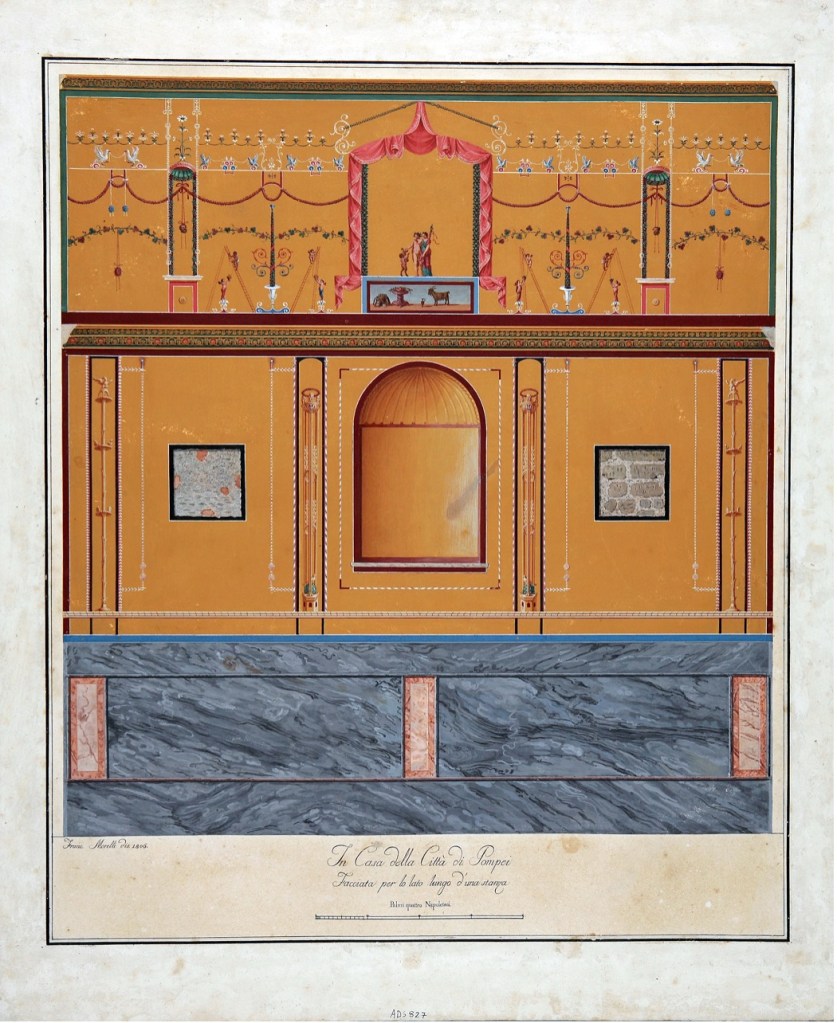
Utilizzabili alle condizioni della licenza Attribuzione – Non commerciale – Condividi allo stesso modo 4.0 Italia (CC BY-NC-SA 4.0 IT)
In the winter months, when the colder weather necessitated the shutters of the large window be closed, the room could still be used without soot or smoke damaging the decoration or disrupting the experience of the space. Enclosed lighting systems enabled patrons to design a room to their taste, allowing sustained use regardless of season or time of day.
In baths and gardens alike, enclosed lighting systems addressed the need to illuminate key domestic spaces while managing soot and smoke. But amid the ongoing seismic activity in post-earthquake Pompeii, these features may have also functioned as a form of fire prevention. In addition to seismic damage, the earthquake caused the outbreak of fires by overturning lit oil lamps, and unsecured flames posed a significant hazard. By enclosing lamps behind glass panes and shutters, these systems reduced fire risk, offering a more controlled and secure form of illumination than portable lighting. Far from technical curiosities, enclosed lighting systems show how ordinary Pompeians strategically reshaped domestic space to manage risk while balancing social display and aesthetic concerns.
Additional Resources
Barrett, C.E., Gleason, K., Graña, L. & A. Marzano, with additional contributions by E. Allen, R. Ferritto, D. Langgut, E. Lime, L. Magno, M. Robinson, & K. Tally-Schumacher. 2023. “Leisure and Labor in a Pompeian Garden: The Casa della Regina Carolina Project (VIII 3, 14), 2022 Field Season”. Rivista di Studi Pompeiani 34: 257–265.
Barrett, C.E., Gleason, K., Graña, L., Marzano, A., & K. Tally-Schumacher, with additional contributions by E. Allen, S. Barker, M. Bartolini, H. Becker, J. Bellviure, J. Feito, R. Ferritto, D. Langgut, E. Lime, P. Mighetto, M. Robinson, J. Sevink, K. Tardio, C. Ward, and C. Warlick. 2025. “The Casa della Regina Carolina (CRC) Project, Pompeii: 2022-2023 Field Seasons.” The Journal of Fasti Online.
Breton, E. 1855. Pompeia décrite et dessinée. Gide et J. Baudry.
Chapelin, G. 2020. “Eyes of Light”. In H. Dessales (ed.) The Villa of Diomedes. The making of a Roman villa in Pompeii. Hermann.
De Haan, N. 2010.Römische Privatbäder. Entwicklung, Verbreitung, Struktur und sozialer Status. Peter Lang Verlag der Wisseschften.
Fontaine, T.H.M. 1991. Die Villa di Diomede in Pompeji. Baugeschichtliche, typologische und stilistische Untersuchungen. PhD diss. Trier University.
Griffiths, D.G. 2022. “Household Consumption of Artificial Light at Pompeii”. In C. Papadopoulos & H. Moyes (eds) The Oxford Handbook of Light in Archaeology. Oxford University Press.
Jashemski, W. F. (1979/1993). The Gardens of Pompeii, 2 Volumes. Aristide D. Caratzas.
Mygind, H. P. T. 1924. Badene i de pompejanske privathuse. Studier fra sprog – og oldtidsforskning,Det ilologisk-historiske samfund nr. 132. Povl Branner.

Emily Lime is a Ph.D. candidate in Classics from UNC-Chapel Hill. Her work concerns the visual and material culture of the Ancient Roman world, with research interests in garden spaces, Roman wall painting, multimedia programming, and the remediation of Greek art in Roman visual culture. Her Master’s Thesis at UNC examined the remediation of sculptural elements into domestic garden paintings; and her current dissertation project, “After the Earthquake: Aesthetics of Disaster in Pompeian Gardens (62 – 79 CE),” reconstructs Pompeian domestic gardens renovated after the earthquake of 62 CE to examine how processes of rebuilding transformed the visual and material character of Roman domestic space. Emily worked in the Finds Lab at the Gabii Project Roma for 5 years, and has served as the Finds Registrar for the Casa della Regina Carolina Project at Pompeii since 2020.
Like our content? Consider donating to Peopling the Past. 100% of all proceeds support honoraria to pay the graduate students and contingent scholars who contribute to the project.
Make a monthly donation
Make a yearly donation
Choose an amount
Or enter a custom amount
Your contribution is appreciated. Please note that we cannot provide tax receipts, as we are not a registered charity.
Your contribution is appreciated. Please note that we cannot provide tax receipts, as we are not a registered charity.
Your contribution is appreciated. Please note that we cannot provide tax receipts, as we are not a registered charity.
DonateDonate monthlyDonate yearly Peopling the Past