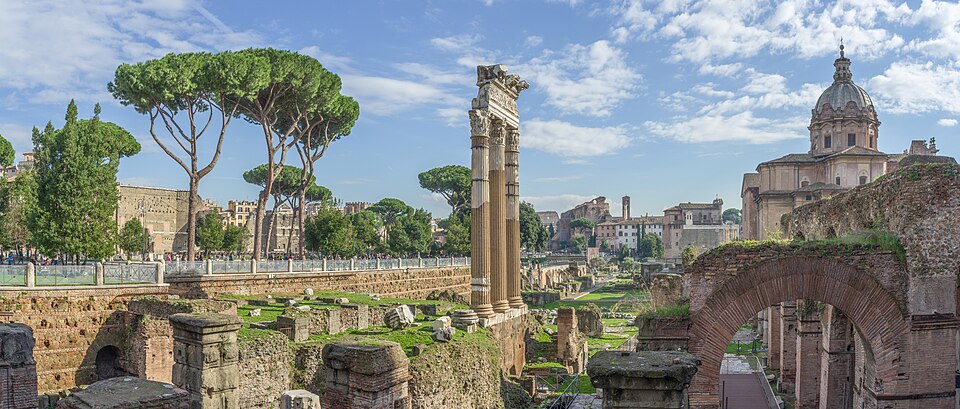
In recognition of Earth Day on April 22nd, this month’s special series of blog posts feature researchers who study human-environment relations in the past, specifically within the context of garden spaces.
Rome’s green spaces were embedded throughout its cityscape in the first century CE and were popular venues for a wide variety of activities. They were spaces for exercise (such as the box hedging in the Porticus Europae), for hairdressing and poetry meetings (as in the Porticus Phillipi), and for displaying art (as in the Porticus of Pompey).
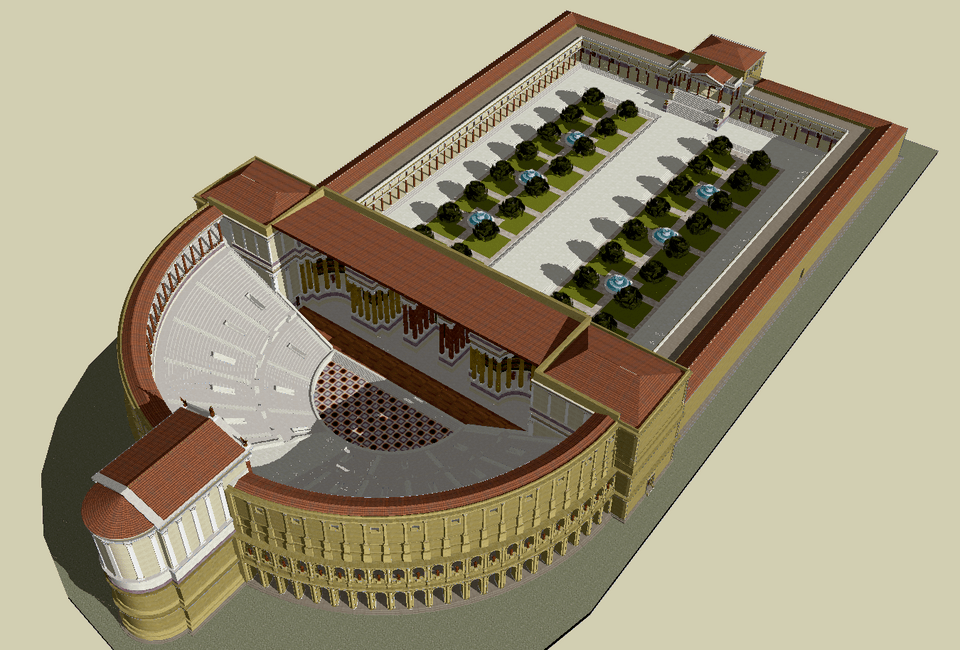
But when Julius Caesar’s architect, Vitruvius, wrote about the green spaces of the city, he did not keep himself to writing about them simply as parts of a building’s layout; but, rather, as an integral part of any construction, vital to preserving the health of the people who use them. But how accurate was any of this?
First, what is it that Vitruvius actually says? In On Architecture, when describing the ideal building, Vitruvius tells his audience that:
The open spaces which are between the colonnades under the open sky, are to be arranged with green plots; because walks in the open are very healthy, first for the eyes, because from the green plantations, the air being subtle and rarefied, flows into the body as it moves, clears the vision, and so by removing the thick humour from the eyes, leaves the glance defined and the image clearly marked.
Vitruvius, On Architecture, 5.9.5.
Vitruvius’ concern with the ‘humours’ may sound a little far-fetched, but a humour in the ancient world is simply another way of saying ‘bodily liquid’, and this starts to make a bit more sense. Vitruvius is not talking about some complex ancient medical thing; he is saying that there should be green spaces to stop you from tearing up. On a similar note of green spaces being healthy, and only a little later in the first century CE, the Roman medical writer Celsus gives his readers a list of where a person should walk in order to be as healthy as possible:
…it is better to walk under the sky than in a portico; better if your head permits it, to walk in the sun than in the shade, better in shade cast by a wall or trees than under a roof; it is better to walk in a straight line than a winding wander.
Celsus, On Medicine, 1.2.6.
Getting out in the open air, then, was considered good for you not just when you were a teenager stinking out your room and annoying your parents, but even two thousand years ago.
However, this line of thinking only really works if Rome was a particularly unhealthy place…
Of course, any city is one that has an awful lot of people in, and an awful lot of people make for an awfully unhealthy place. And so, Seneca, writing in the mid-first century CE, tells his friend Lucilius that:
As soon as I escaped from the oppressive atmosphere of the city, and from that awful odour of reeking kitchens which, when in use, pour forth a ruinous mess of steam and soot, I perceived at once that my health was mending.
Seneca, Letters to Lucilius 104.6
Although Seneca is maybe the grumpiest source on this matter, plenty of other writers also comment on the noise and the smoke within the city. Rome, clearly, could be quite unpleasant. But how would a green space, as recommended by Vitruvius, help here? Would a walk in one actually benefit your health, as Celsus suggests?
Well, it turns out, actually, yes, and not just your physical health.
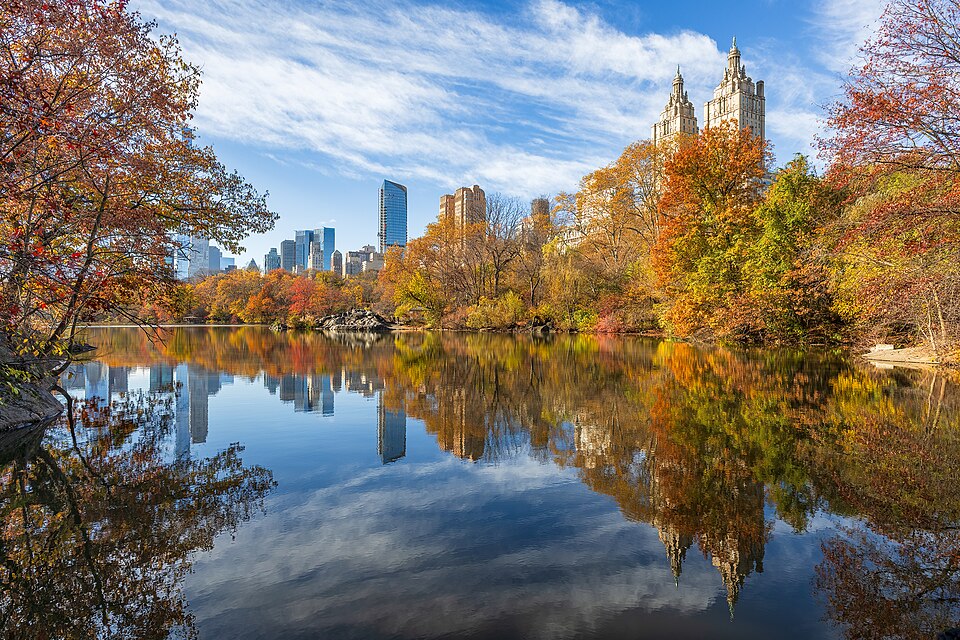
Green spaces are planted today to clear pollution, whether it is noise, carbon, or exhausts. That eery dead quiet of a deep dark forest is not because there is no noise; it is because the trees and the leaves and the needles are all deadening the sound. The clean, fresh air under an avenue of plane trees is because the leaves are catching pollutants. Inhabitants of big cities today know this all too well. New York’s Central Park, London’s Hyde Park and Hampstead Heath, Singapore’s Gardens by the Bay —all of these green spaces exist in part to interrupt the city.
Bologna, Italy, introduced a tree-planting initiative to reduce pollution from cars, and to provide green spaces for people to use without the negative impact of pollution. Leaves on the right trees can, quite literally, catch pollutants. Pollutants that would cause you to tear up if they got in your eye, or, to use Vitruvius’ wording, would prevent the ‘thick humour from the eyes’.
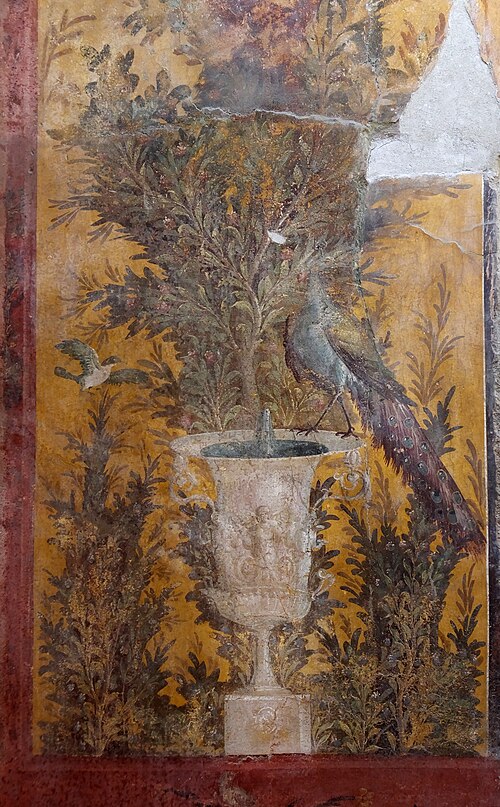
But it was not just Romans’ physical health that improved as they wandered through these green spaces. Across Rome, gardens and green spaces were interrupted by pools and fountains; and water features are a common compositional element in frescoes depicting gardens. Recent psychological studies have shown that the sound of running water can have a direct impact on mental health, and there is even longer-standing evidence that access to urban green spaces improves your mental health.
So, when you are told to go outside and get some fresh air to help you feel better, or when you see another office worker sigh as they flop onto a park bench, know that this is not just a modern tradition. People across history have benefitted from going outside and getting some fresh air. Even in a city as oppressive, stinking, and sooty as Seneca’s Rome.
Additional Resources:
Baker, P. 2018. Identifying the Connection between Roman Conceptions of ‘Pure Air’ and Physical and Mental Health in Pompeian Gardens (C.150 BC–AD 79): a Multi-Sensory Approach to Ancient Medicine. World Archaeology, 50, 404-417.
Kumpulainen, S., Esmaeilzadeh, S., Pesonen, M., Brazão, C. & Pesola, A. J. 2025. Enhancing Psychophysiological Well-Being Through Nature-Based Soundscapes: An Examination of Heart Rate Variability in a Cross-Over Study. Psychophysiology, 62, e14760.
Nutsford, D., Pearson, A. L. & Kingham, S. 2013. An ecological study investigating the association between access to urban green space and mental health. Public Health, 127, 1005-1011.

Andrew Fox is a Lecturer in Ancient History at the University of Liverpool, UK. He writes about trees in the city of Rome, groves, and natural features in artwork. His next project will take him across the Roman world, tackling questions of how Romans understood and responded to environmental pollution. He is a passably adequate runner, and will complain the entire way through a run in the nearby Peak District. Before eating all the post-run pastries.
Like our content? Consider donating to Peopling the Past. 100% of all proceeds support honoraria to pay the graduate students and contingent scholars who contribute to the project.
Make a monthly donation
Make a yearly donation
Choose an amount
Or enter a custom amount
Your contribution is appreciated. Please note that we cannot provide tax receipts, as we are not a registered charity.
Your contribution is appreciated. Please note that we cannot provide tax receipts, as we are not a registered charity.
Your contribution is appreciated. Please note that we cannot provide tax receipts, as we are not a registered charity.

