What do you research?
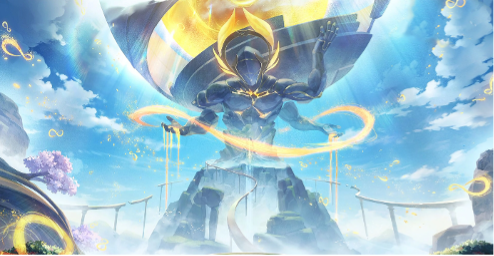
In my dissertation, I examine the history of online gaming in a bid to trace the cultural and commercial uptake of “epic” as an ideology for digital entertainment. The turn of the 21st century bore witness to a transmedia resurgence in sword-and-sandal film and television just as advances in telecommunication were transforming video games from a largely solitary act into a social online practice. At this moment, there was a discernible shift across the game industry towards a grandiose, classicizing vision for digital entertainment grounded in epic and ancient culture. Theorizing how this classicism was internalized within the industry’s then nascent ambitions for online games, I propose that it is no coincidence that some of the most influential genres of online games like MMORPGs (Massively Multiplayer Online Role-Playing Games) and MOBAs (Multiplayer Online Battle Arenas) are intentionally rife with—or, more suggestively, interpretable as—adaptations of large-scale, synchronous, historically-inflected scenarios, chief among them epic warfare and the gladiatorial arena.
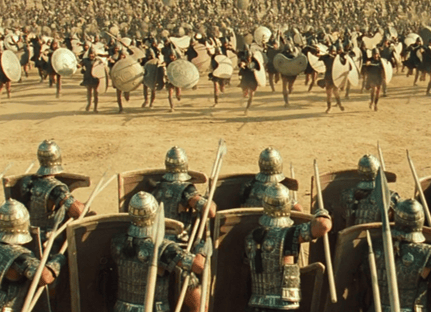
One conceptual challenge I’m working through has to do with closing the gulf between a formal understanding of epic as a canonical genre with a long history of intentional adaptation, and the much more flexible, expansive notion of epic that circulates today in everyday parlance (and ever the more intensely on the internet). These two valences of epic are impossible to extricate from one another. All the same, it is evident just how profoundly this hybrid understanding informs how the producers, consumers, and middlemen of digital culture are interfacing conceptually with epic and, through it, classical antiquity.
Naturally, this research ties in closely to my own passions and hobbies. I grew up in Singapore quite obsessed with online games (and I most certainly still am) and even had a short stint as an amateur esports player myself. In a country located far from the Mediterranean, where classical antiquity was mostly absent from our classrooms, my encounters with antiquity were entirely mediated through online games, digital culture, and the complexly indirect receptions they contain. My dissertation is inspired by a desire to make sense of how and why classical antiquity resonates across the globe, and to conceptualize the mechanisms of culture and commerce that enable this process.
What sources or data do you look at?
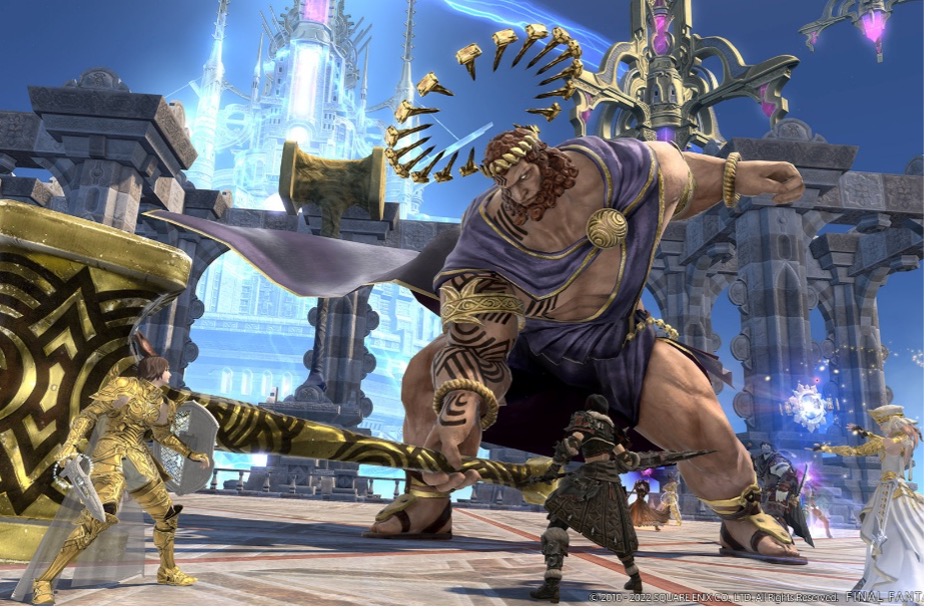
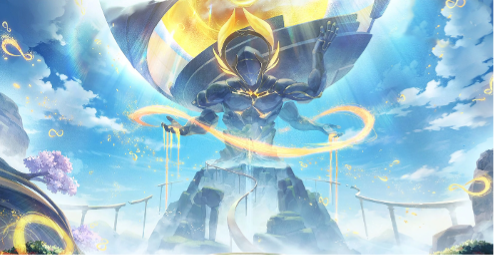
Across my different chapters, I’ll be looking at MMORPGs like World of Warcraft and Final Fantasy XIV, prominent esports titles like League of Legends and Dota 2, and gacha games like Honkai: Star Rail. A natural starting point for my research involves analyzing the games themselves; their narratives, worldbuilding, gameplay, music, and social systems. To some extent, online games follow a similar logic of historical adaptation we find in games like Hades II or Assassin’s Creed Odyssey. But there are also many ways that antiquity has been uniquely adapted to fit the multiplayer premise of online games and the fact that they are continuously maintained as part of a live service. For instance, games like World of Warcraft or Final Fantasy XIV have now been around for decades. If we take this temporality into account, we have to consider how these worlds have developed, over time, their own epic-adjacent traditions, dramaturgies, and cultures of play.
What I’m even more excited about, however, is exploring where online gaming culture and its contained notions of epic spill forth from the games themselves into the “real” world of fan conventions, esports tournaments, packed stadiums, live commentatorship, elaborate set design, Twitch streamers, live concerts, and the thriving economy of embodied and disembodied experiences based around the collective enjoyment of online games. Each of these elements affords us new ways to analyze the historical resonances not just in terms of adaptation but as ongoing emergent practices. With esports, for instance, I’m especially interested in the way esports commentators narrate in-game warfare for a live stadium audience and how they, consciously or unconsciously, utilize so many of the same poetic and rhetorical strategies we find in the Homeric epics.
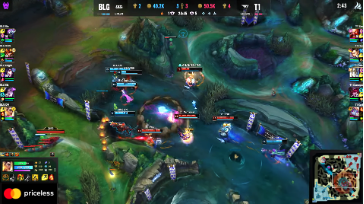
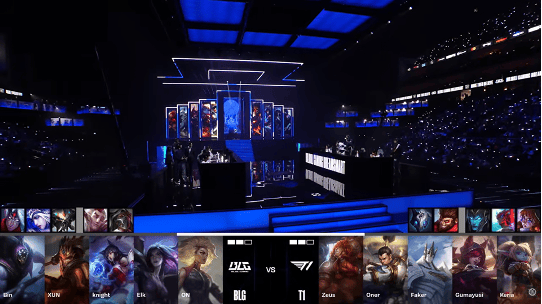
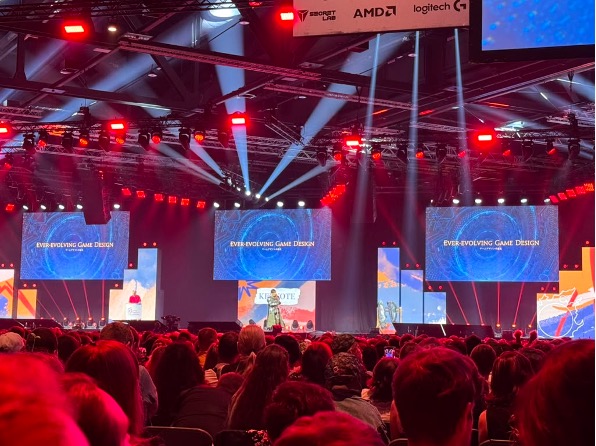
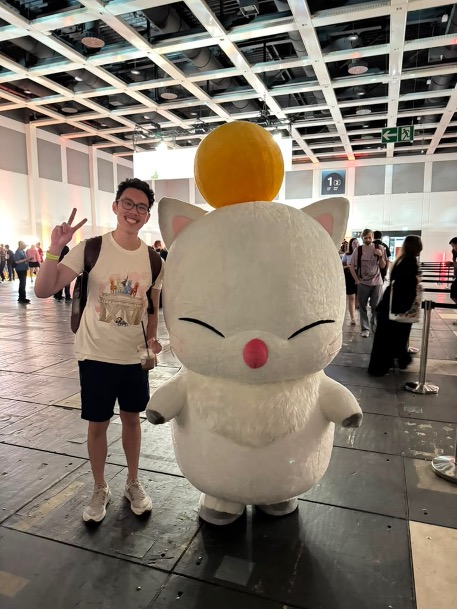
I’m excited to be travelling a lot this year for some very enjoyable fieldwork, and will be based in Tokyo for the Fall of 2026. I’ll be attending a number of big gaming events this year, from Final Fantasy XIV’s fan conventions in Berlin and Tokyo, to annual esports tournaments like Dota 2’s The International held this year in Shanghai, to industry trade shows like Tokyo Game Show. In addition to taking in and analyzing everything else mentioned above, I’ll be interviewing game developers, event organizers, and attendees. Though I’m by no means a trained ethnographer, I’ve already learned a lot from the interviews I’ve conducted so far. It’s also been a refreshingly bizarre experience for me, as a classicist, to stage a dialogue with living people for once. Ovid doesn’t quite respond to my texts.
How does this research shed light on real people in the past and in the present?
There is some element of historical speculation to this comparative, transhistorical study. Online games present us with an exciting opportunity to observe in real time how culture and technology come to develop around classicizing epic paradigms. Such findings, in turn, offer fresh paradigms for theorizing epic’s prolific cultural presence throughout antiquity. The disciplinary study of ancient Greek and Roman epic has long benefited from comparative fieldwork: the best known example being Milman Parry and Albert Lord’s breakthroughs in understanding both performance and audience dimensions of Homeric epic through a comparative study of South Slavic oral performance. If we approach, with equal theoretical seriousness, the live traditions of epic adaptation taking place in online games—a medium built to integrate emergent sociality with the narrative, graphics, gameplay, music, and voice acting of games—there is, I think, a non-zero possibility of developing some insight into the ancient epic tradition. After all, the premise of taking online games as a microcosm or simulation of a larger society is by no means untested: they have long drawn the attention of sociologists, psychologists, anthropologists, cultural theorists, political theorists, virtual economists, epidemiologists, legal scholars, and more. So, why not classicists?
The foreground of this work, however, is very much focused on the experiences of real people today: how they find passion for their hobbies, ascribe value to their pursuits, apply technology to make art and tell stories, discover community online, and of course, spend tons of hard-earned money. Through this dissertation on online gaming, I hope to contribute to our understanding of antiquity’s place within this fascinating nexus of play, value, and legitimation.
Additional Resources
Arnott, Luke. 2016. “Epic and Genre: Beyond the Boundaries of Media.” Comparative Literature 68 (4): 351–69.
Bolter, Jay David, and Richard Grusin. 2002. Remediation: Understanding New Media. MIT Press.
Beissinger, Margaret H., Jane Tylus, and Susanne Lindgren Wofford. 1999. Epic Traditions in the Contemporary World: The Poetics of Community. University of California Press.
Castronova, Edward. 2005. Synthetic Worlds: The Business and Culture of Online Games. University of Chicago Press.
Corneliussen, Hilde, and Jill Walker Rettberg, eds. 2008. Digital Culture, Play, and Identity: A World of Warcraft Reader. MIT Press.
Ensslin, Astrid. 2012. The Language of Gaming. Red Globe Press.
Krzywinska, Tanya. 2006. “Blood Scythes, Festivals, Quests, and Backstories: World Creation and Rhetorics of Myth in World of Warcraft.” Games and Culture 1 (4): 383–96.
Steenberg, Lindsay. 2020. Are You Not Entertained?: Mapping the Gladiator Across Visual Media. Bloomsbury Academic Press.
Taylor, T. L. 2012. Raising the Stakes: E-Sports and the Professionalization of Computer Gaming. MIT Press.

Kevin Wong is a PhD Candidate in Classical Philology at Harvard University, with a secondary field in Science, Technology, and Society. He analyzes the reception of Greco-Roman antiquity across the global video game industry, specializing in online games and the wide array of sociocultural practices that surround them. Kevin has published, presented, and taught on esports, MMORPGs, MOBAs, battle royales, livestreaming, game engines, and other related topics. He has also appeared as a guest host for the Assassin’s Creed – Echoes of History YouTube channel.
[https://www.youtube.com/@assassinscreedEOH]
 Peopling the Past