For Halloween in 2026 we are exploring the scary things in Homer’s (and sometimes Nolan’s!) Odyssey. Our writers investigate how the monstrous and mysterious are narrated, adapted, and situated in both ancient and modern societies through the many iterations of this wondrous tale. What are the deeper meanings of these characters and scenes, and why do they continue to captivate us into the twenty-first century?
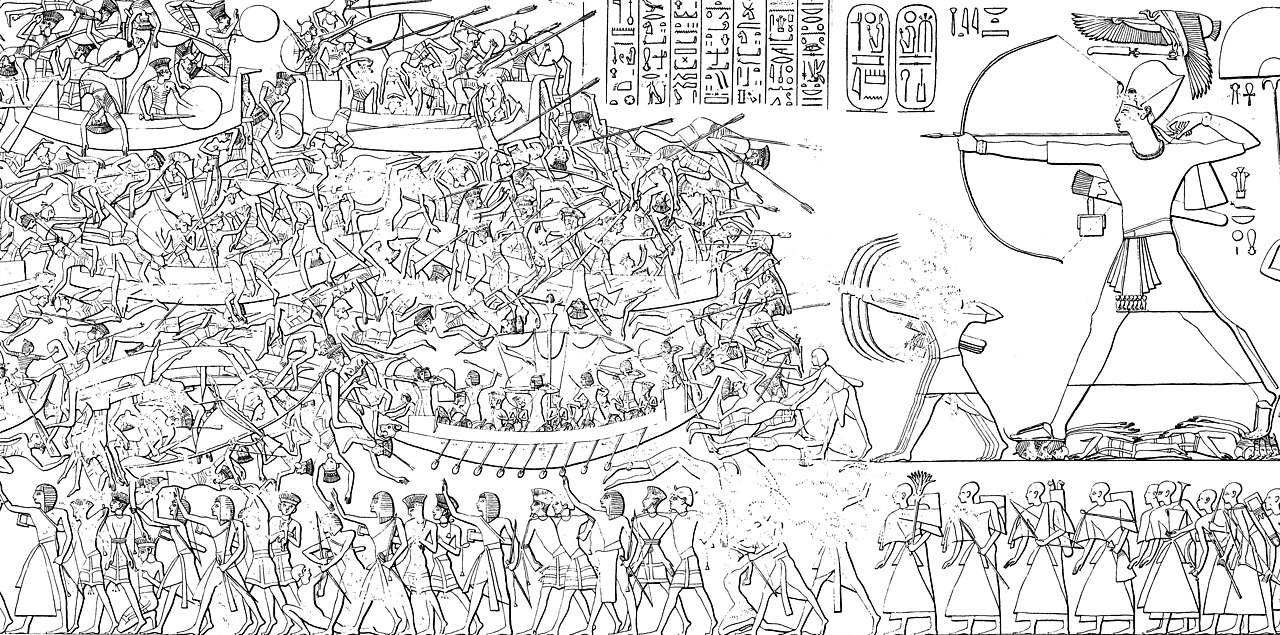
Christopher Nolan has a signature protagonist: a brilliant man who achieves the impossible, and is tormented by what his triumph accomplished. Think Oppenheimer or Dom Cobb in Inception. Nolan’s Odysseus also plays this role: his inception is the Trojan Horse that brought down Troy. And the movie culminates as the hero, a stranger in his own home, admits to his still unknowing wife the torment that has grown in his heart by what he did at Troy:
Odysseus: What if the Odysseus you knew lost his way? What if one night, in a strange city, he saw things that made him think the home he knew couldn’t possibly be there anymore. What if, when he left the belly of the horse, and opened the gates of Troy, he saw ten years of rage pour into that city in one night? We left them a gift, an offering of peace, that they took into their home. We violated all that’s ever sacred between people. It turned a fight into a hunt. To burn the walls of Troy was to burn the world-entire. Including his home. What if he knew, that very night, as he walked through fires, anarchy, and pain — and in a daze of sweaty celebrations that follow — what if he knew exactly what he’d done?
Penelope: What all of you had done?
Odysseus: One man’s idea. One man’s trick to break Zeus’s law forever. We lived in a world of palaces and trade, language, blind to its beauty, until we broke it.
Penelope: You are the people from the sea.
Odysseus: Yes, my queen. The breaking of Zeus’s law, spreading like a plague. Our age of bronze is collapsing, and maybe he couldn’t bear to see the ruins of what he’d done. Anywhere. Least of all, his home.
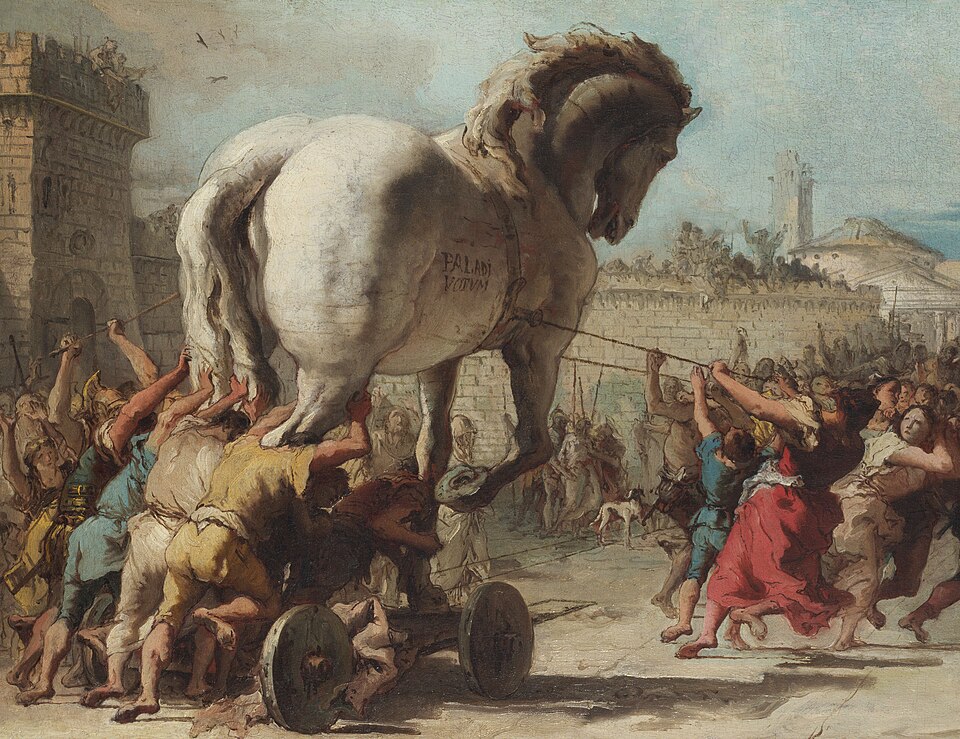
Nolan gives his character’s torment a recurring refrain: the “peoples from the sea,” whom my colleague Louise Hitchcock counted six mentions of throughout the film. Their presence is shadowy but persistent – a threat that never fully takes shape, but becomes an answer to what the Greeks and Odysseus broke: their age of Bronze, and their world of palaces and trade.
This leitmotif of Nolan’s is noteworthy given the historical arguments since the late nineteenth century that hordes of mysterious marauders did indeed bring about cataclysmic destructions of cities. These “Sea Peoples” supposedly set in motion population movements and trade disruptions that led to the collapse of the complex political and economic systems of the Late Bronze Age Eastern Mediterranean. Gaston Maspero, the French Egyptologist who popularized (although did not invent) the term peuples de la mer, described them in these terms in The Struggle of the Nations: Egypt, Syria, and Assyria:
“The movement of great masses of European tribes in a southerly and easterly direction was beginning to be felt by the inhabitants of the Balkans, who were forced to set out in a double stream of emigration – one crossing the Bosphorus and the Propontis towards the centre of Asia Minor, while the other made for what was later known as Greece proper, by way of the passes over Olympus and Pindus. The nations who had hitherto inhabited these regions, now found themselves thrust forward by the pressure of invading hordes, and were constrained to move towards the south and east by every avenue which presented itself.” (Maspero 1896: 461, trans. M. L. McClure)
Maspero and others based these arguments primarily on inscriptions of two Egyptian rulers, Merneptah (r. 1213-1203 BCE) and Ramses III (r. 1186-1154 BCE), who both claimed to have fought off invasions by a number of different ethnic groups. These included nearby peoples called the Meshwesh, the Libyans. Merneptah claims he fought off these along with further invaders: the Shardana, Shekelesh, Lukka, Teresh, and Ekwesh. Ramses III’s Medinet Habu inscriptions name some of Merneptah’s invaders along with new ethnonyms: Shardana, Shekelesh, Tjekker, Denyen, Weshesh, and Peleset. Eric Cline has already written some excellent online publications summarizing what we know of these groups (one can be found here).
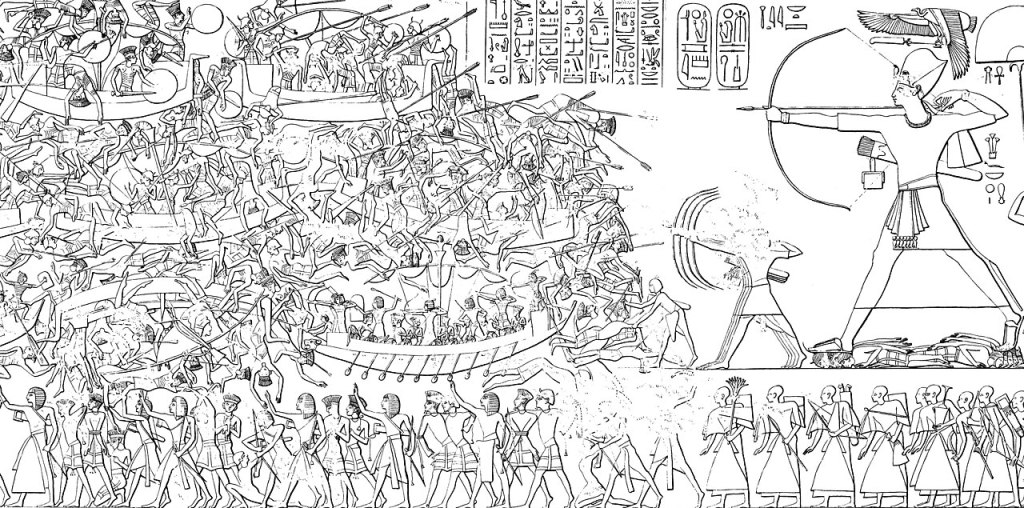
Wall relief at Medinet Habu depicting Ramses III defeating the Sea Peoples in the Battle of the (Nile) Delta. From Gray, Dorothea (1974) “chapter G” in (in German) Seewesen, Archaeologia Homerica, I, Göttingen, pp. 166−167 (public domain
Scholars have attempted to link names like Shardana and Shekelesh with the central Mediterranean (Sardinia and Sicily, respectively), the Denyen and Ekwesh with the Aegean, related to Homer’s names for the Greeks (the Danaans and the Achaeans, respectively), the Lukka with Lycia in Anatolia, and the Tjekker and Peleset with peoples who settled along the Levantine coast. “Peleset” is related to the later name “Philistines,” a people whose origins likely included Aegean migrants who settled among and intermingled with local Levantine populations, argued by Assaf Yasur-Landau, among others. More recently, ancient DNA from four infants buried at Ashkelon in the late twelfth century BCE revealed European-related ancestry alongside local Levantine ancestry, suggesting that some of their recent ancestors had migrated from elsewhere in the Mediterranean, possibly Crete, Sardinia, or Iberia.
There has been much discussion already of Nolan’s use of the historical trope of the Sea Peoples in online forums as well as blogs and other online publications (see here, here, here, and here). On one hand, the film gives a nod to the likely reality that Homer’s Odyssey, an oral composition passed down for centuries, really did preserve and re-narrate memories of the turbulent final years of the Bronze Age.
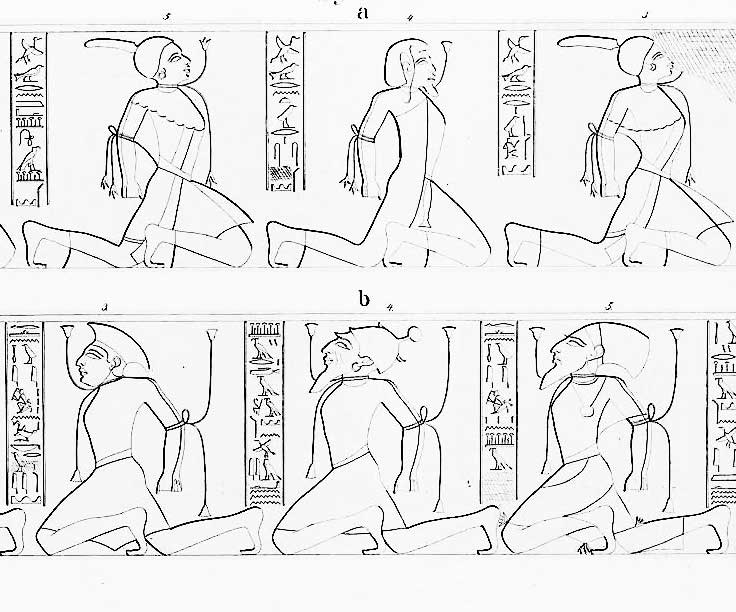
A somewhat recent publication, Jeffrey Emanuel’s Black Ships and Sea Raiders, delves into this possibility through the lies Odysseus tells at a few points throughout the Odyssey (notably Book 14) that he was a Cretan who carried out unsuccessful raids on Egypt, and spent several years in service to the Pharaoh. Indeed, as Emanuel shows, the Shardana, one of the invading groups, are recorded in various sources from Dynasties 19 and 20 as serving in the Pharaoh’s bodyguard, owning land, and acting as witnesses in legal cases.
On the other hand, Nolan’s film does something different with this trope. Maspero’s picture of “invading hordes” goes nicely with Merneptah’s and Ramses III’s imageries and descriptions of these groups. But all of these accounts over-exaggerated the extent of these invaders and could never fully capture the reality of these turbulent years around the close of the Bronze Age. It was convenient for Pharaohs to embellish their accounts of an external invader – perhaps it worked well for Maspero’s narrative too. But Nolan weaves this image around the main characters themselves, the Greek nostoi (returners). The mirror is held up to them the first time the Sea Peoples are mentioned, when a villager, whose home Odysseus and his men are merrily raiding and burning, pointedly asks them if they are the peoples from the sea. At the final mention of the Sea Peoples, quoted above, Odysseus admits what he seems to have always known: they are indeed the destroyers of their own society, not some fictitious migrant.
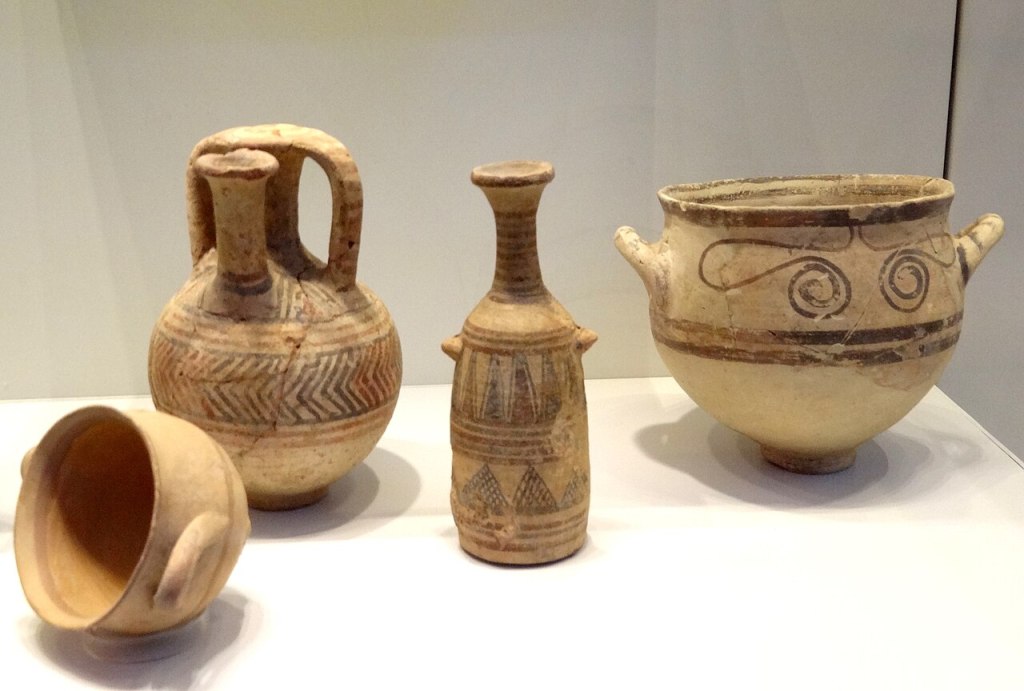
Likely, some of these Sea Peoples mentioned in Egyptian sources were Aegean migrants, as the inscriptions and studies mentioned above suggest. The material culture of the Levantine coasts as well as from sites on Cyprus betrays a number of influences from the Aegean world, including pottery and figurine styles. Bearing in mind the danger of equating material culture with ethnic groups, most scholars would likely accept the reality of population movements from mainland Greece and some of the islands to these regions during the twelfth century.
But Nolan was likely not referencing scholarly studies through his tormented protagonist. His Odysseus presents an even greater challenge to fabricated portrayals of “invading hordes” that Pharaohs, scholars, and modern politicians are so fond of popularizing. The culmination of the film is the realization that we sowed the seeds: we pulled the levers of our own disintegration. We caused the breakdown of society. The shadowy tales of dangerous migrants that follow us are not reality but a mirror: the real revelation lies in looking into that mirror rather than inventing an enemy.
Works Cited:
Cline, Eric H. 2014. 1177 B.C.: The Year Civilization Collapsed. Princeton University Press.
Cline, Eric H. 2026. “Who Were the Sea Peoples? And Did They Bring About the End of the Bronze Age?” The Ancient Near East Today, September 3. https://anetoday.org/sea-peoples-bronze-age/.
Edwards, Belen. 2026. “‘The Odyssey’: Who Were the Real-Life People from the Sea?” Mashable, July 24. https://mashable.com/entertainment/the-odyssey-sea-peoples-explainer.
Emanuel, Jeffrey P. 2017. Black Ships and Sea Raiders: The Late Bronze and Early Iron Age Context of Odysseus’ Second Cretan Lie. Lexington Books.
Feldman, Michal, Daniel M. Master, Raffaela A. Bianco, Marta Burri, Philipp W. Stockhammer, Alissa Mittnik, Adam J. Aja, Choongwon Jeong, and Johannes Krause. 2019. “Ancient DNA Sheds Light on the Genetic Origins of Early Iron Age Philistines.” Science Advances 5 (7): eaax0061. https://doi.org/10.1126/sciadv.aax0061. pmc.ncbi.nlm.nih.gov
Hitchcock, Louise A. 2026. “The Oddities of The Odyssey, or an Odyssey for Everyone.” Neos Kosmos, July 21, 2026. https://neoskosmos.com/en/2026/07/21/features/the-oddities-of-the-odyssey-or-an-odyssey-for-everyone/.
Maspero, Gaston. 1925. The Struggle of the Nations: Egypt, Syria, and Assyria. Edited by A. H. Sayce. Translated by M. L. McClure. 2nd ed., reprint. Society for Promoting Christian Knowledge.
Morris, Sarah. 2026. “The Odyssey Files #10: ‘WE Are the Sea Peoples?’” UCLA Department of Classics, October 16. https://classics.ucla.edu/blog/the-odyssey-files-10-we-are-the-sea-peoples/.

Megan Daniels is Assistant Professor of Ancient Greek Material Culture in the Department of Ancient Mediterranean and Near Eastern Studies at the University of British Columbia, and also the blog editor for Peopling the Past. Her work explores migration, religion, and large-scale political developments across Western Asia and the Eastern Mediterranean using textual and archaeological sources. She is editor of the 2022 volume, Homo Migrans: Modeling Mobility and Migration in Human History, and co-editor (with Sandra Blakely) of the 2023 volume, Data Science, Human Science, and Ancient Gods: Conversations in Theory and Method. She has also completed a study of the Classical and Hellenistic ceramics from the urban acropolis sanctuary of ancient Stymphalos and is currently researching the origins and ideology of divine kingship from Sumer to Greece. She has lived in Canada, the USA, Australia, and China, and has participated in archaeological fieldwork around the Mediterranean (Greece, Italy, Türkiye, Macedonia, and Tunisia), as well as in Canada and Bermuda.
Like our content? Consider donating to Peopling the Past. 100% of all proceeds support honoraria to pay the graduate students and contingent scholars who contribute to the project.
Make a monthly donation
Make a yearly donation
Choose an amount
Or enter a custom amount
Your contribution is appreciated. Please note that we cannot provide tax receipts, as we are not a registered charity.
Your contribution is appreciated. Please note that we cannot provide tax receipts, as we are not a registered charity.
Your contribution is appreciated. Please note that we cannot provide tax receipts, as we are not a registered charity.

