Podcast Season 4, Episode 9: Critical Futures for Ancient Studies with Mathura Umachandran

In this week’s episode of the podcast, we sit down with Dr. Mathura Umachandran to discuss past harms and potential futures for the fields of Classics and Ancient Mediterranean Studies.

Podcast Season 4, Episode 8: Selective Salvage: Archaeology and Hydropolitics with William Carruthers

On this episode of the Peopling the Past podcast, we are joined by Dr. William Carruthers, a lecturer at the school of Philosophical, Historical and Interdisciplinary Studies at the University of Essex.

Listen in, as Dr. Carruthers, discusses archaeology and cultural heritage in post-colonial Egypt.

Podcast Season 4, Episode 7: Hired Hands, Silenced Voices: Archaeology and Local Communities with Allison Mickel

In this episode of the Peopling the Past podcast, we are joined by Dr. Allison Mickel, Associate Professor of Anthropology and Director of Global Studies at Lehigh University.

Listen in, as Dr. Mickel discusses the realm of knowledge-keeping, exploitation of local site workers, and their relations to colonial labor practices.

Podcast Season 4, Episode 6: Classics, the Grand Tour, and Invented Legacies with Hardeep Dhindsa

In this week’s episode of the podcast, we sit down with Dr. Hardeep Dhindsa, a recent PhD graduate from King’s College London.

Listen in, as Dr. Dhindsa discusses colonialism and Whiteness, and the use of Classics in upholding these narratives.

Podcast Season 4, Episode 5: Naturalizing Inequalities: The Colonial Museum with Dan Hicks

In today’s episode of the Peopling the Past podcast, we are joined by Dr. Dan Hicks, professor of contemporary archaeology at the University of Oxford and the curator of World Archaeology at the Pitt Rivers Museum.

Listen in, as he discusses the role of modern museums in colonial mythologies, and what a path forward might look like.

Season 4, Podcast 4: Curating with Care: Transparency in Museums with Lisa Saladino Haney

In this week’s episode we are joined by Dr. Lisa Haney, Assistant Curator of Egypt on the Nile at the Carnegie Museum of Natural History, and part-time instructor at the University of Pittsburgh.

Listen in, as Dr. Saladino Haney speaks about museum pedagogy, community engagement in exhibit development, and the display of Egyptian cultural heritage.

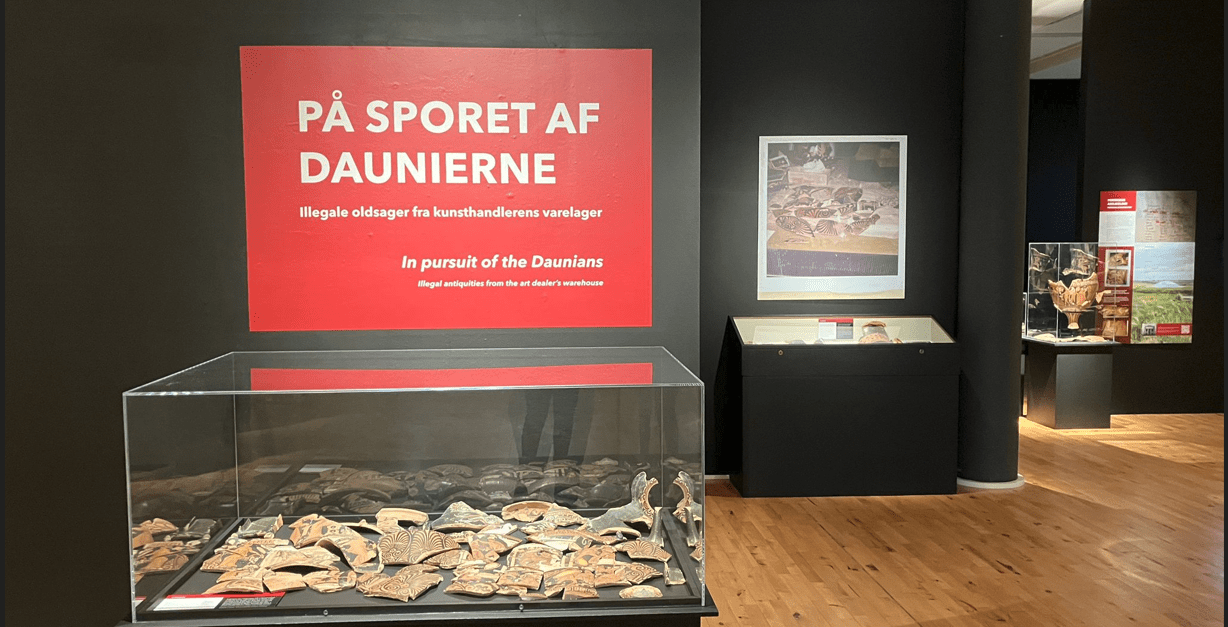
Blog Post #107: Tomb Robbers, Warehouses, and Vases: Giving Looted Antiquities a New Life with Marie Hélène van de Ven

In this week’s blog post, Marie Hélène van de Ven, a PhD student at Aarhus University, explores the ethics of studying looted artefacts without reinforcing the very networks through which they were illegally acquired. Here, she shares a component of this research based on her work with the Illicit Antiquities in the Museum project at Antikmuseet, Aarhus University.

Podcast Season 4, Episode 2: Fragments and Falsehoods: The Papyrus Trade with Roberta Mazza

In this week’s instalment of the podcast, we are joined by Roberta Mazza, papyrologist and Associate Professor at the University of Bologna.

Listen in, as Dr. Mazza discusses the antiquities trade, both past and present, and the ethics behind papyrology, especially highlighting her experience with the illicit papyrus trade in academia.

Podcast Season 4, Episode 1: Trafficking through the Metaverse: The Antiquities Trade in the Internet Age with Katie Paul

Today, we kick off the fourth season of the Peopling the Past podcast, which focuses on cultural heritage and legacies of colonialism. In our first episode, we are joined by Katie Paul, an anthropologist and research analyst whose work centers on the destruction and displacement of cultural heritage.

Listen in, as Katie discusses the role of Facebook in the illicit antiquities trade, and how the company has been complicit in the sale and destruction of cultural heritage.

Blog Post #105: The Gaza Maritime Archaeology Project (GAZAMAP)

Join us for an interview with Yasmeen Elkhoudary and Georgia Andreou, where they discuss the creation and evolution of The Gaza Maritime Archaeology Project (GAZAMAP). Focused on monitoring coastal heritage and training professionals, GAZAMAP shifts the study of heritage to the voices of those most impacted by ongoing humanitarian crises.